
“5 Simple Self-Care Rituals for Moms to Reclaim Calm When Overwhelmed
It usually does not start with one big breaking point. One child is talking, another is touching you, something is out of place, and the next small demand suddenly feels like too much.
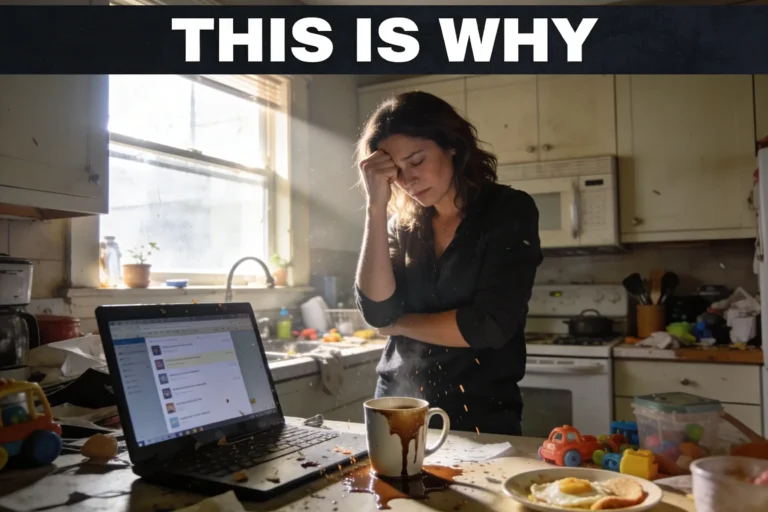
What makes moms self care when overwhelmed so hard is how it shows up in the body. The jaw tightens. The shoulders rise. Skin starts craving space. Even normal sounds can feel sharp, while everything still looks fine from the outside.
That is why this article stays close to real life: the noise, the touch, the interruptions, the guilt, and the small changes that actually ease pressure instead of just sounding wise.
The goal is to name the experience honestly and make the next step feel smaller, kinder, and more real, in language that feels specific and human rather than therapist-generic.

Key Takeaways
- The hardest days usually are not caused by one huge event. They are built by noise, touch, interruption, clutter, and mental load stacking up without enough recovery.
- The body often notices overload first: a tight jaw, tense shoulders, skin that wants space, and the feeling that every sound got louder.
- The guilt after a reaction often hurts more than the trigger itself, which is why good content should name shame clearly instead of smoothing it over.
- What helps fastest is usually not more effort. It is less input, earlier recognition, and one practical change that makes the next ten minutes easier.
Finding Five Minutes of Peace in a Chaotic Morning Routine

This is usually the moment when too many ordinary demands land at once in the kitchen, living room, car, bedtime routine, school run, grocery store, or another noisy family setting. A mother is trying to keep going while children still need things from her, and the pressure shifts from manageable to personal.
It can look like a completely ordinary moment: one more question, one more spill, one more person touching you, and suddenly the whole room feels louder than it did a minute ago.
By this point the body is usually involved too. The shoulders are tight. Breathing gets shallow. The jaw feels hard. Every new sound seems to land harder than it should. The feeling is often a mix of irritation, panic, resentment, and the desperate wish for one quiet minute.
The hidden thought is usually not dramatic. It is something like: I cannot take one more question, one more sound, or one more person touching me right now.
What is happening under the surface
A common mistake here is to write about the moment too politely and miss how physical, relentless, and ordinary the overload really feels.
A stronger move is to stay close to the lived moment: what the room sounds like, what the body is doing, and which input needs to be lowered first.
When this shift works, the moment stops feeling like proof that something is wrong with you. It lowers snapping, shutdown, guilt, and the feeling of failing at a normal day. It also creates a little more room before the next wave of input hits.
Relief often starts the moment the experience is named accurately, because the body no longer has to fight the truth of what the day felt like.
That matters because once the build-up is easier to see, the next response stops feeling like a moral test and starts feeling like a nervous-system question.
Creating a Cozy Evening Ritual After a Long Day of Parenting
This is usually the moment when too many ordinary demands land at once in the kitchen, living room, car, bedtime routine, school run, grocery store, or another noisy family setting. A mother trying to keep functioning while children still need things from her feels the pressure move from manageable to personal.
Often nothing dramatic is happening. It is just too many ordinary inputs arriving without enough pause between them.
By this point the body is usually involved too. The shoulders are tight. Breathing gets shallow. The jaw feels hard. Every new sound seems to land harder than it should. The feeling is often a mix of irritation, panic, resentment, and the desperate wish for one quiet minute.
The hidden thought is usually not dramatic. It is something like: I cannot take one more question, one more sound, or one more person touching me right now.
What is happening under the surface
A common mistake here is to write about the moment too politely and miss how physical, relentless, and ordinary the overload really feels.
A stronger move is to stay close to the lived moment: what the room sounds like, what the body is doing, and which input needs to be lowered first.
When this shift works, the moment stops feeling like proof that something is wrong with you. It lowers snapping, shutdown, guilt, and the feeling of failing at a normal day. It also creates a little more room before the next wave of input hits.
Relief often starts the moment the experience is named accurately, because the body no longer has to fight the truth of what the day felt like.
That matters because once the build-up is easier to see, the next response stops feeling like a moral test and starts feeling like a nervous-system question.
Creating a Cozy Evening Ritual After a Long Day of Parenting at a glance
| Hard moment | What is often happening underneath | Smaller next step |
|---|---|---|
| Snapping quickly | The nervous system is already saturated | Lower one source of input before trying to explain |
| Feeling guilty after | Shame arrives before clarity does | Name the overload before judging yourself |
| Wanting to hide | Your system is looking for less stimulation | Take two quiet minutes on purpose, not as a failure |
| Everything feels like too much | Small demands have piled up without recovery | Make the next ten minutes simpler, not better |
Transforming Your Bathroom into a Sanctuary for Self-Care

This is usually the moment when too many ordinary demands land at once in the kitchen, living room, car, bedtime routine, school run, grocery store, or another noisy family setting. A mother trying to keep functioning while children still need things from her feels the pressure move from manageable to personal.
This is why the reaction can feel confusing from the outside. The visible trigger is small, but the build-up underneath it is not.
By this point the body is usually involved too. The shoulders are tight. Breathing gets shallow. The jaw feels hard. Every new sound seems to land harder than it should. The feeling is often a mix of irritation, panic, resentment, and the desperate wish for one quiet minute.
The hidden thought is usually not dramatic. It is something like: I cannot take one more question, one more sound, or one more person touching me right now.
What is happening under the surface
A common mistake here is to write about the moment too politely and miss how physical, relentless, and ordinary the overload really feels.
A stronger move is to stay close to the lived moment: what the room sounds like, what the body is doing, and which input needs to be lowered first.
When this shift works, the moment stops feeling like proof that something is wrong with you. It lowers snapping, shutdown, guilt, and the feeling of failing at a normal day. It also creates a little more room before the next wave of input hits.
Relief often starts the moment the experience is named accurately, because the body no longer has to fight the truth of what the day felt like.
That matters because once the build-up is easier to see, the next response stops feeling like a moral test and starts feeling like a nervous-system question.
Harnessing the Power of Nature: A Walk with Your Child to Reset
This is usually the moment when too many ordinary demands land at once in the kitchen, living room, car, bedtime routine, school run, grocery store, or another noisy family setting. A mother trying to keep functioning while children still need things from her feels the pressure move from manageable to personal.
It can look like a completely ordinary moment: one more question, one more spill, one more person touching you, and suddenly the whole room feels louder than it did a minute ago.
By this point the body is usually involved too. The shoulders are tight. Breathing gets shallow. The jaw feels hard. Every new sound seems to land harder than it should. The feeling is often a mix of irritation, panic, resentment, and the desperate wish for one quiet minute.
The hidden thought is usually not dramatic. It is something like: I cannot take one more question, one more sound, or one more person touching me right now.
What is happening under the surface
A common mistake here is to write about the moment too politely and miss how physical, relentless, and ordinary the overload really feels.
A stronger move is to stay close to the lived moment: what the room sounds like, what the body is doing, and which input needs to be lowered first.
When this shift works, the moment stops feeling like proof that something is wrong with you. It lowers snapping, shutdown, guilt, and the feeling of failing at a normal day. It also creates a little more room before the next wave of input hits.
Relief often starts the moment the experience is named accurately, because the body no longer has to fight the truth of what the day felt like.
That matters because once the build-up is easier to see, the next response stops feeling like a moral test and starts feeling like a nervous-system question.
Making Time for a Mindful Moment Amidst the Noise of Family Life

This is usually the moment when too many ordinary demands land at once in the kitchen, living room, car, bedtime routine, school run, grocery store, or another noisy family setting. A mother trying to keep functioning while children still need things from her feels the pressure move from manageable to personal.
Often nothing dramatic is happening. It is just too many ordinary inputs arriving without enough pause between them.
By this point the body is usually involved too. The shoulders are tight. Breathing gets shallow. The jaw feels hard. Every new sound seems to land harder than it should. The feeling is often a mix of irritation, panic, resentment, and the desperate wish for one quiet minute.
The hidden thought is usually not dramatic. It is something like: I cannot take one more question, one more sound, or one more person touching me right now.
What is happening under the surface
A common mistake here is to write about the moment too politely and miss how physical, relentless, and ordinary the overload really feels.
A stronger move is to stay close to the lived moment: what the room sounds like, what the body is doing, and which input needs to be lowered first.
When this shift works, the moment stops feeling like proof that something is wrong with you. It lowers snapping, shutdown, guilt, and the feeling of failing at a normal day. It also creates a little more room before the next wave of input hits.
Relief often starts the moment the experience is named accurately, because the body no longer has to fight the truth of what the day felt like.
That matters because once the build-up is easier to see, the next response stops feeling like a moral test and starts feeling like a nervous-system question.
Making Time for a Mindful Moment Amidst the Noise of Family Life at a glance
| Hard moment | What is often happening underneath | Smaller next step |
|---|---|---|
| Snapping quickly | The nervous system is already saturated | Lower one source of input before trying to explain |
| Feeling guilty after | Shame arrives before clarity does | Name the overload before judging yourself |
| Wanting to hide | Your system is looking for less stimulation | Take two quiet minutes on purpose, not as a failure |
| Everything feels like too much | Small demands have piled up without recovery | Make the next ten minutes simpler, not better |
Reclaiming Your Identity: Simple Ways to Connect with Your Passions
This is usually the moment when too many ordinary demands land at once in the kitchen, living room, car, bedtime routine, school run, grocery store, or another noisy family setting. A mother trying to keep functioning while children still need things from her feels the pressure move from manageable to personal.
This is why the reaction can feel confusing from the outside. The visible trigger is small, but the build-up underneath it is not.
By this point the body is usually involved too. The shoulders are tight. Breathing gets shallow. The jaw feels hard. Every new sound seems to land harder than it should. The feeling is often a mix of irritation, panic, resentment, and the desperate wish for one quiet minute.
The hidden thought is usually not dramatic. It is something like: I cannot take one more question, one more sound, or one more person touching me right now.
What is happening under the surface
A common mistake here is to write about the moment too politely and miss how physical, relentless, and ordinary the overload really feels.
A stronger move is to stay close to the lived moment: what the room sounds like, what the body is doing, and which input needs to be lowered first.
When this shift works, the moment stops feeling like proof that something is wrong with you. It lowers snapping, shutdown, guilt, and the feeling of failing at a normal day. It also creates a little more room before the next wave of input hits.
Relief often starts the moment the experience is named accurately, because the body no longer has to fight the truth of what the day felt like.
That matters because once the build-up is easier to see, the next response stops feeling like a moral test and starts feeling like a nervous-system question.
Navigating Guilt: Embracing Self-Care Without the Weight of Motherhood Expectations
This is usually the moment when the reaction is already over but the guilt arrives almost immediately in the kitchen, living room, car, bedtime routine, school run, grocery store, or another noisy family setting.
A mother trying to keep functioning while children still need things from her feels the pressure move from manageable to personal.
It can look like a completely ordinary moment: one more question, one more spill, one more person touching you, and suddenly the whole room feels louder than it did a minute ago.
By this point the body is usually involved too. The shoulders are tight. Breathing gets shallow. The jaw feels hard. Every new sound seems to land harder than it should. What makes this hard is that the emotional crash usually comes with immediate shame, not relief.
The hidden thought is often: how can something so small make me react like this?
Why the emotional crash often comes second
A common mistake here is to judge the reaction before naming the buildup. That usually turns overload into shame within seconds.
A stronger move is to name what had been building all day before turning the whole moment into a verdict on your character.
When this shift works, the moment stops feeling like proof that something is wrong with you. It lowers snapping, shutdown, guilt, and the feeling of failing at a normal day. It also creates a little more room before the next wave of input hits.
Relief often starts the moment the experience is named accurately, because the body no longer has to fight the truth of what the day felt like.
That matters because once the build-up is easier to see, the next response stops feeling like a moral test and starts feeling like a nervous-system question.
Incorporating Family into Your Self-Care: Bonding Activities that Recharge You

This is usually the moment when too many ordinary demands land at once in the kitchen, living room, car, bedtime routine, school run, grocery store, or another noisy family setting. A mother trying to keep functioning while children still need things from her feels the pressure move from manageable to personal.
Often nothing dramatic is happening. It is just too many ordinary inputs arriving without enough pause between them.
By this point the body is usually involved too. The shoulders are tight. Breathing gets shallow. The jaw feels hard. Every new sound seems to land harder than it should. The feeling is often a mix of irritation, panic, resentment, and the desperate wish for one quiet minute.
The hidden thought is usually not dramatic. It is something like: I cannot take one more question, one more sound, or one more person touching me right now.
What is happening under the surface
A common mistake here is to write about the moment too politely and miss how physical, relentless, and ordinary the overload really feels.
A stronger move is to stay close to the lived moment: what the room sounds like, what the body is doing, and which input needs to be lowered first.
When this shift works, the moment stops feeling like proof that something is wrong with you. It lowers snapping, shutdown, guilt, and the feeling of failing at a normal day. It also creates a little more room before the next wave of input hits.
Relief often starts the moment the experience is named accurately, because the body no longer has to fight the truth of what the day felt like.
That matters because once the build-up is easier to see, the next response stops feeling like a moral test and starts feeling like a nervous-system question.
Incorporating Family into Your Self-Care: Bonding Activities that Recharge You at a glance
| Hard moment | What is often happening underneath | Smaller next step |
|---|---|---|
| Snapping quickly | The nervous system is already saturated | Lower one source of input before trying to explain |
| Feeling guilty after | Shame arrives before clarity does | Name the overload before judging yourself |
| Wanting to hide | Your system is looking for less stimulation | Take two quiet minutes on purpose, not as a failure |
| Everything feels like too much | Small demands have piled up without recovery | Make the next ten minutes simpler, not better |
Setting Boundaries: Communicating Your Needs to Family for Personal Space
This is usually the moment when too many ordinary demands land at once in the kitchen, living room, car, bedtime routine, school run, grocery store, or another noisy family setting. A mother trying to keep functioning while children still need things from her feels the pressure move from manageable to personal.
This is why the reaction can feel confusing from the outside. The visible trigger is small, but the build-up underneath it is not.
By this point the body is usually involved too. The shoulders are tight. Breathing gets shallow. The jaw feels hard. Every new sound seems to land harder than it should. The feeling is often a mix of irritation, panic, resentment, and the desperate wish for one quiet minute.
The hidden thought is usually not dramatic. It is something like: I cannot take one more question, one more sound, or one more person touching me right now.
What is happening under the surface
A common mistake here is to write about the moment too politely and miss how physical, relentless, and ordinary the overload really feels.
A stronger move is to stay close to the lived moment: what the room sounds like, what the body is doing, and which input needs to be lowered first.
When this shift works, the moment stops feeling like proof that something is wrong with you. It lowers snapping, shutdown, guilt, and the feeling of failing at a normal day. It also creates a little more room before the next wave of input hits.
Relief often starts the moment the experience is named accurately, because the body no longer has to fight the truth of what the day felt like.
That matters because once the build-up is easier to see, the next response stops feeling like a moral test and starts feeling like a nervous-system question.
Quick Action Plan
- Pick one clear priority for moms self care when overwhelmed.
- Apply one change first before adding complexity.
- Review what improved and what still slows you down.
Conclusion
Situations like this usually do not mean something is fundamentally wrong. More often, they mean the system is overloaded and needs a clearer, smaller response.
Once the pattern is named honestly, the next step usually gets easier to see. That is where better decisions start: less panic, less noise, and one steadier action at a time.
You do not need a perfect reaction for moms self care when overwhelmed to improve. You need a response that lowers pressure, fits real life, and can be repeated on ordinary days.
If this problem keeps showing up, the answer is usually not more force. It is a better structure, a better read on the moment, and a simpler plan you can trust.