
Daylight Saving Time and Kids: Sleep Without Meltdowns
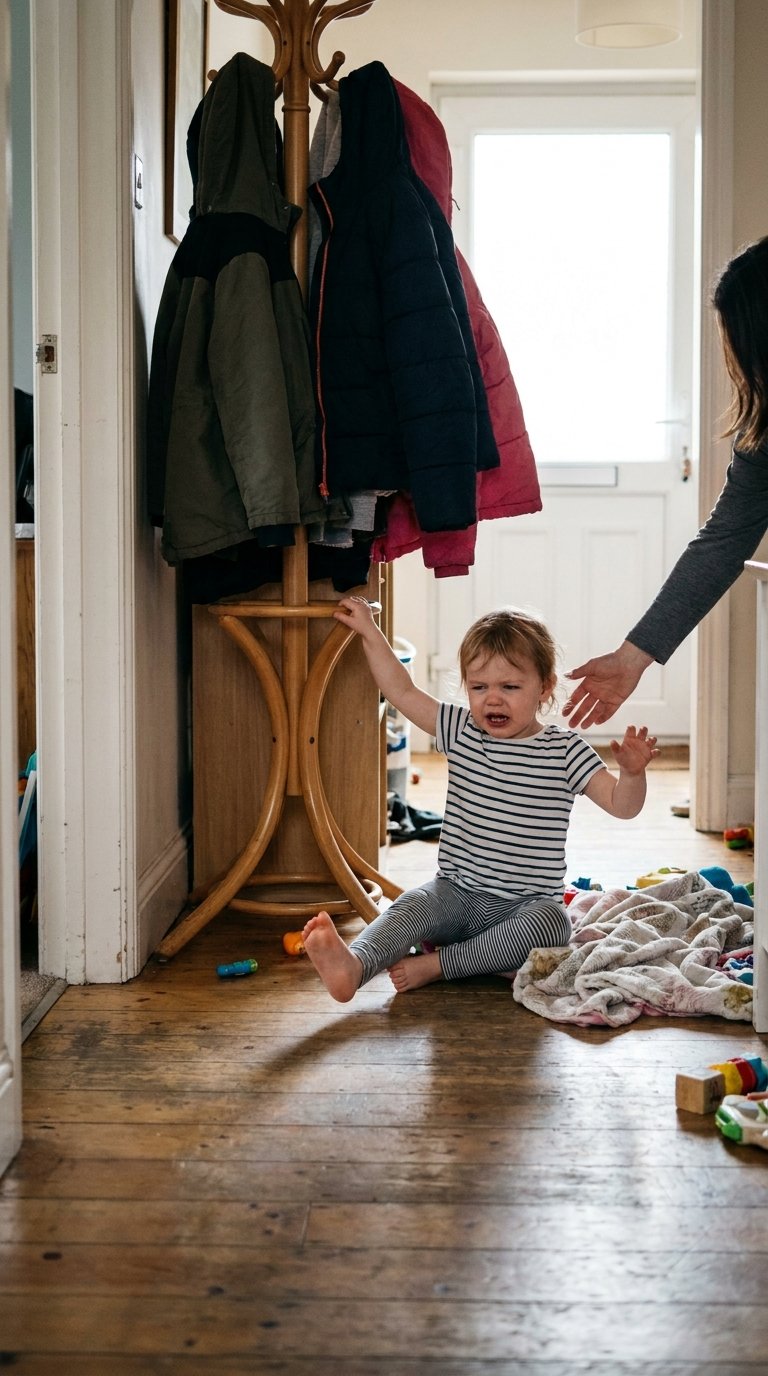
Every year, the clocks change and parents brace for impact. Daylight saving time kids often show it within a day or two: crankier moods, bedtime battles, and wake-ups that arrive at the wrong hour. If your child was sleeping beautifully last week, it can feel unfair.
The good news is that the disruption is usually temporary, and you can soften it. In this guide you will find a clear explanation of why the time change throws children off, a prep plan with two methods, tips for spring and fall, age-by-age advice, and ways to handle the hard moments. Everything is practical and built for real households.
Think of it as a roadmap you can pick up a week before the change, or the night before if you are reading this late.
Key takeaways
- Most children adjust to a one-hour clock change within about one week, though some take up to two weeks.
- A gradual bedtime shift of 10 to 15 minutes at a time, started several days ahead, is the gentlest approach for most kids.
- Morning light, consistent meal times and a dark bedroom help reset your child’s body clock faster than anything else.
- Babies and toddlers feel the change most because their schedules are rigid and their internal clocks are still maturing.
- If sleep problems last beyond two to three weeks or affect daytime functioning, talk to your pediatrician.
Why Daylight Saving Time Kids Feel So Off
The clock changes by one hour, but your child’s internal body clock does not. Their sleepiness, hunger and alertness stay tied to light and routine, so a 7:00 p.m. bedtime can suddenly feel like 6:00 or 8:00 p.m. to their body.
What the clock change does to your child’s body clock
The circadian rhythm is the roughly 24-hour internal cycle that tells the body when to feel awake and when to feel sleepy. It is guided mainly by light, especially morning light, and supported by cues like meals and routines.
When the clocks move, the sun rises and sets at a different clock time than your child is used to. Their body keeps pushing sleepiness and wakefulness on the old schedule. That mismatch is a bit like mild jet lag, without the travel.
Melatonin, the hormone that helps signal nighttime, also follows light patterns. If it is still bright at bedtime after springing forward, your child’s body may not feel ready to wind down.
Why little ones feel it more than adults
Adults can push through a groggy Monday with coffee and willpower. Children cannot. Their days are often built around tight windows: nap at noon, dinner at 5:30, bed at 7:00.
Younger kids also have less ability to self-regulate when tired. Instead of feeling sluggish, they often get wired, clingy or tearful. Babies cannot understand that the clock changed at all, so the only thing you can adjust is their schedule and environment.
Signs Your Child Is Struggling With the Time Change
Children who struggle with the time change typically show shorter sleep, more night wakings, early rising and irritability. These signs usually appear within the first few days and ease as the body clock catches up.

Common behavior and mood changes
Watch for these patterns in the days after the switch, because daylight saving time kids may show several at once:
- Fighting bedtime or taking much longer to fall asleep
- Waking earlier or later than usual
- More night wakings or restless sleep
- Short, poor-quality naps
- Meltdowns over small things
- Clinginess, whining or a shorter fuse
- Changes in appetite, especially at breakfast
- Trouble focusing at school or daycare
A child who seems “hyper” at bedtime is often overtired, not energetic. That second wind is a common sign that bedtime has slipped past the sweet spot.
How long the adjustment usually lasts
Most children settle in within a week, and many bounce back in a few days. Some sensitive kids need up to two weeks. Fall back is often easier for older children, while spring forward tends to feel harder because everyone loses an hour of sleep.
| Age group | Typical adjustment time (approximate) | Most common issue |
|---|---|---|
| Babies | 3 days to 1 week | Early waking, shifted naps |
| Toddlers and preschoolers | 4 days to 2 weeks | Bedtime resistance, meltdowns |
| School-age kids | 3 days to 1 week | Morning grogginess |
| Teens | 1 to 2 weeks | Late sleep onset, daytime fatigue |
These ranges are general guidelines. Every child is different, and a child who is already short on sleep may take longer.
Getting Ready: Daylight Saving Time Kids Prep Plan
The best preparation for daylight saving time kids face is to shift their schedule toward the new time before the clocks change, or to switch all at once and commit to the new routine. Which approach works depends on your child’s temperament and how rigid their schedule is.

The gradual bedtime shift method (10 to 15 minutes at a time)
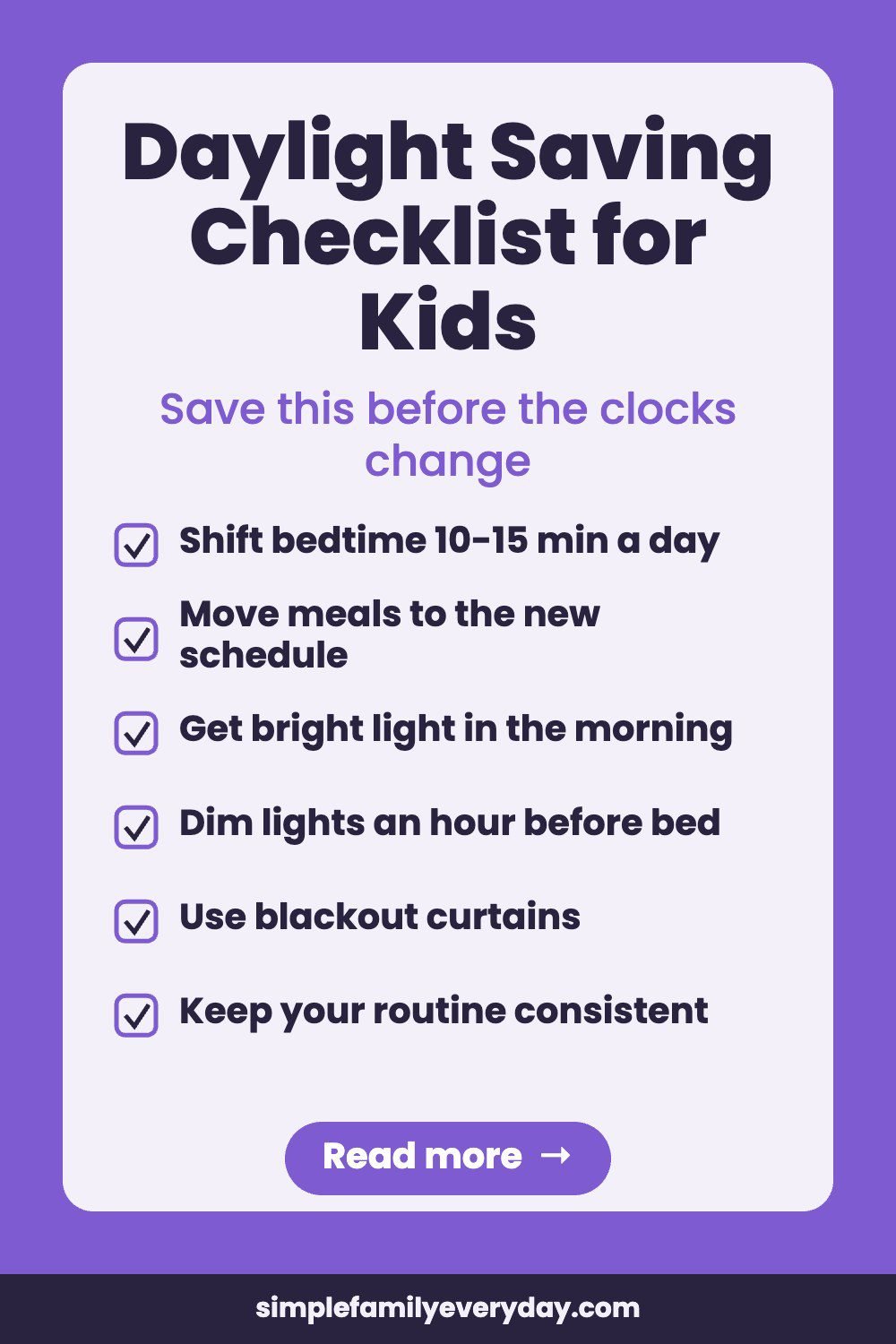
A gradual bedtime shift means moving bedtime, naps and meals a few minutes each day so your child reaches the new clock time by the day of the change. This is usually the gentlest option, especially for babies and toddlers.
Here is a simple four-day example for spring forward, when you need to move everything earlier:
- Four days before: Move bedtime 15 minutes earlier (7:00 becomes 6:45).
- Three days before: Move another 15 minutes (6:30).
- Two days before: Move to 6:15.
- The day before: Move to 6:00.
After the clocks change, 6:00 on the old clock is 7:00 on the new one. Shift naps, meals and wake-up time by the same amount each day.
For fall back, reverse the process: move everything 10 to 15 minutes later each day. If you only have a couple of days, even a 10-minute shift each night helps.
The cold turkey method and when it works
The cold turkey method means changing the clocks and immediately following the new time with no gradual shift. If bedtime was 7:00 p.m., it is simply 7:00 p.m. on the new clock.
This works well for easygoing, flexible children, school-age kids and teens, and for families who did not have time to prepare. It can be rougher for babies and toddlers, but many families find it takes just a few days of patience.
If you choose this method, protect the first morning. Get your child up at the new regular time, open the curtains and head outside for light as soon as you can.
Adjusting meals, naps and light exposure
Light, food and activity are the three cues that tell the body clock what time it is.
- Morning light: Get outside within the first hour after waking, even for 10 minutes. Natural light is the strongest signal for resetting the body clock.
- Meals: Shift breakfast, lunch and dinner along with bedtime. Regular meal times anchor the day.
- Naps: Move naps in the same small steps, and avoid letting a nap run long late in the day.
- Evening light: Dim the lights and turn off screens about an hour before bed to help melatonin do its job.
Daylight Saving Time Kids: Spring Forward vs Fall Back
Spring forward takes an hour away, so kids feel tired and bedtime feels too early. Fall back adds an hour, so kids often wake up too early. The strategies differ slightly for each, so it helps to plan for the one you are facing.
Springing forward: handling the lost hour
With spring forward kids sleep usually suffers because bedtime feels an hour too early. Your child may lie awake, then struggle to wake up the next morning.
Try this approach:
- Start shifting bedtime earlier by 10 to 15 minutes a few days ahead.
- On Sunday morning, wake your child at their normal time on the new clock rather than letting them sleep in.
- Get bright light early in the day to push the body clock earlier.
- Keep the evening calm and dark, using blackout curtains if the sun is still up at bedtime.
- Expect a slightly early-feeling bedtime for a few nights and keep the routine predictable.
Do not let a long afternoon nap undo your progress. If your child is a school-age kid, keep naps short or skip them.
Falling back: handling early wake-ups
The fall back kids bedtime challenge is the opposite. Your child wakes at their usual body-clock time, which now reads an hour earlier on the clock. A child who normally wakes at 6:30 may be up at 5:30.
Here is how to handle it:
- Shift bedtime 10 to 15 minutes later each night in the days before, or hold bedtime steady for a night or two if your child is very sensitive.
- Keep the room dark until the new wake-up time.
- Use an OK-to-wake clock so your child knows when morning begins.
- Avoid rushing in with breakfast and lights at the early hour, which teaches the body that this is the new wake time.
- Be patient. Early wake-ups often fade within a few days to a week.
Some parents find that moving bedtime later all at once makes kids overtired, so use the gradual approach if your child gets cranky easily.
Daylight Saving Time and Kids by Age
How you handle the time change depends on your child’s age, because younger children need more rigid routines and older children have more flexible clocks. Use the guidance below based on where your child is right now.

Babies and newborns
Daylight saving time baby sleep can be tricky because babies run on feeding and nap cycles. Newborns, though, often have no fixed schedule yet, so the clock change affects them less. You can simply follow their cues and use the new clock time for daytime light and nighttime darkness.
For babies on a more established routine, say around four months and older:
- Shift naps and feeds by 10 to 15 minutes a day.
- Keep nighttime feeds calm and dark.
- Expose your baby to daylight in the morning.
- Do not worry if the first few days are messy.
Safe sleep rules stay the same no matter what the clock says. Keep your baby on their back, on a firm, flat sleep surface with nothing else in the crib. The American Academy of Pediatrics offers safe sleep guidance for families.
Toddlers and preschoolers
Daylight saving time and toddlers is where most of the drama happens. Toddlers thrive on routine, have big feelings and are fiercely opinionated about bedtime.
What helps:
- Use the gradual shift for several days if you can.
- Keep the bedtime routine identical: bath, pajamas, two books, song, lights out.
- Offer a calm explanation, such as “The sun is playing hide and seek, so we are going to bed a little earlier.”
- Hold naps steady. Most toddlers still need one nap, so shift it along with bedtime.
- Offer choices within limits, like which pajamas or which book, to reduce power struggles.
A toddler who is overtired will resist sleep harder, so a slightly early bedtime is better than a late one.
School-age kids and teens
School-age kids usually adapt faster, but the Monday morning after spring forward can be rough. Shift bedtime 15 minutes earlier for a few nights, and keep wake-up times consistent.
Teenagers have biologically later body clocks, so the spring change can hit them especially hard. They may already be short on sleep. Encourage:
- Morning sunlight right after waking
- Screens off at least 30 to 60 minutes before bed
- No caffeine in the afternoon or evening
- Avoiding big weekend sleep-ins that make Monday harder
Sleep needs vary, but the American Academy of Sleep Medicine and the AAP publish recommended sleep ranges by age. Check those sources to see what is typical for your child.
Tools That Make the Adjustment Easier
The right sleep environment, including a dark room, steady sound and a clear wake-up signal, can make the time change much smoother. These tools help your child’s body believe it is time to sleep, especially when the sun disagrees, and they are worth setting up for daylight saving time kids of any age.
Blackout curtains, white noise and sleep-friendly lighting
Blackout curtains for kids are one of the most useful tools for spring forward, when the sun is still up at bedtime, and for fall back, when dawn arrives too soon. They block light that would otherwise tell your child’s brain to wake up or stay alert.
Tips for setting up the room:
- Choose curtains that cover the whole window with minimal gaps at the edges.
- Use a white noise machine at a steady, moderate volume to mask morning birds and household sounds. Place it away from the crib or bed.
- Use warm, dim nightlights rather than bright or blue-toned ones.
- Keep the room comfortably cool, as many sleep experts recommend.
- Dim the lights in the house during the hour before bed.
Remember to check cords and safety for anything near a crib or child’s bed.
OK-to-wake clocks and morning routines
An OK-to-wake clock is a simple clock or light that changes color or shows an image to signal when it is acceptable to get out of bed. It is helpful for toddlers and preschoolers who cannot read a clock yet.
How to use it:
- Set the wake time to the new correct hour. During fall back, you might start slightly later than the early wake time and move it a few minutes earlier each day.
- Explain the rule: “When the light turns green, it is morning.”
- Praise your child warmly when they stay in bed until the signal.
- Keep a short morning routine ready: open curtains, get dressed, eat breakfast, go outside.
Consistency matters more than the specific product you choose.
Handling Meltdowns and Tough Days
When your child melts down after the time change, stay calm, simplify the day and prioritize sleep. A tired child cannot learn self-control on demand, so your steady presence matters more than any technique.
Staying calm when everyone is tired
You are probably tired too, which makes patience harder. A few things help:
- Lower expectations for the first few days. Skip extra activities if you can.
- Move bedtime a bit earlier on rough days.
- Offer a snack, water and a quiet cuddle before reacting to behavior.
- Use short, soft phrases: “I know you are tired. I am here.”
- Plan an early dinner and a calm evening.
- Take turns with your partner for early wake-ups if possible.
Remember that this is temporary. Your child is not misbehaving to be difficult; their body is out of sync, which is common for daylight saving time kids.
When to talk to your pediatrician
Most time-change sleep problems resolve on their own. Contact your pediatrician if:
- Sleep problems last longer than two to three weeks.
- Your child seems unusually tired, sad or irritable for days.
- You notice loud snoring, pauses in breathing or very restless sleep.
- Your child’s school performance or daytime behavior changes significantly.
- You are worried about your baby’s feeding, weight or alertness.
Do not give melatonin or other sleep aids to your child unless your pediatrician recommends them. A doctor can check for underlying issues and give advice that fits your child.
Daylight Saving Time Kids Summary: Your Quick Game Plan
For daylight saving time kids, the simplest plan is to shift bedtime in small steps, get morning light, keep the room dark and stay consistent for about a week. You do not need a perfect schedule, just a steady one.
Use this checklist:
- One week before: Decide between the gradual shift and the cold turkey method.
- Four days before: Begin moving bedtime, naps and meals by 10 to 15 minutes a day.
- Time change day: Wake your child at the new regular time and get outside for daylight.
- First week: Keep routines identical, use blackout curtains and an OK-to-wake clock, and protect naps.
- Ongoing: Be patient, and call your pediatrician if problems last beyond two to three weeks.
Your next step: pick your method today and write the new schedule on a sticky note on the fridge. For more family guides, visit the Simple Family Everyday blog and find ideas to make everyday routines easier.
Frequently asked questions
How long does it take kids to adjust to daylight saving time?
Most children adjust within about one week, and many do so in just a few days. Sensitive kids, toddlers and teens may need up to two weeks. If trouble continues past two to three weeks, check in with your pediatrician.
Should I change my child’s bedtime before the clocks change?
It often helps, especially for babies and toddlers. Moving bedtime, naps and meals by 10 to 15 minutes a day for about four days makes the shift smaller and easier. Older children and flexible kids may do fine switching all at once.
How do I help my toddler with the time change?
Keep the bedtime routine exactly the same, shift naps and meals gradually, and get bright light in the morning. Use blackout curtains and an OK-to-wake clock to support the new schedule. Aim for a slightly early bedtime rather than a late one, since overtired toddlers resist sleep more.
Why is my baby waking up so early after the clocks fall back?
Your baby’s body clock still runs on the old time, so a 6:30 wake-up now reads as 5:30. Keep the room dark, keep early feeds calm and quiet, and shift bedtime and naps later in small steps. Most babies adapt within a few days to a week.
Do teenagers need a different approach to daylight saving time?
Yes, a bit. Teens have naturally later body clocks, so the spring change can be especially tough. Encourage morning sunlight, limit screens and caffeine in the evening, and keep wake times steady rather than sleeping in heavily on weekends.