
Bedtime Routine for Kids: 7 Simple Steps to Calm Nights
A bedtime routine for kids is a short, predictable series of calming activities, done in the same order every night, that tells your child’s body and brain it is time to sleep. If evenings in your house feel like a negotiation, a good routine can change that without any special equipment or expert training. It simply makes the evening more predictable.
In this guide you will find the recommended sleep hours for each age, a seven-step routine you can start tonight, and adjustments for toddlers, school-age children and tweens. You will also get fixes for stalling, night fears and post-holiday slumps, plus a simple way to build a bedtime routine chart that your child actually follows.
Nothing here requires perfection. Small, repeated habits do the heavy lifting, and you can adapt every step to your family’s schedule.
Key takeaways
- A consistent bedtime routine for kids of about 20 to 45 minutes helps children settle faster and makes bedtime less of a battle.
- Sleep needs vary by age: roughly 10 to 13 hours for preschoolers and 9 to 12 hours for school-age children, according to the American Academy of Sleep Medicine.
- The seven steps are: wind down, snack, bath and pajamas, teeth and toilet, tidy up, stories, and cuddles with lights out.
- Screens should be off at least an hour before bed, and the bedroom should be dark, cool and quiet.
- A visual routine chart and calm consistency work better than rewards, threats or long negotiations.
Why a Bedtime Routine for Kids Matters
A bedtime routine for kids matters because children thrive on predictability, and a repeated sequence of calm activities helps them relax, fall asleep faster and sleep more soundly. It also gives you and your child dependable time together at the end of a busy day.
What predictable evenings do for your child’s sleep
Your child’s body runs on an internal clock, often called the circadian rhythm, which is the roughly 24-hour cycle that regulates sleepiness and alertness. When bedtime activities happen in the same order at about the same time, they become cues. Dim lights, warm water and a familiar story signal that sleep is coming.
Routines also lower evening stress. A child who knows what comes next is less likely to protest, because there is little left to argue about. Many parents notice that the routine itself becomes the “boss,” which takes pressure off you.
There is an emotional side too. Ten or twenty minutes of undivided attention before bed fills your child’s connection tank, so they are less likely to seek it through stalling.
How much sleep kids need at each age
If you have ever wondered how much sleep do kids need, the American Academy of Sleep Medicine (AASM) gives widely used recommendations, including naps for younger children. Treat these as ranges, not strict targets, and check the official source for the latest guidance.
| Age | Recommended sleep per 24 hours (including naps) |
|---|---|
| Infants 4–12 months | 12–16 hours |
| Toddlers 1–2 years | 11–14 hours |
| Preschoolers 3–5 years | 10–13 hours |
| School-age children 6–12 years | 9–12 hours |
| Teens 13–18 years | 8–10 hours |
Use this table as the base for your kids bedtime routine by age. Work backward from your child’s wake-up time to find a bedtime that lands them in the right range. A child who wakes at 6:45 a.m. and needs 11 hours, for example, should be asleep by about 7:45 p.m.
Before You Start: Set the Stage for Easier Nights
Before you start a bedtime routine for kids, set a realistic sleep schedule and prepare the bedroom. These two foundations make every later step easier, because your child is working with their body clock and a space designed for rest.
Choose a realistic bedtime and wake-up time
Start with the wake-up time, since it is usually fixed by school or daycare. Count back the hours of sleep your child needs, then add 20 to 30 minutes for the routine itself. If lights out is 8:00 p.m., begin the routine at about 7:20.
Watch your child for a few days. Signs of overtiredness include sudden hyperactivity, meltdowns and rubbing eyes well before bedtime. If your child lies awake for more than 30 minutes most nights, the bedtime may be too early. If they fall asleep instantly and are hard to wake, it may be too late.
Try to keep weekend wake-ups within an hour of weekday times. Big shifts create what many parents call “social jet lag,” where Monday feels like a time zone change.
Create a calm, sleep-friendly bedroom
A sleep-friendly bedroom is dark, quiet, comfortably cool and free of stimulating gadgets. These simple adjustments support the whole routine.
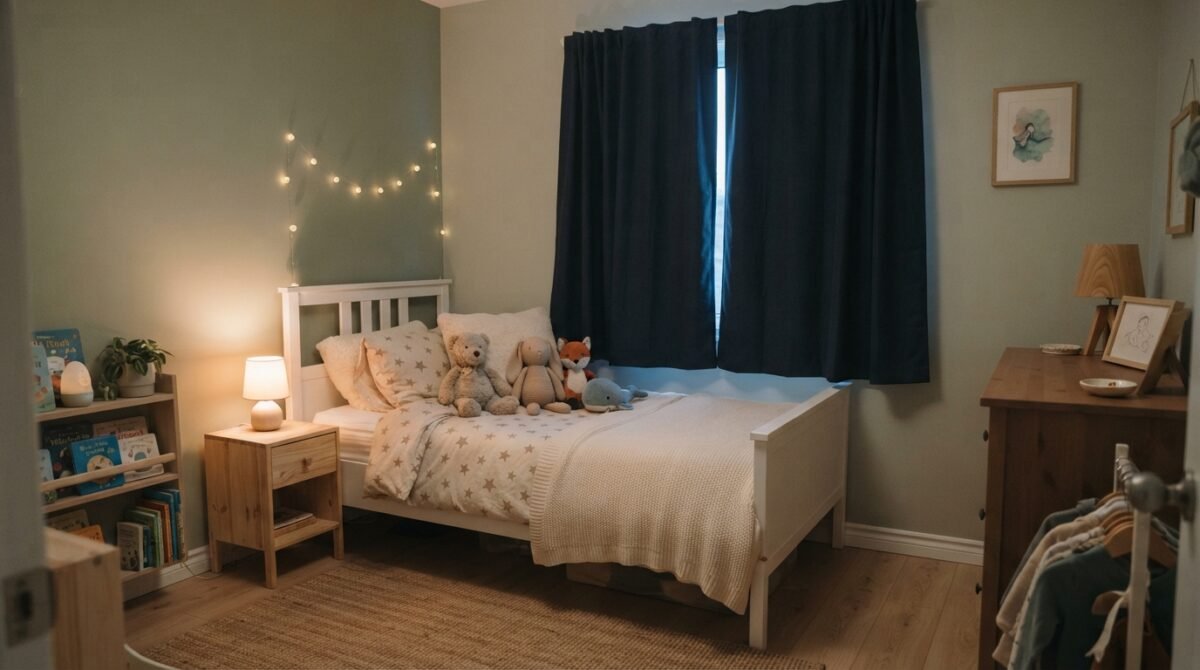
- Darkness: Use blackout curtains or shades, especially in summer. A small, dim nightlight is fine for children who want one.
- Temperature: Aim for a comfortably cool room. Many sleep experts suggest roughly 18 to 21°C (65 to 70°F), which is an approximate range.
- Sound: A fan or a steady white noise machine can mask household sounds. Keep the volume low.
- Clutter: Store toys out of sight or in a closed bin so the room reads as a place for sleep.
- Devices: Keep TVs, tablets and phones out of the bedroom overnight.
The 7-Step Bedtime Routine for Kids
The 7-step bedtime routine for kids is: wind down, snack, bath and pajamas, teeth and toilet, tidy up, stories, then cuddles and lights out. Together the steps take about 30 to 45 minutes and move your child gradually from active play to sleepy calm.
Step 1: Wind down screens and energy early
Winding down means shifting from high-energy activity to quiet, low-stimulation time. Turn off screens about one hour before lights out, since bright light and fast content can make it harder to feel sleepy. The American Academy of Pediatrics also encourages screen-free time before bed.
Replace the screen with something gentle. Dim the lights in the main living area, lower your voice and put on soft music. Rough play and tickle fights belong earlier in the evening.
Here are some calming bedtime activities for kids that work well at this stage:
- Doing a simple jigsaw puzzle
- Colouring or drawing at the table
- Building with blocks quietly
- Listening to a soft playlist
- Stretching or gentle yoga poses
Step 2: Offer a light snack and a drink
A light snack prevents hunger from keeping your child awake, but a heavy meal close to bed can backfire. Offer something small about 30 to 60 minutes before lights out, such as a banana, a slice of toast, plain yogurt or a few whole-grain crackers.
Water is the best drink. Avoid caffeine entirely, including chocolate drinks and some sodas, and go easy on sugary treats. Give the last sip of water at this stage so you reduce midnight toilet trips.
Make this a “kitchen closes” moment. Saying “The kitchen is closed after our snack” gives a clear boundary that cuts down on later requests.
Step 3: Bath and pajamas
A warm bath helps because the drop in body temperature afterward encourages sleepiness. Keep it to 10 to 15 minutes. Younger children enjoy a few bath toys, while older kids may prefer a quick shower.

Not every child needs a bath nightly. If baths energize your child or dry out their skin, switch to a quick wash and save the full bath for every second or third night.
Then comes pajamas. Let your child choose between two options, which gives them a sense of control without opening a huge debate. Choose breathable, comfortable fabric suited to the room temperature.
Step 4: Brush teeth and use the toilet
Brushing twice a day is a standard dental recommendation, and the evening brush is the most important because saliva flow drops during sleep. Use a fluoride toothpaste in the amount your dentist recommends for your child’s age, and supervise brushing until your child can do it well alone. Many dental organizations suggest helping until around age 7 or 8, though this varies.

Make it a game if needed. Sing a two-minute song, use a sand timer or let your child “brush the stuffed animal’s teeth” first.
Finish with a final toilet visit, even if your child says they do not need to go. This single habit prevents many “I need to pee!” calls after lights out.
Step 5: Tidy up and set out tomorrow’s clothes
Tidying is a gentle closing ritual that signals the day is over. Set a five-minute timer and have your child put toys in a bin and dirty clothes in the hamper. Keep expectations modest and cheerful.
Setting out tomorrow’s outfit shifts a morning chore into the evening. School-age children can also pack their bag and place shoes by the door. This reduces morning stress and, for anxious kids, removes one more worry from bedtime.
Toddlers can join in by choosing between two shirts. It is a small decision that builds independence.
Step 6: Read stories together
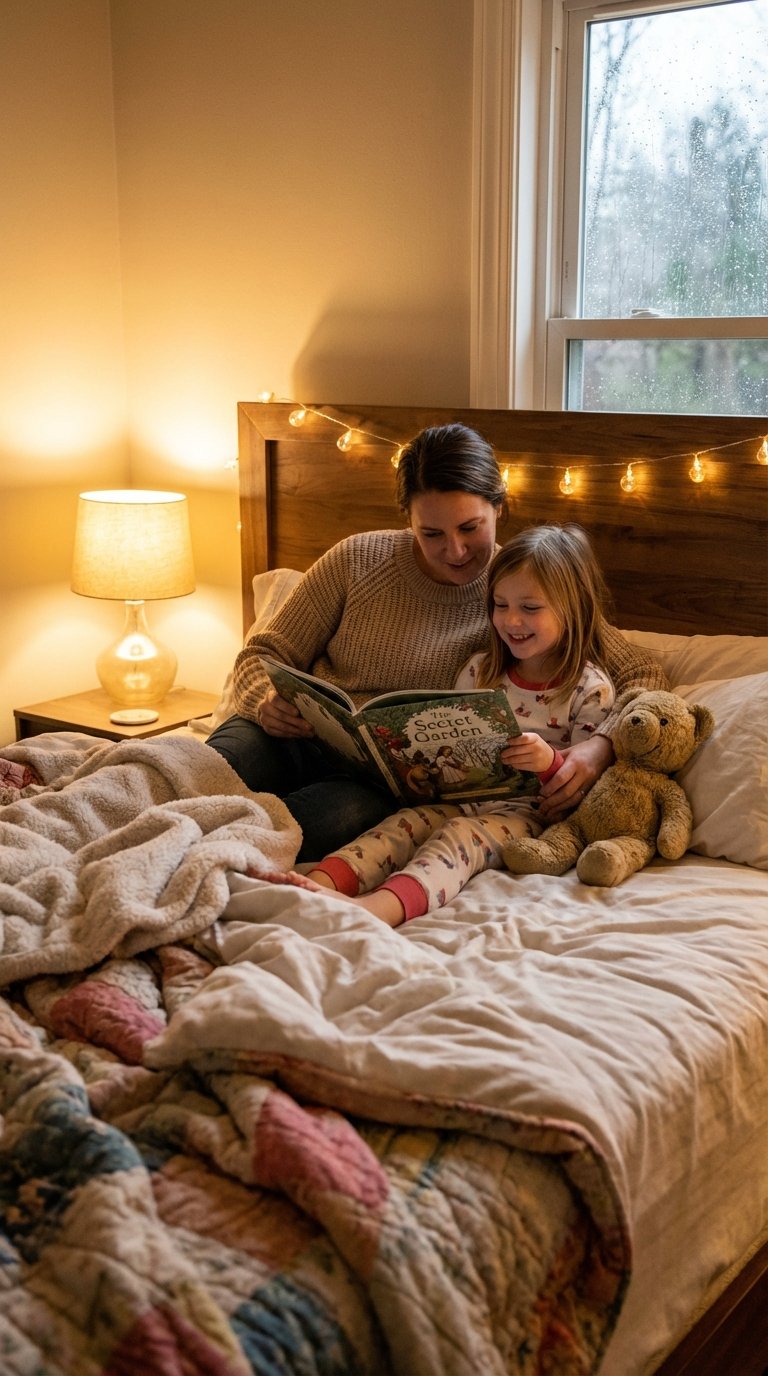
Reading together is the heart of many routines because it is calm, connected and easy to repeat. Aim for 10 to 20 minutes, in a dimly lit room, with your child snuggled beside you or in bed.
Agree on the number of books before you start, such as two stories or one chapter. State it every night so there is no surprise. A paper book works better than a tablet because there is no glowing screen.
If your child is already a reader, take turns: you read a page, they read a page. Older children may enjoy a chapter book series that continues from night to night, which gives them something to look forward to.
Step 7: Cuddles, a goodnight phrase and lights out
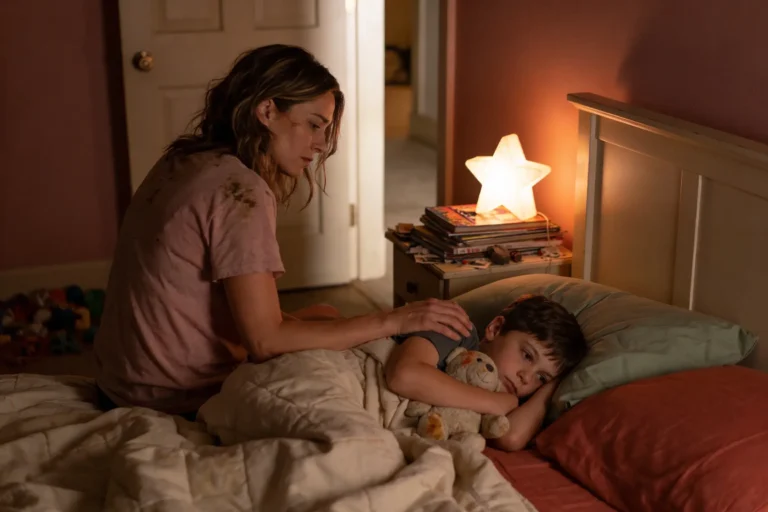
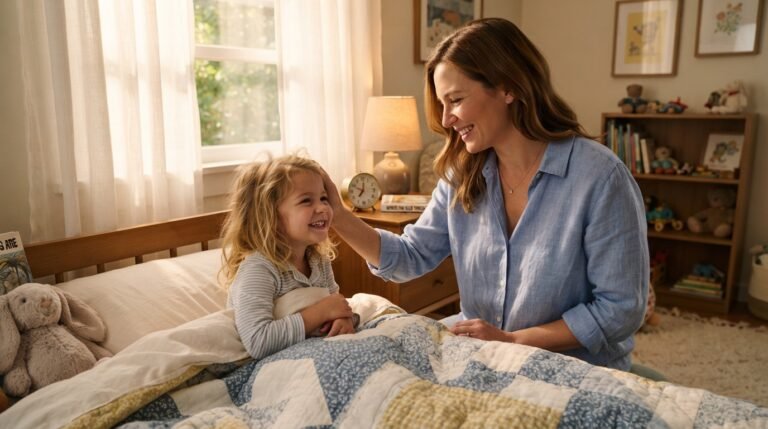
The last step should be short, warm and identical every night. Offer a cuddle, say your special goodnight phrase and turn off the light. A phrase like “Sleep tight, I love you, see you in the morning” works well because it is brief and reassuring.
Leave while your child is calm and drowsy but still awake, so they learn to fall asleep in their own bed. If they ask for one more thing, a gentle “We already did that, it’s time to sleep” is enough. Keep your tone kind and boring.
Here is a sample timeline for an 8:00 p.m. lights-out:
| Time | Activity |
|---|---|
| 7:00 | Screens off, quiet play |
| 7:10 | Light snack and water |
| 7:20 | Bath and pajamas |
| 7:35 | Teeth and toilet |
| 7:45 | Tidy up, clothes ready |
| 7:50 | Stories |
| 8:00 | Cuddles, goodnight phrase, lights out |
Adjusting Your Bedtime Routine for Kids by Age
Your bedtime routine for kids should shift as your child grows: shorter and more physical for toddlers, more independent and conversation-based for school-age children and tweens. The seven steps stay the same, but the length, choices and responsibility change.
Toddlers and preschoolers
A toddler bedtime routine works best when it is short, around 20 to 30 minutes, and filled with simple choices. Toddlers love repetition, so do exactly the same things in the same order. Offer limited options such as “Do you want the bear book or the truck book?”
Many toddlers also need a transitional comfort item, like a soft toy or blanket, in the cot or bed. Check that it is safe for your child’s age, and follow safe sleep guidance for any child under 12 months.
Watch naps. A preschooler who naps too late may resist bedtime, while one who skips naps entirely may become overtired. Try to finish the last nap at least four hours before lights out.
If your child has moved from a cot to a bed, expect some testing. Calmly walk them back, with minimal talk, as many times as needed.
School-age children and tweens
A bedtime routine for school-age children can run 30 to 45 minutes and should give them more ownership. Let them manage their own shower, teeth and bag packing, with you checking in. Reading can shift to independent time, followed by a few minutes of conversation.
Homework, activities and screens often crowd the evening. Set a firm “homework done” time and a device cut-off. Having a charging station outside the bedroom helps tweens resist late-night scrolling.
Talk time matters too. Many children open up at bedtime, sharing worries they held in all day. Ask simple questions like “What was the best part of today?” and “Is anything on your mind for tomorrow?”
Troubleshooting Common Bedtime Struggles
Most bedtime struggles come from a few predictable causes: seeking attention, anxiety or a disrupted schedule. Responding with calm consistency, rather than frustration, usually resolves them within one to two weeks. If you are wondering how to get kids to sleep when nothing seems to work, start with the issue below that fits best.
Stalling, curtain calls and endless requests
Stalling usually means your child wants more connection or more control. Build both into the routine so they do not need to ask. Offer a “bedtime pass” or two, which is a card your child can trade for one request, such as a glass of water or an extra hug.
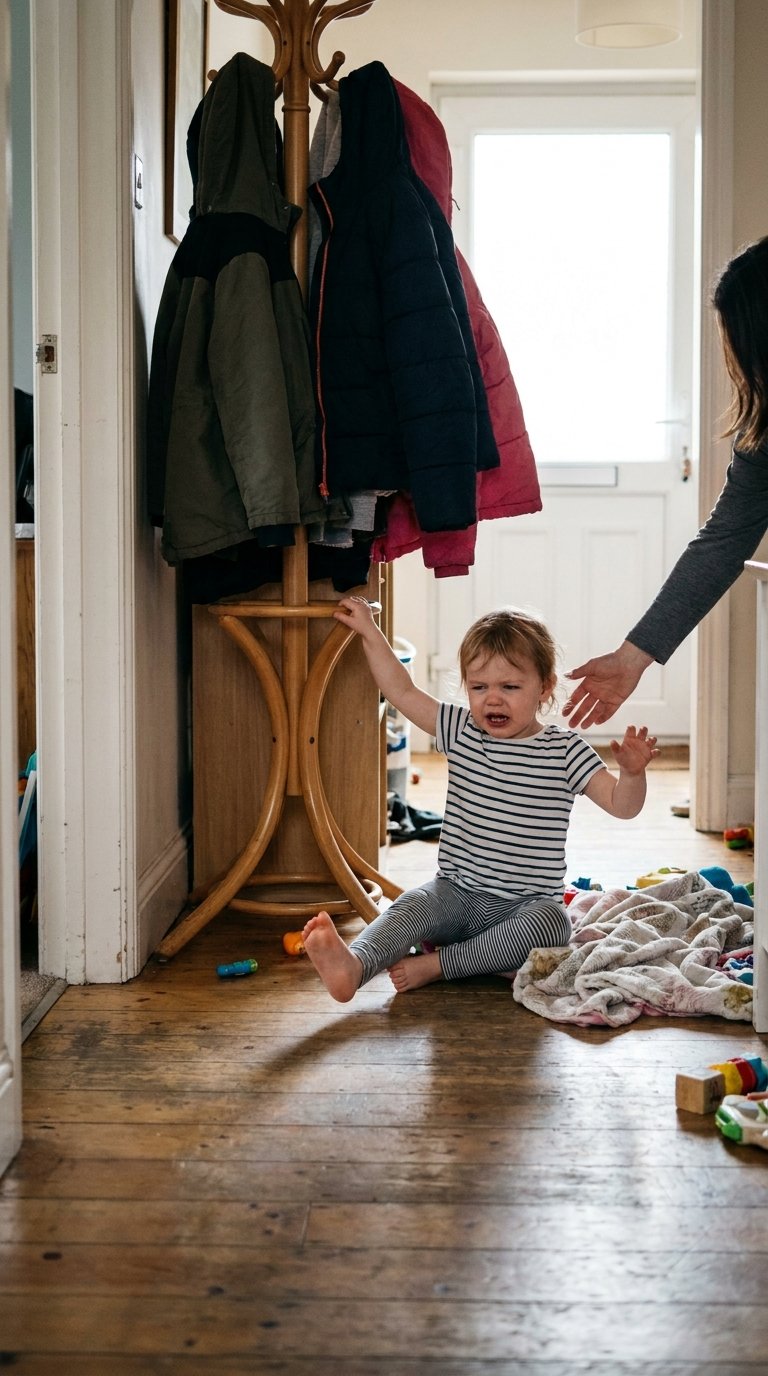
When your child leaves the room, return them with little talking and no big reaction. Boring is the goal. If you respond the same way every time, the behavior fades.
You can also try a “check-in” plan: tell your child, “I’ll come back in five minutes to check on you.” Then do it. Gradually stretch the time as they learn to trust you.
Fears of the dark and separation worries
Fear of the dark is common in the preschool and early school years and is a normal stage of development. Take fears seriously without feeding them. Avoid checking under the bed for monsters, which can confirm that there is something to find.
Instead, try these ideas:
- Use a dim nightlight or a hallway light with the door open a crack.
- Give a comfort object a “job,” like guarding the bed.
- Read books about bedtime fears during the day, not at night.
- Practice a short breathing exercise, such as smelling a flower and blowing out a candle.
If anxiety is intense, lasts for weeks or affects daytime life, talk with your child’s pediatrician.
Getting back on track after holidays or illness
After holidays, trips or sickness, routines slip, and that is normal. Return to your regular wake-up time first, since it anchors the body clock. Then move bedtime earlier by 15 minutes every couple of nights until you reach your target.
During illness, comfort comes first. Allow extra cuddles and flexibility, then restart the routine as soon as your child is better. Expect two or three bumpy nights, and keep the steps familiar.
Making Your Bedtime Routine for Kids Stick
To make a bedtime routine for kids stick, show the steps visually, repeat them consistently and give yourself room for imperfect nights. Habits usually take a few weeks to settle, so patience matters more than strictness.
Use a visual routine chart
A bedtime routine chart is a simple picture or checklist that shows each step of the evening in order. Children, especially ages 2 to 8, follow pictures better than spoken reminders, and a chart lets the paper do the nagging.
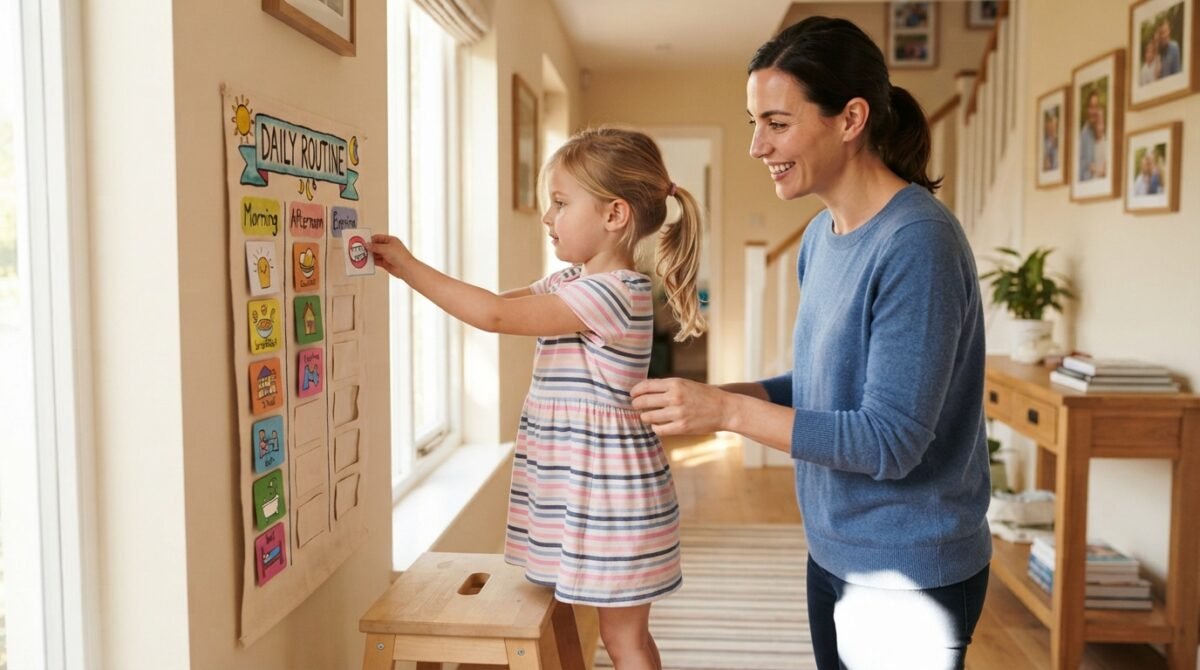
Here is how to make one:
- List your steps, using the seven above or your own version.
- Add a drawing, photo or sticker for each step.
- Place the chart where your child can see it, such as the bedroom door.
- Let your child tick off or move a magnet for each completed step.
- Review it together after two weeks and adjust if needed.
Involve your child in decorating it. Ownership boosts cooperation. Simple praise like “You remembered teeth all by yourself” tends to work better than big prizes.
Stay consistent, flexible and kind to yourself
Consistency means following the same order most nights, not every single night. Aim for about 80 percent and allow for birthdays, late flights and family events. A relaxed evening here and there will not undo your progress.
Be kind to yourself, too. Some nights will end in tears, yours or theirs. Tomorrow is another chance, and your steady presence matters more than flawless execution.
If you have a partner or caregiver, agree on the plan together so your child hears the same message. Share duties by alternating who does bath and who does stories.
For more evidence-based guidance on children’s sleep, visit the American Academy of Sleep Medicine’s sleep education site or the American Academy of Pediatrics’ HealthyChildren.org.
Bedtime Routine for Kids: Quick Practical Summary
A good bedtime routine for kids is consistent, calm and about 30 to 45 minutes long. Pick a bedtime based on your child’s age and wake-up time, then follow the seven steps in the same order every night.
- Prepare: Set a realistic bedtime and make the bedroom dark, cool and quiet.
- Wind down: Turn off screens an hour before lights out.
- Follow the steps: Snack, bath, teeth and toilet, tidy up, stories, then cuddles and lights out.
- Adjust: Shorten the routine for toddlers and add independence for older children.
- Support: Use a visual chart and respond calmly to stalling.
Your next step: tonight, write down your seven steps, pick a lights-out time and start with just the first two. Add the rest over the coming week. For more simple, family-friendly guides, explore the rest of the articles on Simple Family Everyday.
Frequently asked questions
What is a good bedtime routine for kids?
A good bedtime routine for kids is a short, predictable sequence of calming activities in the same order each night. A typical version includes a light snack, bath, pajamas, teeth, a toilet visit, stories and a goodnight cuddle. What matters most is repetition and a calm atmosphere.
How long should a bedtime routine for kids take?
Most routines take about 20 to 45 minutes. Toddlers do well with 20 to 30 minutes, while school-age children may need 30 to 45. Longer routines tend to drift into stalling, so keep each step brief.
What time should kids go to bed?
It depends on age and wake-up time. Count back from the morning using the recommended sleep range, such as 10 to 13 hours for preschoolers and 9 to 12 hours for school-age children. Many families land on a bedtime between 7:00 and 9:00 p.m., depending on the child.
How do I get my child to stay in bed at night?
Make the routine predictable, include a final toilet and water break, and set clear expectations. When your child gets up, walk them back calmly with minimal talk, every time. A bedtime pass or a short check-in plan can also reduce repeated trips out of bed.
When should I stop screens before bedtime?
Turn screens off about one hour before lights out, and keep devices out of the bedroom overnight. Replace them with quiet activities such as puzzles, colouring or stories. If an hour feels hard at first, start with 30 minutes and extend it gradually.