
Why Working Moms Get Overstimulated Too
You’re at the door, juggling your laptop bag and a buzzing phone, while your 7-year-old bounces with stories to tell. This is what working mom overstimulation feels like.
Everything blurs into one loud moment. Too much.
The overstimulation echoes in your head, tightening your chest. It’s an exhausting cycle that many working moms find themselves caught up in, day after day.
The sound of dropped shoes, the kitchen counter cluttered with schoolwork and mail—it all feels never-ending.
It’s a mixture of physical clutter and mental noise that combines to create a perfect storm of sensory overload.
We’ll look at why working moms also get overstimulated too and practical steps to calm the chaos.
What helps with working mom overstimulation in real life
Key Takeaways
The short version you can come back to quickly.
- Start with the single change that removes the most friction — not the most comprehensive system.
- Match the approach to the current energy level and age stage, not to the ideal version of the day.
- Adding more rules on top of a broken setup makes the load heavier when real life gets busy.
- If the improvement disappears after a week, the friction point came back — not the child.
Why Overstimulation Hits Hard

Your brain is processing input from multiple sources, leaving little room to decompress.
Every notification, every request from your child, every unfinished task adds to the cacophony inside your mind.
At 7, your child is more communicative and active, requiring more of your attention and interaction.
They are at a stage where they are constantly learning and eager to share every experience with you.
While this is wonderful, it can also be incredibly taxing when you’re already stretched thin.
It’s not about failing to manage; it’s about handling an overloaded sensory system.
Understanding that feeling overwhelmed doesn’t mean you’re not competent can be the first step to addressing the issue.
Here are some steps to help manage this:
- Identify Your Triggers: Notice what sets off feelings of overstimulation, whether it’s specific tasks or times of the day.
- Create Buffer Zones: After work, take 10 minutes for yourself to transition before engaging with family life.
- Practice Mindfulness: Stay present in the moment and use deep breathing to ground yourself when things feel too much.
When Dinner Time Feels Like a Circus

It’s too much. You walk in the door and barely kick off your shoes before it hits.
The best parenting improvements usually come from a simpler system, not a more complicated promise.
The chaos swells the moment you step foot inside. It’s as if the air itself vibrates with the demands of both work and home life.
The chaos. The noise isn’t just audible; it’s something you can feel. It’s the emotional weight of having to be present and productive in two places at once.
You’re not even in the kitchen yet, and everything is already too loud—emails dinging, your child chatters endlessly about the day’s events, and you’re supposed to magically turn ingredients into dinner.
The refrigerator hums, another layer of noise.
This isn’t failure; it’s just overload.
It’s important to remember that this sense of overwhelm isn’t a reflection of your ability to handle responsibility; it’s a testament to how much you juggle.
As you step into the kitchen, a pile of laundry mocks you from the hallway. The pressure mounts.
There’s a mental list ticking in your head that seems infinite: the dog needs walking, the car needs gas, upcoming birthdays to plan for.
You’re torn between listening to your child and responding to work. It’s a tug-of-war between the need to provide and the need to nurture.
The way your kid’s voice rises with excitement makes you want to listen, but your phone interrupts with a buzz.
You’re caught in a crossfire of priorities, and all you want is a moment’s peace to figure it out.
You feel the tension in your shoulders. Your head spins. You need to recalibrate, but there seems to be no time to breathe.
Here’s what’s really happening: you’re overstimulated. It’s hard to separate work from home demands, and the noise level feels relentless.
Your nervous system is barraged by inputs, both emotional and sensory.
But you need a break, even if just for a moment. So, take a breath. Remind yourself: it’s okay to pause.
Turn on some calming background music. It won’t solve everything, but it lowers the noise. It helps create a thin barrier between you and chaos.
Ask your child to help with dinner, turning their stories into part of the routine. Let them stir the pot or wash veggies.
Involving them gives you both a shared purpose, a small anchor in the storm.
You’re not ignoring them; you’re inviting them in. This doesn’t just keep their hands busy; it connects you both through a shared task.
It’s a teaching moment, wrapped in the guise of simple chores.
You need this small calm. It’s an essential respite, a chance to recharge—even slightly.
- Lower the noise first. Diminish the auditory clutter to focus on engagement rather than survival.
- Say less. Use fewer words to conserve energy and reduce cognitive load.
- Take five minutes. Step outside, stretch, and breathe deeply before reengaging with your family.
Notice the shift. The kitchen feels a bit quieter, less chaotic. The air might still be busy, but now it’s approachable.
This isn’t perfect, but it’s better. Your child’s voice softens with the focus on helping. Their presence becomes less frenetic and more soothing.
When the world presses in too hard, having a little structure helps. Your system needs this. It’s a subtle, yet vital rhythm to carry you through.
Invite your child into dinner prep. It’s a simple, practical move but very effective.
Keep reminding yourself, nothing is wrong with you. It’s okay if dinner takes a bit longer, or isn’t gourmet.
The connection is key.
Parent note: It’s okay if dinner is a little late; the peace is worth it. These moments of calm are investments in your well-being.
Why Work Emails Can Wait

Pinging notifications hit you like tiny hammers. There’s a budget meeting tomorrow, a project update needed, and “Can you double-check this report?” Too much.
| Situation | Quick approach | When it works best |
|---|---|---|
| Low energy day | One simple visible step | After school, before dinner |
| High sensory load | Reduce input first, then act | Transitions and bedtime |
| Repeated behaviour | Change the setup, not the response | Evenings and mornings |
| Strong resistance | Give one real choice, not instructions | When control is the underlying issue |
You feel like a traffic cop, amid the chaos, trying to direct these responsibilities in real-time.
Your brain feels outside itself, and there’s just too much noise. Right as your kid is trying to share something about their day.
You’re at a crossroads of priorities, and your bandwidth is maxed.
Not now. You think, a common sentiment so many parents feel when work demands collide with family needs.
This chaos sucks the energy right out. The buzz of emails feels urgent, but the reality often is that they can wait. Remember, no crisis will unravel in ten additional minutes.
Work shouldn’t overtake that living room conversation about a scraped knee or your child’s excitement over their latest Lego creation.
That scratch will heal, but your reaction teaches them resilience.
These precious moments quietly slip by for the sake of inbox zero. Your system is done. The internal barrage is only compounded by trying to meet self-imposed expectations.
So, what do you do? Set boundaries. Establishing limits helps regain control over your environment.
Once home, commit to checking emails post-dinner. Leave the phone on the hallway table. This gesture, while small, redraws the line between work and home.
Start there. Remember, those emails will still be there after you’ve tucked your child into bed.
Rest assured, the world does not stop turning because you disconnected for a few hours.
Here’s how to make it happen:
- Lower the noise first. Mute both digital devices and internal expectations.
- Mute your phone during dinner. Silencing notifications during meals brings a focus to who matters most.
- Explain to co-workers your new boundaries. Communicate these practices to those around you to underscore their importance.
- Enjoy hearing about your child’s day. Envelop yourself in these candid moments, for they are fleeting.
Activating this boundary transforms family time. You regain the ability to focus truly on your child’s stories and happenings.
Your reality shifts from fractured attention to genuine presence.
You prevent work’s stress from seeping into these valuable interactions. This is not failure. It’s a courageous choice for personal well-being and for nurturing bonds.
It’s a choice to prioritize presence when everything else demands your attention. It’s about reclaiming your time and space.
Remember, parenting is filled with these kinds of choices. It isn’t about perfection.
It’s about finding your rhythm and adjusting when necessary. Every decision helps shape the life you want for yourself and your family.
Parent note: Emails can wait, but the chance to hear about your child’s day won’t always be there. Placing importance on the present fosters deep roots for the future.
Finding Quiet in the Noise

You want to relax after dinner, but the volume of life at home hits you too hard. Even when the chaos subsides, the echoes remain.
Your child’s laughter fills the room, yet the toys crash to the floor and the TV shouts in the background. It’s all too much.
Even joy becomes overwhelming against a backdrop of persistent noise.
Your mind aches for quiet. But where is it? It feels elusive in a home bustling with life and energy.
The pressure builds. You feel it in your shoulders and chest. It’s a heaviness that ebbs into your bones, speaking of the day’s unmet expectations.
You need sanctuary, a moment without noise. That’s the real issue. A place for solitude to set in, if only momentarily.
The overstimulation isn’t just about your environment—it’s how your body reacts to it. Your physiological responses are every bit as real as your environmental triggers.
Here’s what you can do. Create a ‘quiet corner’ in your living space. A place dedicated to finding the peace you long for.
This isn’t about aesthetics; it’s about sanity. Use a floor cushion, a soft lamp, and a small stack of books. Surround this haven with things that soothe rather than stimulate.
Add in one beloved item, like a worn stuffed toy. Make this a recurring ritual, starting right after dinner when chaos peaks. It’s not just a corner; it’s a promise of relief.
Lower the noise first. Turn off the TV. Pick a book to read together in your little oasis. Say less, just enjoy the calm. Here are a few steps:
- Lower the noise first. Reduce auditory burdens, allowing the slivers of calm to expand.
- Pick one thing. Focus on a single, gentle interest to transport your mind to a better place.
- Say less. Use the quiet as mutual understanding rather than filling space with words.
- Take five minutes. Five intentional minutes of silence can become the cornerstone of an evening routine.
This is not failure. It helps when the day feels endless. This small intervention can change the course of an evening.
Quiet corners give your nervous system a breather. You align, both your heartbeats slowing. The reduction in chaos isn’t perfect, but it’s peaceful.
Even if it’s just ten minutes, it matters. Ten minutes don’t erase chaos, but they reset your mind. A brief lull amid an expectant day.
Your child may resist at first, but consistency will transform this into a quiet habit. That’s okay.
Nothing is wrong with you. You’re a working mom looking to breathe.
Your heart is big enough for learning curves.
Parent note: This space becomes your little sanctuary, even if it’s just for ten minutes.
Those ten minutes are a gift to yourself, an acknowledgment that your needs matter too.
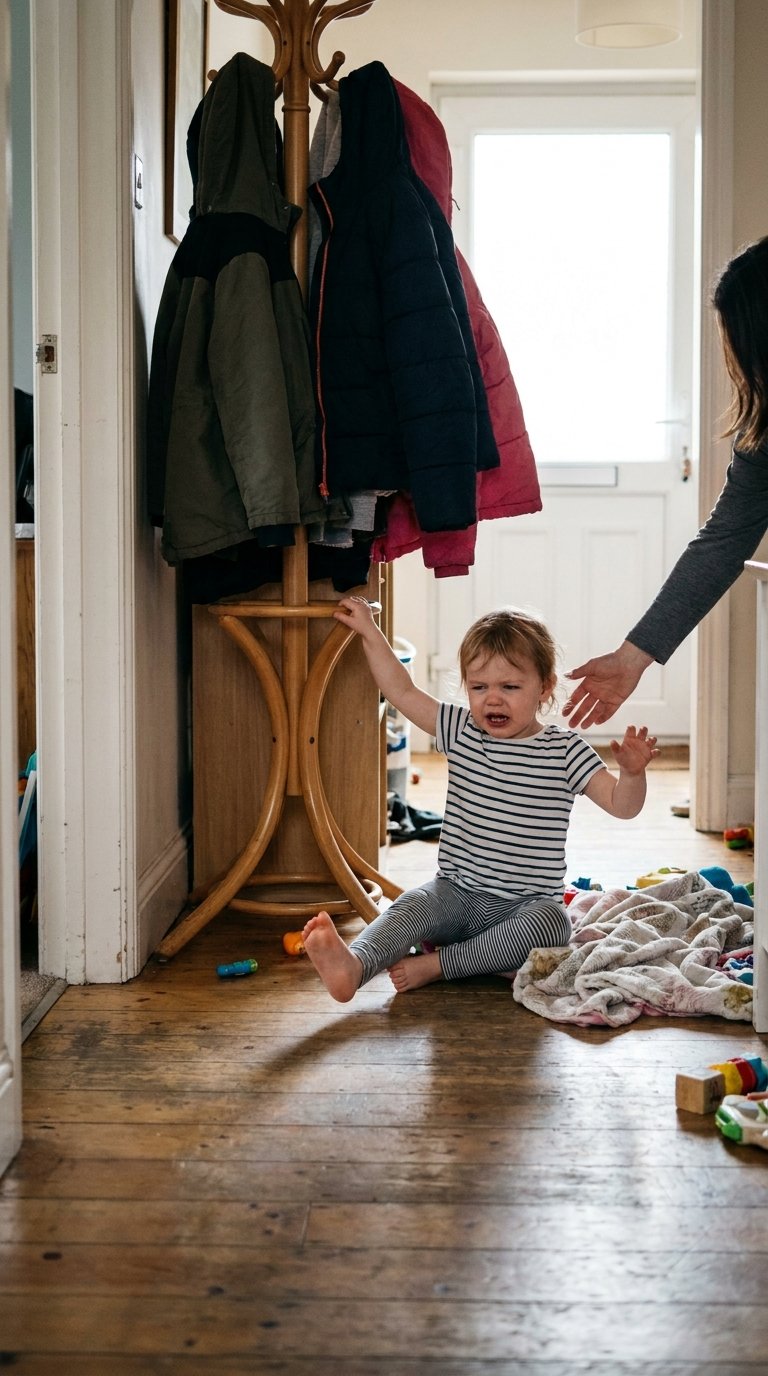
Handling That Sudden Emotional Meltdown

You hear the sobs start out of nowhere. Your patience feels wafer-thin. You’ve used up all reserves on juggling this day’s myriad tasks.
Again. It’s the end of a long day, dishes still in the sink, and your 7-year-old is crying because their favorite socks are in the laundry.
It feels like the last thing you can handle, yet here it is.
This is overstimulation. Yours, and theirs. It’s a shared experience, albeit from differing perspectives.
It’s not about socks. Not really. The meltdown is merely a symptom, not the core.
Maybe it’s the noise from the TV blasting in the background, the leftover crumbs under the dining table, or your child feeling the struggle of balancing school and their first-grade friendships.
Each small stressor builds until it can’t be contained.
It’s overload. Both your emotional bandwidths are spread too thin, leading to this very moment of collective breakdown.
So, what now? You need a moment. It’s an invitation to pause, regroup, and approach the situation with fresh eyes.
Breathe deeply. Then, get down to their level. Physically lowering yourself can change the dynamics and set a stage for empathy.
Sitting on the floor next to them feels different, closer. Hug them if they let you. It establishes a shared space where comfort can take root.
Words can wait. Just being there matters, showing you’re in it together—no explanations needed right now. Sometimes presence is more powerful than words.
When does this help? When everything feels too much too suddenly.
This is not failure. It’s a pause—a chance for both of you to let emotions settle.
This mutual decompression allows room for strides forward.
For your own sake, try a simple list:
- Lower the noise first. Keep environments calm to offer solace.
- Pick one thing. Focus on a singular action to alleviate both of your emotional burdens.
- Say less. Embrace the quiet care of companionship.
- Take five minutes. Five quiet minutes as a bridge from chaos to comfort.
It’s not perfect. You’re not perfect. But you’re not alone in this. Each struggle shared strengthens the bonds between you and your child.
Parent note: Sometimes, words aren’t needed; just being there is enough. This nonverbal bond speaks volumes.
Establishing a Routine That Respects Your Energy
Evenings shouldn’t always feel like chaos. When dinner plates still hold crumbs and socks disappear under the couch, it’s time to find a calming way forward.
A realignment that can transform the twilight of your daily routine.
That overwhelming rush to bedtime? It can shift with a shared evening routine. A tapestry of small rituals can steer collective energies towards calm.
It’s crucial to acknowledge why night routines become a blur. As day winds down, adults often feel depleted; their experiences at work and home leave them overstimulated.
Children, too, are susceptible to this evening energy, although expressed differently.
Too much. Your toddler’s lively chatter and demands can push your patience to its edge. You crave a moment of quiet just as their vitality peaks.
You snap. Strong emotions burst forth, and the cycle of overstimulation perpetuates.
A structured evening plan can create a sense of order, reducing overstimulation. It doesn’t have to be elaborate. It’s about consistency more than complexity.
Pick one calming activity that fits your evening. Maybe it’s reading a beloved bedtime story or a warm bath in the evening’s bath steam. Routines needn’t be grand, just grounding.
Start there. Let it become a touchpoint between you and your child. The thread that unwinds the day cohesively for both.
Here’s how to make it work:
- Lower the noise first. Silencing external chaos aids internal peace.
- Pick one thing. Focus on the strength of a repeated soothing activity.
- Say less. Use moments of silence to simmer into tranquility.
- Take five minutes. Invest in several minutes of calm to counter the day’s demands.
You’ll notice this routine helps when your energy feels tapped out. It gives closure to your day.
Routines fortified with predictable calm offer scaffolding when you’re most vulnerable.
More predictability means less chaos as bedtime nears. Relief starts to seep in. Relief from demands you may not even recognize you’re carrying.
Nothing is wrong with you. You’re managing a lot. You’re calibrating amidst chaos, exploring limits, and embracing imperfection.
Remember, it won’t be perfect every night. The aim isn’t perfection. Just a little less scramble. Each small calm can untangle tense endings.
Parent note: The routine may not be flawless every night, but it gives you something to lean on. This isn’t about immediate perfection, but sustainable sanity.
Frequently Asked Questions
Quick answers for the most common sticking points.
What is the most important first step with working mom overstimulation?
Start with the one change that removes the most friction in the shortest time, not the one that sounds most comprehensive.
How long before I see a difference?
Most parents see a noticeable change within three to five days of consistent application — long before most systems claim to deliver results.
What if it stops working after a week?
Check whether the environment changed, not the child. The most common cause of regression is an unaddressed friction point returning after the initial effort wore off.
Does this work for all ages?
The core approach works across ages, but the exact step needs to match the developmental stage. What works for a toddler usually needs adjusting for a school-age child.
Quick Action Plan
- Pick one clear priority from this guide for working mom overstimulation.
- Apply one change before adding anything else.
- Review after three days: what improved and what still adds friction?
Learn more: family time.