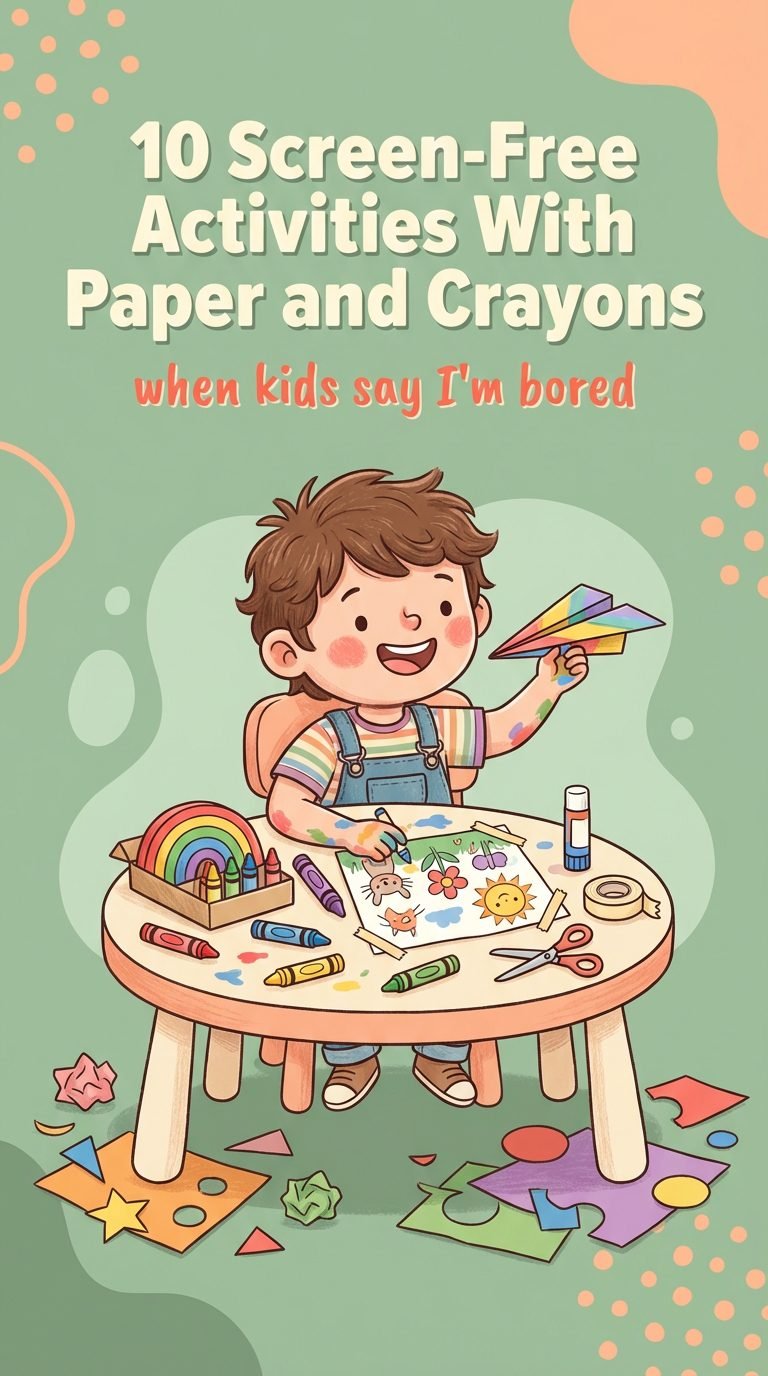
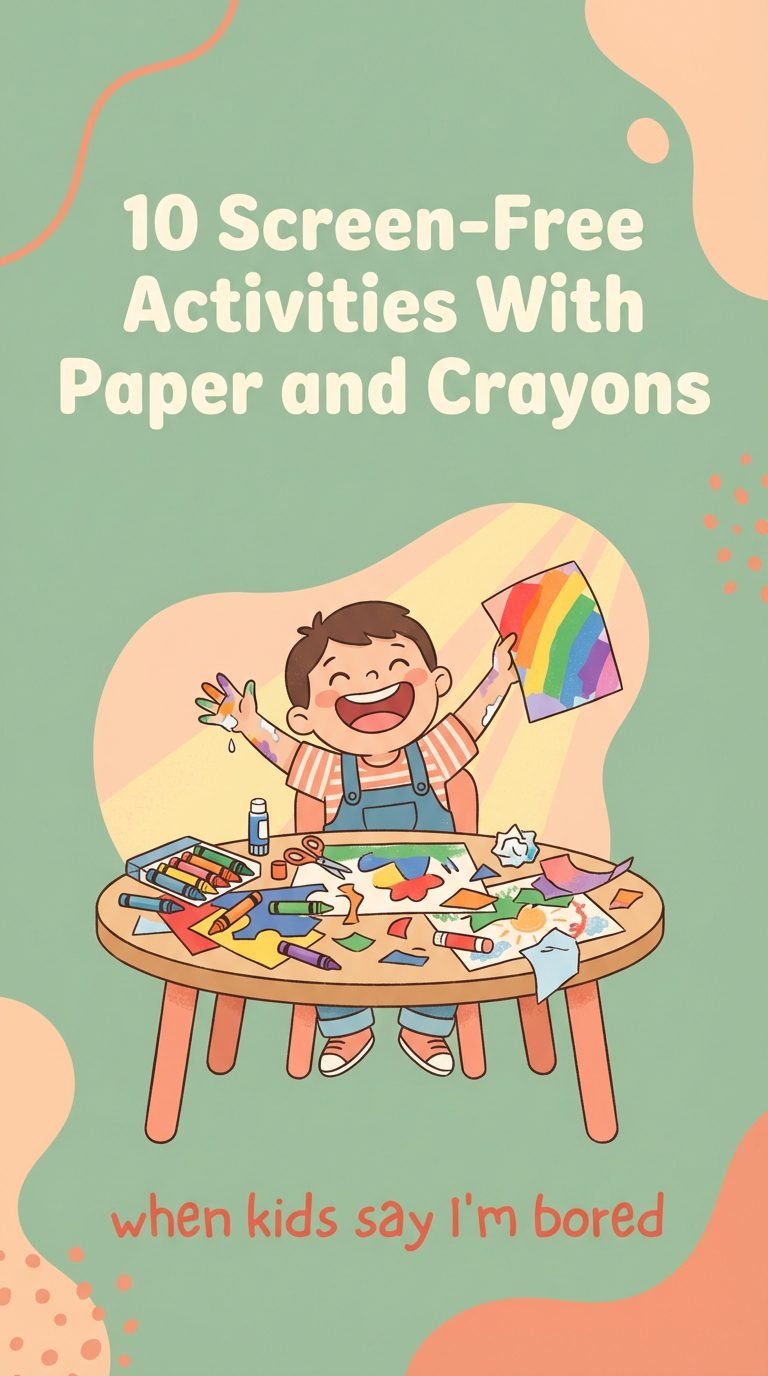
10 Screen-Free Activities With Paper and Crayons for Creative Fun
Why Do Kids Need Screen-Free Activities?
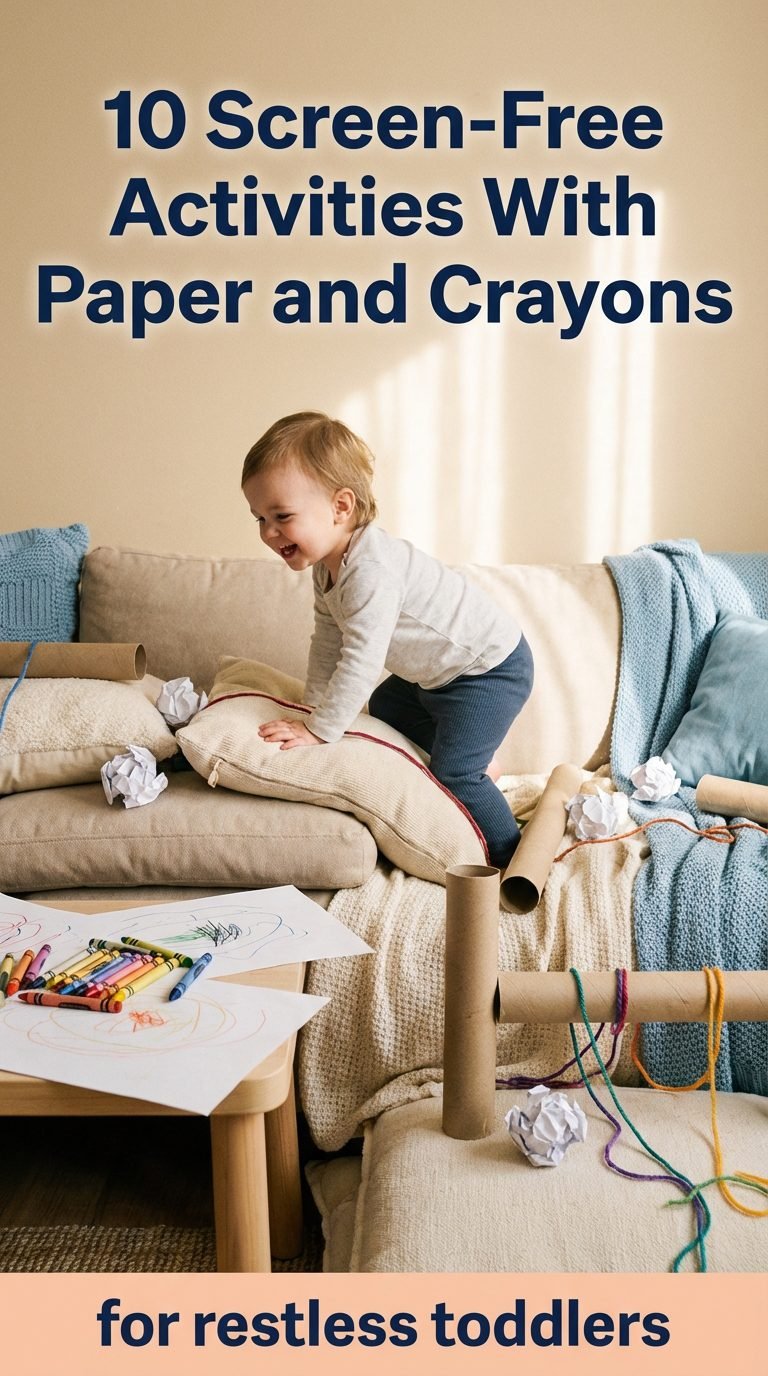
Screen-free activities are essential for children’s development. They promote creativity and help kids engage with the world around them. By limiting screen time, children can improve their focus, social skills, and imaginative play.
Finding the right screen-free activities with paper and crayons ideas can feel overwhelming at first. However, with a little guidance, it becomes much easier to get started.
Finding the right screen-free activities with paper and crayons ideas can feel overwhelming at first. However, with a little guidance, it becomes much easier to get started.
1. Create A Simple Craft Station
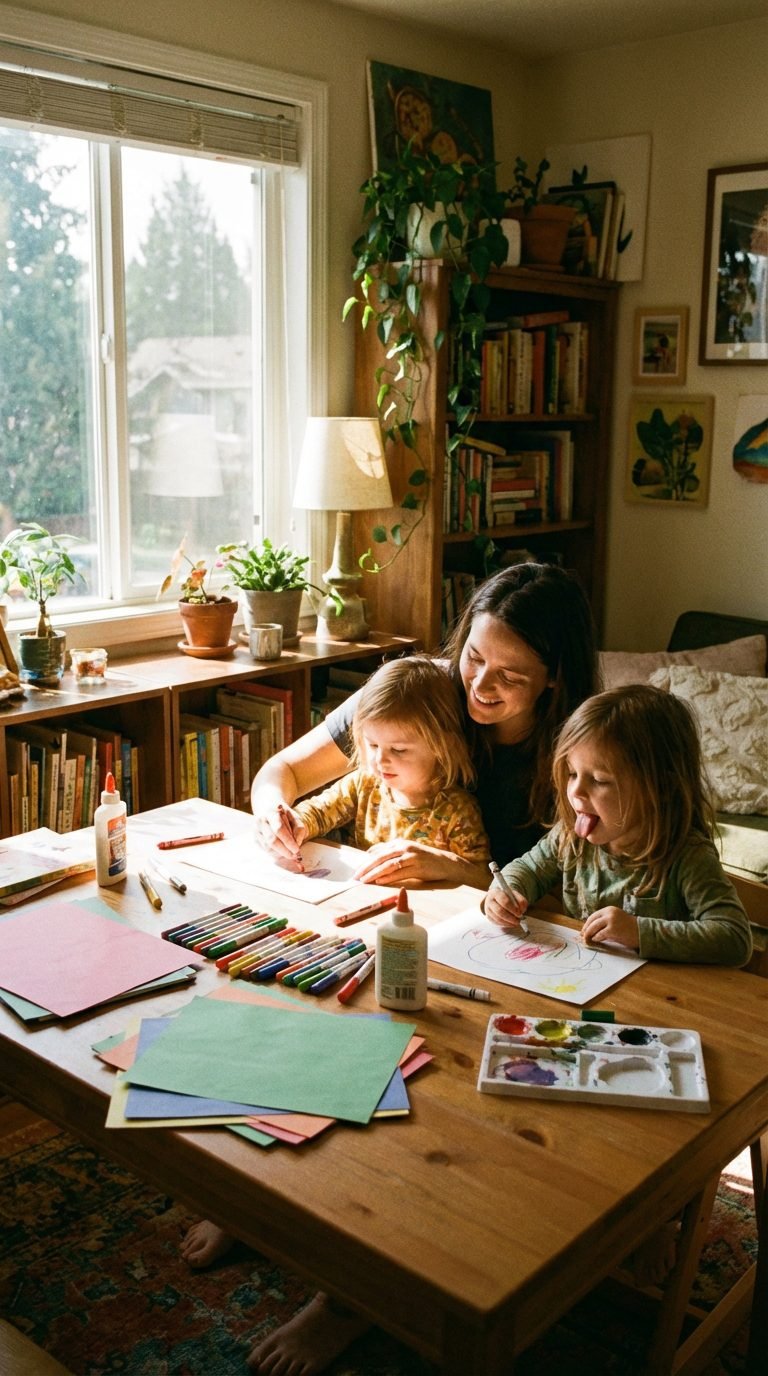
Set up a designated area in your home where kids can access paper, crayons, and other crafting supplies. This space can be as simple as a small table with organized bins. Encourage your children to explore their creativity without the constraints of screens. You can rotate materials regularly to keep their interest alive and spark new ideas. Let them know this is their creative corner, and watch as they dive into imaginative projects.
2. Build An Indoor Obstacle Course
Use paper and crayons to create signs or markers for an indoor obstacle course. Kids can draw their path, design challenges, and even make awards for completing the course. This activity combines physical movement with creativity, allowing them to express themselves freely while having fun. You can use cushions, chairs, and other household items to create various obstacles, making it an exciting adventure.
3. Host A Drawing Contest
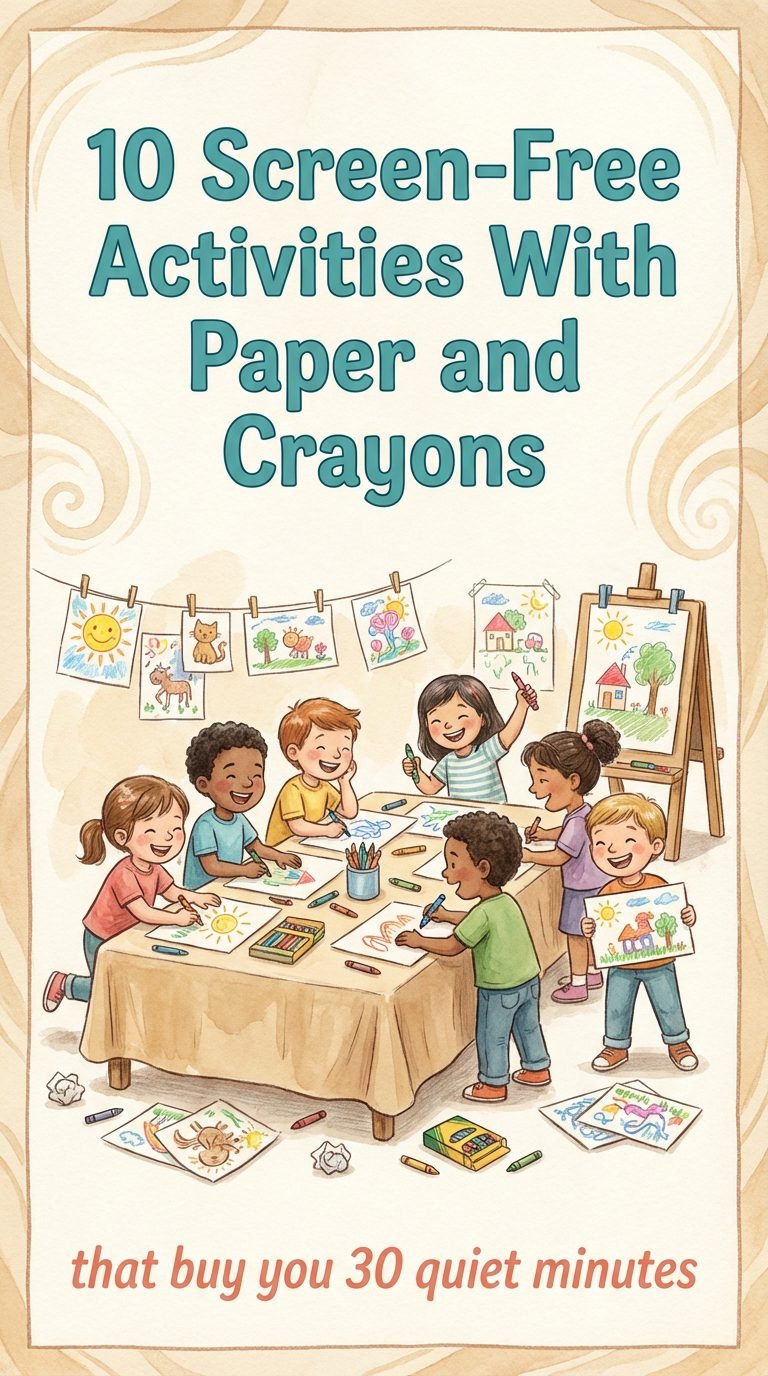
Invite your kids and their friends to participate in a friendly drawing contest. Choose a theme, such as animals or outer space, and set a timer. After the time is up, everyone can showcase their artwork. This not only fosters creativity but also encourages social interaction and healthy competition. Consider offering small prizes for different categories, like ‘Most Creative’ or ‘Best Use of Color’. It’s a great way to bring everyone together!
4. Make Greeting Cards
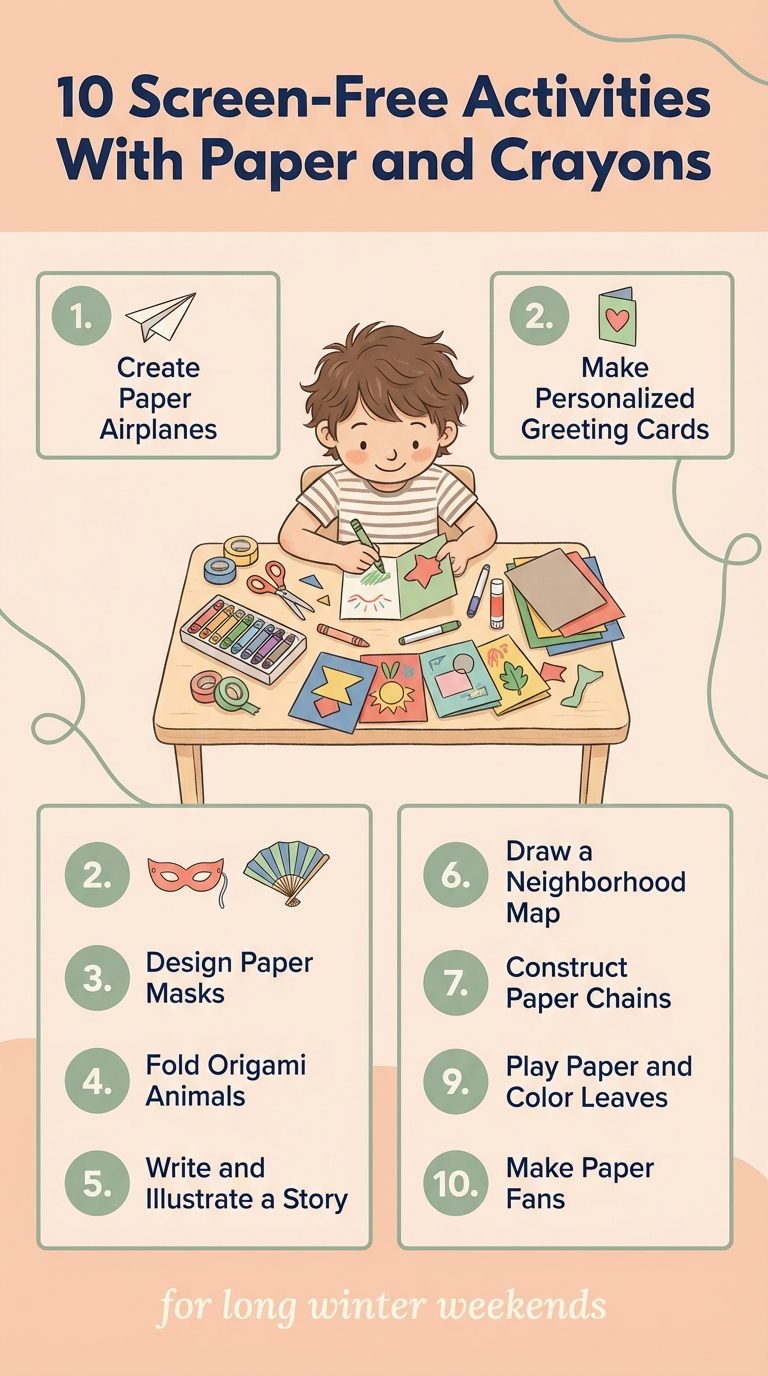
Encourage your kids to create greeting cards for family and friends. They can use their artistic skills to design the front and write heartfelt messages inside. This activity teaches empathy and the joy of giving, as children learn the importance of connecting with others through simple gestures. Plus, it’s a fun way to practice writing and drawing!
5. Create Storyboards
Have your children create storyboards using paper and crayons to tell a story. They can draw scenes and characters, allowing them to visualize their narratives. This activity not only enhances their storytelling skills but also sparks their imagination. Encourage them to share their stories with you or even act them out, adding an element of performance.
6. Explore Nature Art
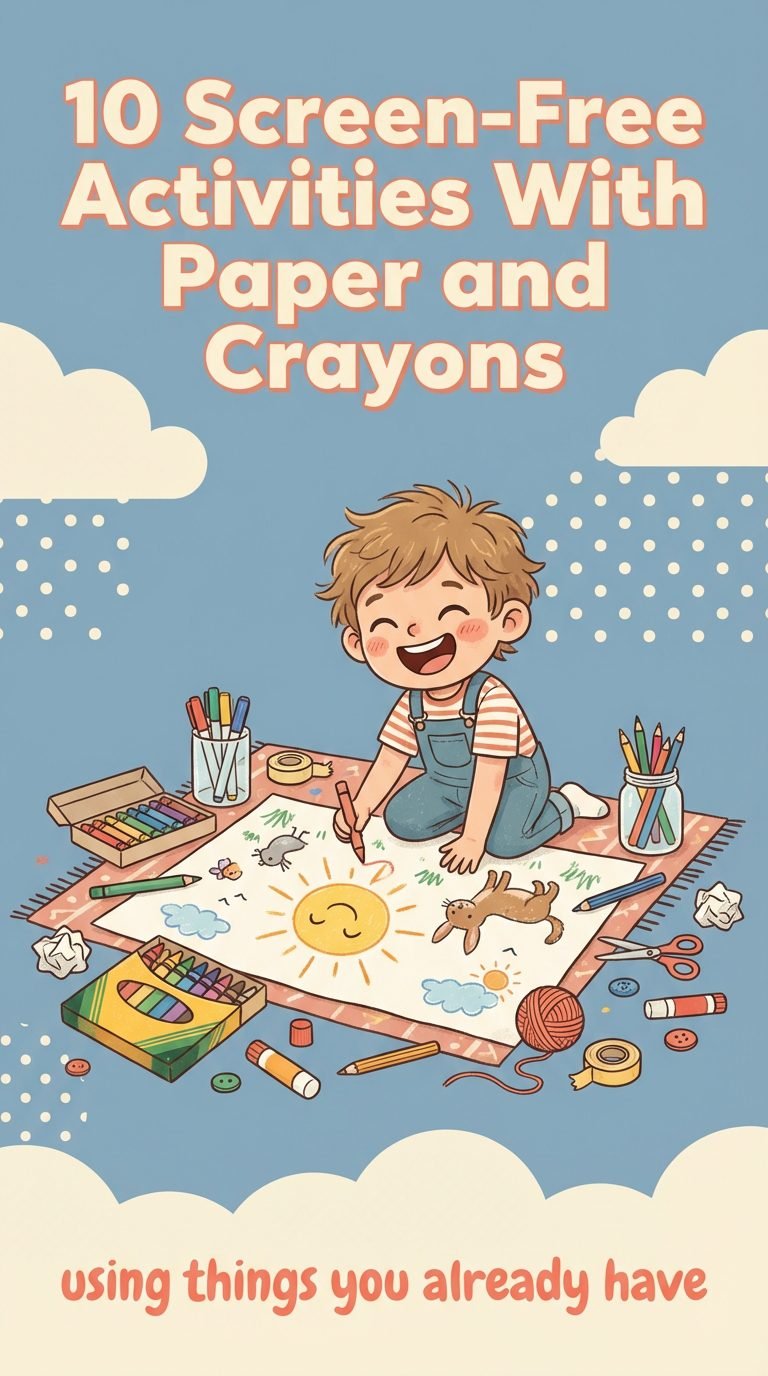
Take a nature walk and collect leaves, flowers, and other interesting items. Once back home, your kids can use these materials as inspiration for their art. They can draw the items or create collages using them. This activity connects them with nature while fostering creativity and artistic expression. It’s a great way to learn about the environment too!
7. Design A Family Art Gallery
Set up a space in your home where your kids can display their artwork. They can curate their own exhibitions, deciding which pieces to showcase. This not only boosts their confidence but also helps them appreciate art. You can rotate the displayed pieces regularly to keep the gallery fresh and exciting. Invite family members to visit the gallery, making it a fun event!
8. Craft Recycled Art Projects
Use recyclable materials to create art projects. Gather items like cardboard, plastic bottles, and old magazines. Let your children use their imagination to transform these materials into new creations. This activity teaches them about sustainability while encouraging creativity. It’s a win-win situation, as they learn the value of recycling and artistic expression!
9. Create A Family Scrapbook
Start a family scrapbook where your kids can draw pictures and write memories. This project allows them to document special moments and express their feelings creatively. Encourage them to personalize the scrapbook with colors and designs that reflect their personalities. It’s a wonderful way to bond as a family while preserving memories for years to come.
10. Organize A Themed Art Day
Plan a themed art day where your kids can explore different artistic styles or cultures. Provide materials related to the theme and encourage them to create art inspired by it. This activity broadens their horizons and introduces them to various forms of expression. It’s a fun way to learn about art history while engaging in hands-on creativity.
In conclusion, incorporating screen-free activities with paper and crayons into your child’s routine can significantly enrich their development. By fostering creativity and providing engaging experiences, you can help them explore their imagination and develop valuable skills. Encourage them to try new things, and remember, every small change can make a big difference.
Frequently Asked Questions
Why are screen-free activities important for kids?
Screen-free activities encourage creativity, improve focus, and enhance social skills, allowing kids to engage with the world around them.
What materials do I need for these activities?
You’ll primarily need paper and crayons, but you can also include markers, scissors, and glue for added fun.
How can I encourage my child to participate in these activities?
Create a dedicated craft space, set a good example by participating yourself, and make it a fun family event.
Are these activities suitable for all age groups?
Yes, many activities can be adapted for different ages, from toddlers to older kids, enhancing their skills at every level.
How long should we spend on these activities?
Aim for 30 minutes to an hour, depending on your child’s interest and attention span.
Can these activities help with my child’s development?
Absolutely! They promote fine motor skills, creativity, and cognitive development through hands-on engagement.
What if my child doesn’t enjoy drawing?
Encourage exploration! They can use crayons for coloring, crafting, or even making collages with different materials.
How can I incorporate learning into these activities?
You can mix in educational themes, like colors, shapes, or storytelling, to make learning fun and interactive.
Browse more ideas on our site.
According to the American Academy of Pediatrics, balanced screen habits support healthy child development. For more ideas, check out parenting tips and expert advice. Learn more: child development. Learn more: child development.