
9 Screen Free Bedtime Routine Ideas for Kids for Better Sleep
The clock hits 8:00 PM, and it feels like you’re walking through a toy store with a floor for a living room. Meanwhile, your 7-year-old is tethered to their tablet, seemingly unbothered by your gentle bedtime reminders.
It’s like navigating bedtime through a sea of resistance, knowing the allure of screens is robbing them of restful sleep.
The perpetual glow of gadgets can severely interfere with the body’s natural inclination toward sleep as they emit blue light, which impacts the production of melatonin, a hormone crucial for sleep.
We’ve wrestled with this too, and though exhaustion is whispering in your ear, your heart hopes for a solution.
An effective screen free bedtime routine for kids might be your best ally, gradually transitioning them from the buzz of daily activities into a peaceful slumber.
Picture seven peaceful nights ahead with a screen free bedtime routine for kids, transforming chaos into calm and paving the way for sweet dreams—for both them and you.
1. A Gentle Stretching Routine

Is your 7-year-old bouncing with energy, resisting the very idea of bedtime? Engage them in a stretching routine. On the bedroom carpet, right where it feels comfy and inviting, guide them through some gentle stretches.
Initiate this right after dinner as a signal that the day is gradually winding down. Stretching not only relaxes their muscles but also sets a serene atmosphere, gently guiding them towards sleep.
It might start with simple poses, but you’ll notice how quickly it becomes a much-anticipated ritual.
Incorporate calming music to enhance the mood, filtering out any latent energy. The act of focusing on their body movements, paired with a soothing rhythm, can effectively transition their minds from high alert to calm.
- Butterfly stretches
- Gentle neck rolls
- Cat-cow poses
This could transform the nightly struggle into a soothing ritual, offering a chance to unwind and chat about their day. Plus, it’s a shared ritual that brings the two of you closer, intertwining physical calming with quality bonding.
Bonding through movement opens avenues for conversations you might not have during the hectic day.
Parent note: I never thought my kid would take to yoga, but seeing them unwind changed our evening routine. There’s an unexpected joy watching them transition so fluidly from bouncing around to settling calmly into their bedtime.
This practice has become as much a part of our evenings as brushing teeth.
2. Create a Bedtime Story Adventure
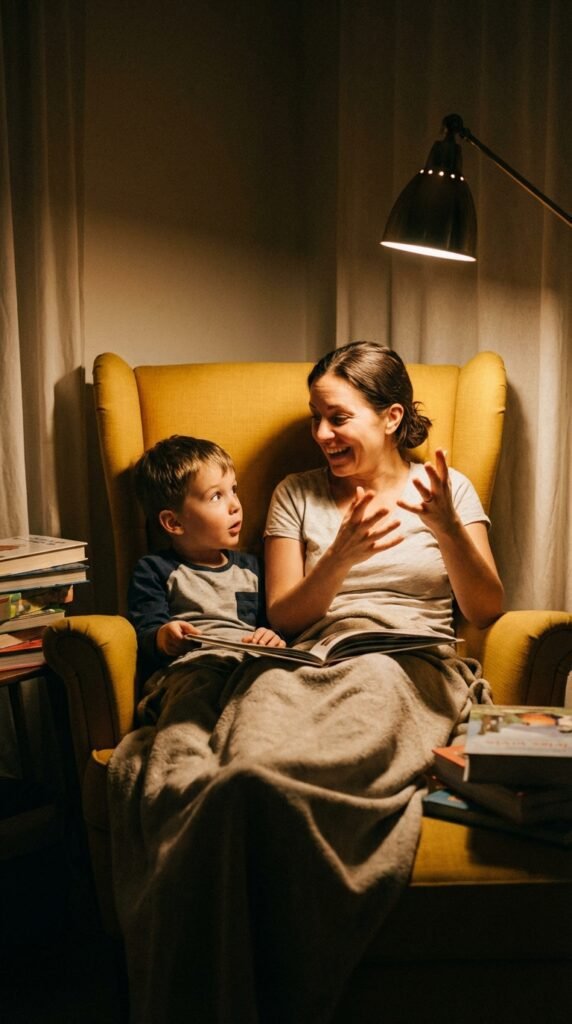
If your child’s imagination is still tethered to the worlds of their video games, crafting a bedtime story adventure could be the ticket. Let them pick the characters and plot twists, making the tale uniquely theirs.
This creative engagement pulls them from the idea of a static digital environment into a dynamic narrative where they hold the reins. Invitation to imagination fosters their creativity and produces excitement rather than resistance when it’s story time.
Gather on the bed after they’re in pajamas to embark on this imaginative journey. It’s a delightful way to pull focus from the screen, steering them gently into a dreamy state.
Engage their senses further with voices or sound effects, transforming simple sentences into live adventures.
Even involve silly voices or props that relate to their adventure, adding layers of fun that screens simply cannot replicate. This kind of interaction taps into their craving for play without needing a screen to do so.
Their involvement keeps them engaged, offering a delightful way to wind down while you share some giggles and close moments. These narratives, although sometimes embellished, become special memories your child will cherish.
Over time, these stories blend with real-life adventures, enriching their childhood experiences.
Parent note: Our stories sometimes veer into the absurd, but the laughter and connection are worth every mixed-up storyline. It’s the shared gasps and giggles that carry us both into sleep.
It’s amazing how much these tales reflect her inner world and budding personality.
3. A Calming Bath Time

If they’re still racing around like they’re on a playground, a calming bath could be the magic potion. Run a warm bath, added with a dash of lavender bubbles for that calming touch.
The soothing properties of lavender can significantly aid in relaxation, signaling to the young brain that it’s time to wind down.
The warm water is not only relaxing to their muscles, but it also creates a clear divide between active playtime and restful evening.
Start about an hour before bedtime. The relaxation from the warm water and soothing scents helps cue the body to ease into a restful mode.
While they’re soaking, incorporate some gentle music or a soft lullaby. This creates a calm auditory environment that prepares their minds for bedtime.
Dim the lights and use a few candles to create a spa-like atmosphere. This sensory immersion provides a tranquil environment, away from daily noise.
Beyond calming your child, it offers them a sensory escape that gently lowers the curtain on the day. Educating them on self-care can be as soothing as it is educational.
Parent note: We dim the lights and use a few candles—it feels like a mini spa session right at home. The shift from a busy atmosphere to silence with gentle splashes lulls her into a peaceful night.
This ritual helps me unwind too; a little shared peace sounds like tiny bubbles bursting to life.
4. Engage in Guided Breathing

When their minds are buzzing with the day’s events, a few moments of shared breathing can work wonders. Cozy up on the bed post tooth-brushing and breathe together. It adds a meditative touch to your bedtime routine.
Guiding your child through measured breathing is not just calming but teaches a valuable lifelong skill. Inhaling and exhaling deliberately can help them center their thoughts, making the transition into sleep smoother.
This brief ritual lowers stress and anxiety, setting the stage for sleep. It’s an easy, bonding practice to weave into their bedtime routine, equipping them with tools to handle stress.
The repetition of focused breathing echoes a natural rhythm, inviting calmness.
- Inhale deeply through the nose for four counts
- Hold the breath for four counts
- Exhale slowly through the mouth for four counts
Start with just a minute and gradually extend it—a small practice that can make a remarkable difference. You might even introduce them to visualization, imagining calm scenes as they breathe.
This transforms their focus from scattered thoughts to a peaceful end of day ritual.
Parent note: We began with just a minute; now it’s a cherished part of winding down that makes a noticeable difference. It’s incredible how a few deep breaths replaced minutes of reluctance with serene submission to sleep.
As her breaths slow, so does the hustle of the day.
5. Set Up a Cozy Reading Nook

If prying them away from the lively living room feels impossible, maybe a cozy reading nook will change that. Carve out a corner filled with plush pillows and a soft blanket, creating an inviting space that beckons quiet time.
Choose some beloved books and invite them over after their pajamas are on. The snug setting makes reading feel like a treat, not a task, easing them away from screens towards a more gentle close to the day.
The comforting setup makes stories come alive, encouraging a love for books without any digital distraction.
Reading nurtures their imagination while quietly steering them to slumber. It’s a time where they explore distant worlds nestled in the safety of their nook.
- Stimulates imagination without screens
- Encourages a love for books
Parent note: I was amazed at how quickly this became her favorite corner of the home. In this nook, vibrant stories replace screen time, allowing her to float away on waves of fantasy as sleep beckons.
The books she chooses often mirror her thoughts, giving me insightful glimpses into her world.
6. Introduce a Bedtime Playlist
If your child’s mind is racing at bedtime, a soothing playlist can gently slow things down. Curate whispers of lullabies or the gentle hum of nature sounds that they can fall in love with.
Consider including a mix of classical music, nature sounds, or soft acoustic melodies in the playlist. Music has a way of saying goodnight that words often can’t, guiding them to peaceful dreams.
Let it softly play as they settle in, its gentle melodies crafting a peaceful haven for drifting into dreams. Music engages the brain in a distinct way, allowing unwanted thoughts to slowly dissipate.
This auditory enjoyment becomes something they look forward to each night.
- Establishes a calming routine
- Cultivates auditory relaxation habits
Parent note: Even I start nodding off with the same playlist we’ve come to love. The familiar tunes have become woven into the fabric of our evenings, leading us into restful sleep. Our shared musical journey helps sketch simple melodies into memories.
7. Introduce a Gratitude Journal
If your child’s carrying the weight of small daily stressors, a gratitude journal offers perspective. Spend time jotting down three moments they are thankful for before turning off the lights.
This mindful practice transitions focus from anxiety to appreciation. As they think of the day with gratitude, they shift energy from worry to contentment, forming a positive footing for restful sleep.
This shift toward positivity reorients their thoughts, helping ease them into sleep. As they express gratitude, the emotional weight of the day dissipates, making space for peaceful dreams. It’s a gentle reminder of daily joys that adds spark to the routine.
- Promotes a positive mindset
- Fosters reflection and mindfulness
Parent note: Her lists often surprise me—it’s the little things that catch her heart. This practice not only eases her into sleep but invites enriching conversations about our day.
Each entry records not just gratitude but a personal map of her growth and changes.
8. Snuggle with a Favorite Stuffed Animal
If the night feels a bit daunting to them, a snuggly plush friend can bring comforting magic. Encourage them to choose a stuffed bedtime buddy. This simple act of selecting a companion instills confidence and security.
The warmth of cuddling offers reassurance that they’re safe and sound, softly steering them toward sleep. A consistent nighttime companion reduces anxiety, providing a steady source of comfort and grounding.
- Reduces bedtime anxiety
- Provides emotional comfort
Parent note: She picks a different buddy each night, and that smile as she snuggles in is priceless. The security it provides eases her into a calm, worry-free sleep. It’s amazing to watch how her chosen friend bridges her lively day and serene night.
9. End with Gentle Back Scratches
Your child’s mind is still buzzing, bedtimes feel restless. It’s a familiar scene following an active day when winding down seems elusive. A comforting solution is weaving gentle back scratches into their screen free bedtime routine for kids.
Just a few minutes of this nurturing touch can work wonders, helping them downshift from the day’s excitements to a peaceful night. The tactile sensation relaxes them, offering a physical transition from day to night.
Right after they’re tucked in, offer this soothing gesture as you say goodnight. This creates a heartfelt connection, calming lingering thoughts as they drift off. The rhythm of your hand on their back becomes a lullaby of familiarity and affection.
The gentle repetition is a comforting embrace that draws them into restful sleep, backed by the power of loving touch. Whether the day brought joy or challenges, you’re their anchor to peacefulness.
Consistently, this touch serves as a reminder of the safety and warmth of parental love.
- Improves the parent-child bond
- Encourages relaxation
- Creates a comforting ritual
Parent note: Those few minutes of back scratches smooth the passage into slumber, making everything feel just right. This simple touch connects us beyond words, ensuring a gentle sail into dreams.
Each gentle trace is a promise of solace that carries through the night.
Learn more: positive mindset.