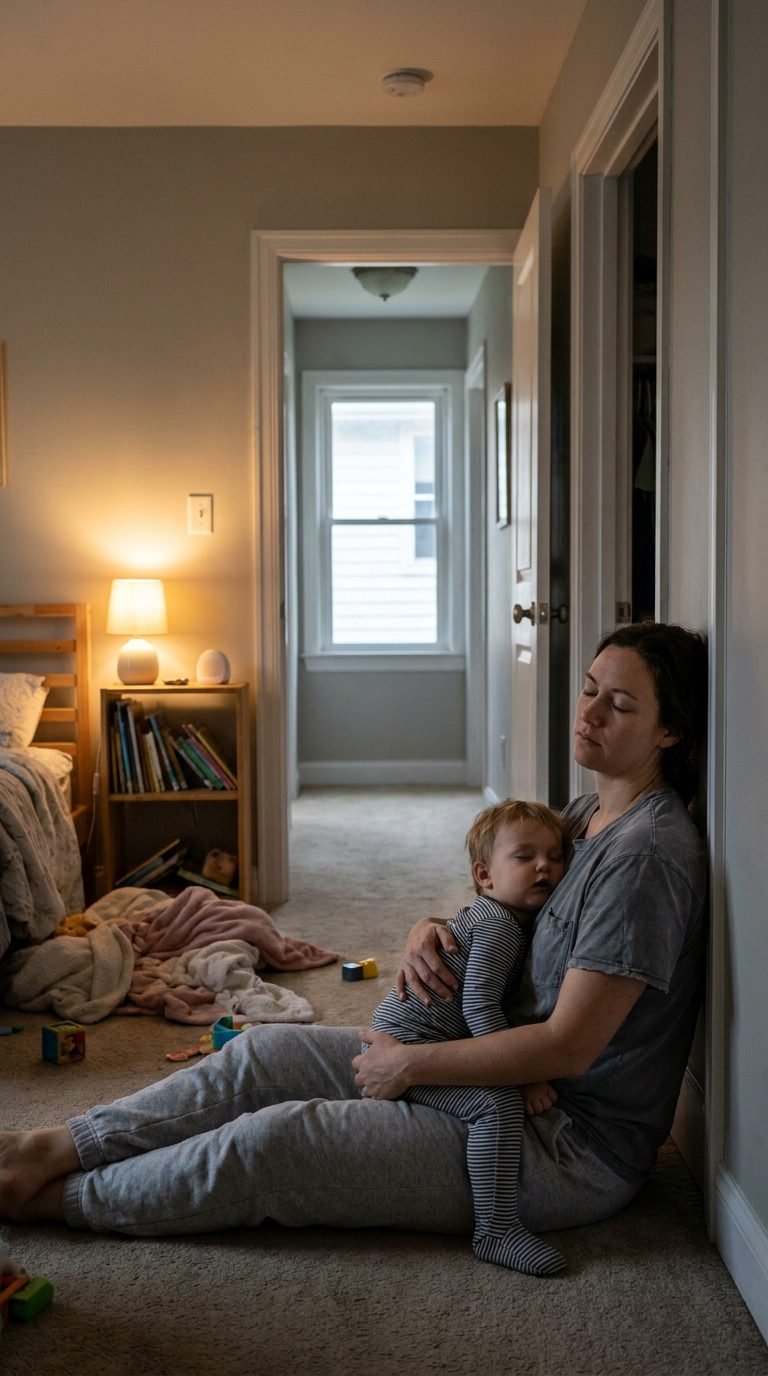

Always On Edge? How to Calm Your Overwhelmed Mom System
Always On Edge? How to Calm Your Overwhelmed Mom System
The plastic lid of the snack container clicks shut, a sharp, sudden sound that echoes just a little too loudly in the quiet kitchen. You’ve just finished cleaning up breakfast, the sun barely up, and already your shoulders feel tight, your jaw clenched. It’s not even 8 AM, and the day feels like a marathon you’ve already lost.
That small sound, or the sudden whine from the living room, or the constant questions, can send a jolt through your body. It’s a familiar tightening in your chest, a shallow breath, a feeling of being constantly “on” and ready to react. You might find yourself snapping at small things, or retreating into silence, wondering why simple moments feel so overwhelming.
If this sounds familiar, know this: you are not alone, and you are not failing. Being a calm nervous system mom isn’t about being perfect; it’s about understanding why your body reacts the way it does and learning gentle, effective ways to find your footing again. This guide is for you, offering practical steps to bring more peace into your busy days.
Key Takeaways
- Your body’s “on edge” feeling is a natural response to the unique, relentless sensory and emotional load of parenting, especially when you’re trying to be a calm nervous system mom.
- The constant demands for attention, even small ones like a child’s repeated “Mom!,” can accumulate and trigger a feeling of overwhelm, not just major crises.
- You can love your children deeply and still need the constant background noise, the repetitive questions, or the physical touch to pause. This need for space is valid.
- Implementing small, proactive “circuit breaker” pauses throughout your day, like a Quick Calm Check, can interrupt the cycle of rising tension before you reach a snapping point.
- Prevention is key: identify your specific triggers and implement sensory-friendly routines or communication scripts to lower your overall load and foster a calmer home environment for everyone.
Why Parenting Feels Harder Than Other Stressors

You might have handled high-pressure jobs, navigated complex relationships, or even managed big life changes with relative grace. Yet, the moment your child starts repeating your name for the tenth time while you’re trying to chop vegetables for dinner, a wave of irritation can wash over you, making your hands tremble slightly. It’s not just the noise; it’s the relentless, 24/7 nature of parenting that creates a unique kind of stress.
Unlike a job where you can clock out, or a problem that has a clear resolution, parenting is an ongoing, unpredictable symphony of needs, sounds, and emotions. Your body is constantly scanning, listening, and anticipating. This means the part of you that helps you pause and think calmly has less room to work, leaving you feeling more reactive and on edge.
This isn’t a sign of weakness; it’s a sign that your system is working overtime, trying to keep everyone safe and happy, including yourself. Acknowledging this invisible burden is the first step toward understanding why you might feel less like a calm nervous system mom than you’d like, and more like a human alarm bell.
The Invisible Weight of Feeling Constantly On Edge

Imagine you’re finally sitting down with a cup of tea, trying to read a chapter of a book in the living room. Your children are playing nearby, a mix of giggles, toy clatter, and the occasional shout. You tell yourself it’s fine, you can focus. But inside, your muscles are subtly tensing, your eyes darting, your ears straining to differentiate between happy play and a potential meltdown. You might think, “I just need five minutes of quiet,” but even those five minutes feel impossible to truly achieve.
This constant state of low-level alert is incredibly draining. It’s the cumulative effect of a thousand tiny demands: the sticky hands, the unexpected spills, the endless questions, the sudden loud noises. Each one, on its own, is minor. But together, they build an invisible weight on your shoulders, making you feel perpetually on the brink of overwhelm. This is the experience of many parents trying to be a calm nervous system mom.
Your body is designed to respond to threats, and while your child’s joyful shriek isn’t a threat, the constant input can mimic that feeling of being “under attack” for a system that’s already stretched thin. This leads to a state where your body struggles to fully relax, leaving you feeling wired and tired, even after a full night’s sleep.
Signs You’re Overwhelmed Before You Snap
The moment before you snap isn’t usually sudden; it’s often preceded by a series of subtle signals your body sends. You might notice your jaw clenching involuntarily, your shoulders creeping up towards your ears, or a persistent tension in your neck. Your breath might become shallower, held high in your chest instead of deep in your belly, signaling that your system is gearing up for a fight-or-flight response.
Emotionally, you might feel a growing sense of irritation, a short fuse for minor annoyances, or an overwhelming desire to escape. Perhaps you find yourself counting to three under your breath more often, or feeling a surge of heat in your face when a child asks for “just one more thing.” These are all signs that your capacity is full, and your body is trying to tell you it needs a break.
Recognizing these early warning signs is crucial. It’s like seeing the yellow light before the red. When you feel that familiar tightening in your stomach as your toddler starts another tantrum in the grocery store aisle, or the quickening of your pulse when the baby cries just as you sit down, that’s your cue. These moments are an invitation to pause and intervene gently, before the overwhelm takes over completely.
What to Do Before You Snap

You’re standing in the kitchen, the dinner prep chaos swirling around you. One child is asking for a snack, another is complaining about their sibling, and the timer for the oven just went off. You feel that familiar heat rising in your chest, your patience wearing thin. This is the moment to hit your internal pause button, to gently redirect your body’s rising tension before it escalates.
Instead of pushing through, try a quick, intentional circuit breaker. Even 10-20 seconds can make a difference. Step away from the immediate trigger if possible, even just to turn your back for a moment. Take a deep breath, focusing on a long exhale. This signals to your body that it’s safe to start settling down, giving you a tiny bit of space to respond rather than react.
This isn’t about ignoring your children or their needs, but about giving yourself the micro-moments needed to be more present and less reactive. It’s about empowering yourself to be a calm nervous system mom, even in the thick of it. You can love your children deeply and still need the toy siren to stop, or a moment to yourself to reset.
The Quick Calm Check: Feet on the floor, breath in your belly, one sound to notice.
The 3-Part Calm Nervous System Mom Reset:
- Lower the room: turn down or remove one sound source.
- Lower your body: take one slow breath, touch something cool, or step away briefly.
- Lower the next request: answer with one calm sentence instead of explaining everything.
Mistakes That Make the Feeling On Edge Worse
When you’re already feeling overwhelmed, it’s easy to fall into habits that inadvertently amplify the stress. One common mistake is trying to “power through” the discomfort, ignoring the early warning signs your body is sending. You might tell yourself you “should” be able to handle it, pushing past your limits until you reach a breaking point, which only reinforces the cycle of overwhelm.
Another pitfall is trying to control every external factor, believing that if only your children were quieter, or the house was tidier, you would feel calm. While external changes can help, focusing solely on them can lead to frustration when reality inevitably falls short. True calm comes from within, from learning to regulate your own system even amidst the chaos, rather than waiting for perfect conditions.
| Specific Trigger Situation | What it Really Means | Exact First Step To Try |
|---|---|---|
| Kids shouting from another room | Your brain reads it as a possible safety alert, even when it’s not. | Check once, then set a “come to me if you need me” boundary for a few minutes. |
| Repetitive toy sounds (e.g., siren, music box) | Constant, predictable noise can be just as grating as sudden loud ones, filling your sensory cup. | Suggest a “quiet toy” time or move the noisy toy to a different room for a bit. |
| Multiple requests at once (e.g., “Mom! Can I have water? Where’s my shoe? He hit me!”) | Your system struggles to process multiple inputs, leading to mental overload. | Hold up one finger and say, “One at a time, please. I hear you. What’s first?” |
| Unexpected physical touch (e.g., child grabbing your leg while you’re busy) | Loss of personal space can feel startling and intrusive when your system is already sensitive. | Gently detach and say, “Please use your words to ask for my attention,” then offer a hug on your terms. |
| Clanging dishes during dinner cleanup | Sharp, sudden sounds hit harder when your system is already full and trying to wind down. | Lay a towel in the sink or on the counter before washing, or put in earplugs before cleanup. |
The 5-Minute Reset for Overstimulated Parents

- Step away from the loudest room. Even moving to a quieter corner of the house, like a bathroom or a pantry, can offer a crucial change of sensory input.
- Let your ears rest for two minutes. If possible, put in earplugs or noise-canceling headphones, or simply sit in silence. Notice the absence of sound and let your auditory system settle.
- Use one grounding sense. Focus on a single sensory input: the warmth of a mug in your hands, the scent of a favorite essential oil, or the feeling of your feet firmly on the floor.
- Choose one calm sentence before going back. Before re-engaging, internally repeat a phrase like, “I am steady,” “I can handle this,” or “I am here.”
- Re-enter slowly and lower one sound first. When you return, consciously lower your voice, or gently ask for one specific sound to be reduced (e.g., “Let’s turn the TV down a little”).
Simple Scripts for Asking for Quiet Without Guilt
Asking for what you need, especially quiet or space, can feel incredibly difficult for parents. There’s often an underlying guilt that you “should” be able to handle it all, or that expressing your needs will make your children feel like a burden. But communicating your boundaries is a powerful act of self-care and a vital lesson for your children in emotional regulation.
The key is to use “I” statements, focus on your own needs, and avoid blaming or shaming your children for their natural exuberance. You’re modeling healthy boundaries, not shutting them down. These scripts can help you express your need to be a calm nervous system mom without feeling guilty.
"My ears need a little break right now. I'm going to step into the kitchen for two minutes of quiet, then I'll be back to play."
"I'm feeling a bit overwhelmed by all the noise. Could we try a quiet activity for a little while, like reading or drawing? It would really help my body settle."
"Mommy needs a few minutes of calm to recharge. I'm going to sit here quietly for a moment. You can play nearby, but please use your quiet voices for a bit."
How to Create Calm Without Making Your Kids Feel Wrong

The goal of creating more calm in your home isn’t to silence your children or make them feel like their natural energy is a problem. Instead, it’s about teaching them about emotional regulation, respecting personal space, and understanding that everyone, including Mom, has needs. It’s a delicate balance, but one that fosters empathy and healthy boundaries for everyone.
One effective strategy is to frame your need for quiet as a personal need, not a punishment or a judgment of their behavior. You might say, “My body needs a little quiet to feel calm,” rather than, “You’re being too loud.” This helps children understand that your feelings are your own, and they don’t have to carry the burden of “making” you feel a certain way.
You can also create “quiet zones” or “calm corners” in your home, places where everyone knows the expectation is a lower volume and more gentle activities. By modeling these practices and explaining them in age-appropriate ways, you’re not just finding calm for yourself; you’re teaching your children invaluable lessons about self-awareness and respect for others’ needs, helping them grow into emotionally intelligent individuals.
Prevention: How to Lower Tomorrow’s Load
Being a calm nervous system mom isn’t just about reacting in the moment; it’s also about proactively setting up your environment and routines to prevent overwhelm. Look at your daily schedule and identify consistent “hot spots” – times or activities that reliably trigger your feeling of being on edge. Is it dinner prep? Morning rush? Bedtime?
Once you’ve identified these triggers, brainstorm small, systemic changes. Could you do some dinner prep the night before? Could you create a “landing strip” by the door for shoes and bags to reduce morning chaos? Or perhaps institute a “quiet hour” in the afternoon where everyone engages in independent, low-key activities, even if it’s just for 20 minutes?
Consider sensory input as well. Are there certain lights that are too bright, or background noises that could be reduced? Simple changes like using dimmer switches, playing soft instrumental music instead of the TV, or having designated quiet toys can significantly lower the overall sensory load in your home, creating a more naturally calming environment for everyone.
When Feeling Constantly On Edge Might Need Extra Support
While many parents experience moments of overwhelm, there are times when the feeling of being constantly on edge might signal a need for additional support. If your strategies for being a calm nervous system mom don’t seem to make a lasting difference, or if your feelings of irritation, anxiety, or sadness are persistent and impacting your daily life, it might be time to reach out for professional help.
You might notice that you’re withdrawing from activities you once enjoyed, struggling with sleep even when your children are sleeping, or experiencing physical symptoms like chronic headaches or stomach issues. These can be signs that your body is under significant, prolonged stress, and could benefit from a different kind of support.
Talking to a therapist, counselor, or your doctor is a brave and proactive step. They can offer personalized strategies, help you explore underlying causes, and provide a safe space to process your feelings without judgment. Seeking support is not a sign of failure; it’s a testament to your strength and your commitment to your well-being and that of your family.
FAQ
Why do I feel so overwhelmed by normal kid noise?
It’s common for parents to feel overwhelmed by what seems like normal kid noise because your system is constantly on alert. Your brain processes every sound, every demand, and every potential need, which can be incredibly draining. This constant input can make even typical sounds feel like too much, especially when you’re already tired or stressed.
Is it normal to feel like I’m always on edge as a mom?
Yes, it’s very normal for many moms to feel consistently on edge. The relentless demands of parenting, the lack of personal space, and the constant need to anticipate and respond can keep your body in a state of heightened awareness. This doesn’t mean something is wrong with you; it simply means your system is working hard to manage a complex and demanding role.
How can I calm my system quickly when I feel a “snap” coming?
When you feel that tension rising, try a “Quick Calm Check”: firmly plant your feet on the floor, take a deep breath focusing on a long exhale into your belly, and then notice one non-threatening sound around you. Even 10-20 seconds of this can help create a tiny pause and signal to your body that it’s safe to start settling.
How do I talk to my kids about needing quiet without making them feel bad?
Frame your needs using “I” statements, focusing on your own body’s experience rather than blaming their behavior. For example, “My ears need a little break right now to feel calm,” or “Mommy needs a few minutes of quiet to recharge.” This teaches them about personal boundaries and emotional regulation without shaming their natural energy.
What’s the difference between normal mom stress and needing more help?
Normal mom stress is episodic and usually improves with self-care or a break. If your feelings of being on edge are constant, intense, interfere with your daily life, or are accompanied by persistent sadness, anxiety, or physical symptoms, it might be a sign to seek professional support from a therapist or doctor. It’s a sign of strength to know when to ask for help.
Conclusion
Feeling constantly on edge as a mom is a real, valid experience, not a personal failing. Your body is simply responding to the immense, beautiful, and often overwhelming demands of parenting. By understanding these responses, practicing small, consistent resets, and communicating your needs without guilt, you can gently guide your system back to a place of more calm and presence. You deserve to feel settled, supported, and capable, even in the midst of the beautiful chaos that is family life.
Start today by trying just one “Quick Calm Check” when you feel the next wave of overwhelm approaching. It’s a small step that can make a big difference.
Read this next: How to Set Gentle Boundaries with Your Kids (and Actually Stick to Them)