17 Easy Indoor Activities for 3 Year Olds (No Prep, No Mess)
Easy Indoor Activities For 3 Year Olds No Prep ideas that make routines easier
Easy Indoor Activities For 3 Year Olds No Prep helps children see what comes next, start faster, and need fewer reminders during the day. This guide offers parents a handy set of ideas that can be utilized at a moment’s notice, ensuring that both you and your toddler have a variety of engaging activities to enjoy. Engaging in such activities not only nurtures a child’s imagination but also helps parents seamlessly manage their daily routines.
1. Pillow Jumping Fun
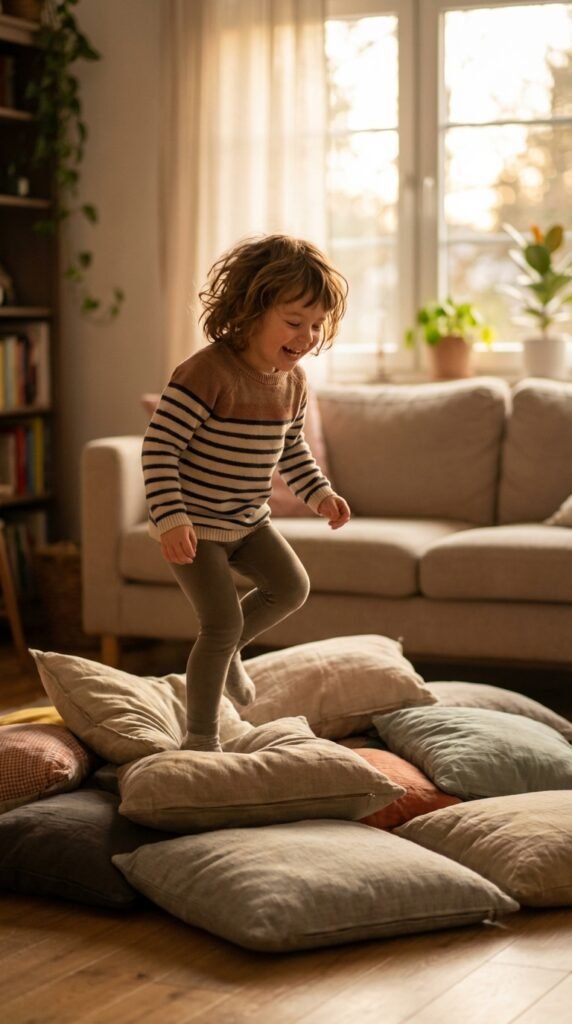
Easy Indoor Activities For 3 Year Olds No Prep can make daily chores feel clearer, calmer, and easier for everyone at home. A simple stack of pillows or couch cushions becomes a platform for jumping joy. It’s not only about expending extra energy; children also develop coordination and balance as they land and leap again. Watching your little one as they giggle and jump can be a joyful reminder of the simplicity of fun.
- Material needed: Pillows or cushions
- Create a designated area for jumping to ensure safety.
Observing them leap and occasionally fall with laughter teaches resilience too. Safety remains key, so ensure there’s ample space and everything’s stable. Encourage your child to count their jumps aloud, subtly integrating numbers into the play, reinforcing counting in a joyful and energetic context.
2. Sock Puppet Theater
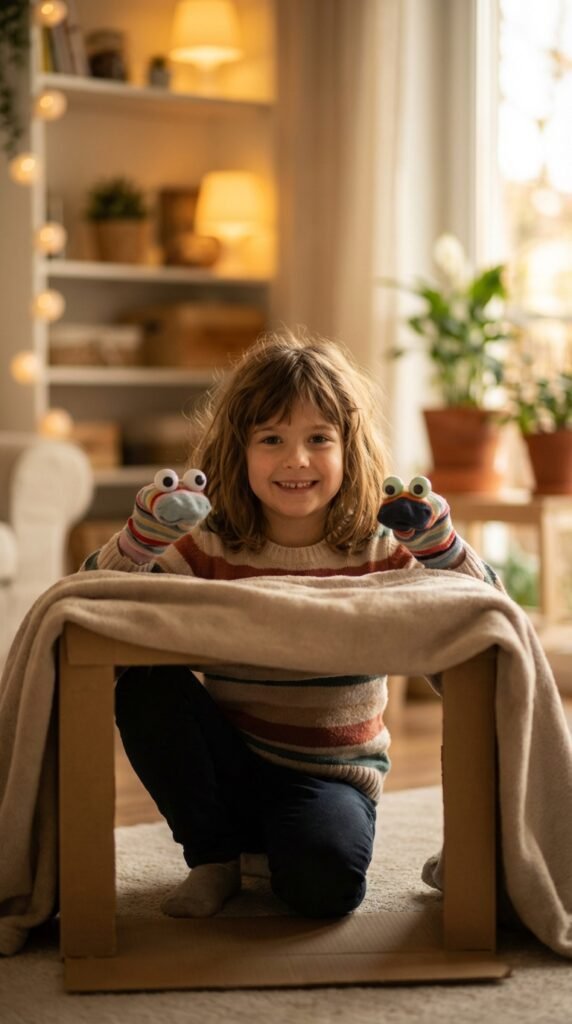
Transform old socks into quirky characters with the help of a few markers and some imagination. Encourage your child to narrate a story or reenact their favorite tale using their new sock puppet friends. It’s a wonderful exercise in creativity and storytelling, which are foundational elements of effective communication. By alternating roles, your child can learn empathy as they consider different perspectives.
- Items needed: Old socks, markers
- Optional: Buttons, glue, and felt for adding features
Create a miniature stage using a cardboard box, encouraging them to design their sets, adding layers of creative play. This activity promotes bilingual development if the dialogue includes different languages spoken at home, enriching linguistic skills.
3. Indoor Scavenger Hunt
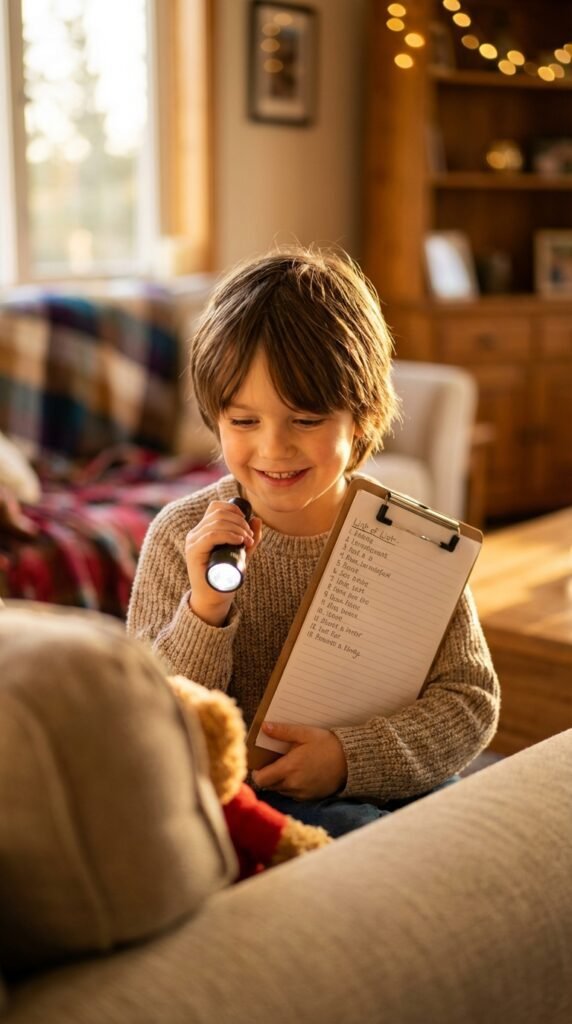
Hide small toys or household objects around and turn your home into a treasure map waiting to be explored. Craft clever clues or simple riddles to guide them from one object to the next. It’s not just a game; it develops problem-solving skills as children learn to connect the dots between clues and their targets. Tailoring hunts based on themes, such as color or season, can add an educational layer.
- Materials needed: Small toys/objects, clues
- Different hunt themes: Colors, Shapes, Alphabet
Join in the fun by becoming a “detective” yourself. Your enthusiasm will amplify theirs. Encourage teamwork if other siblings or friends join, promoting social skills and collaborative problem-solving as they navigate the quest together.
4. Balloon Volleyball
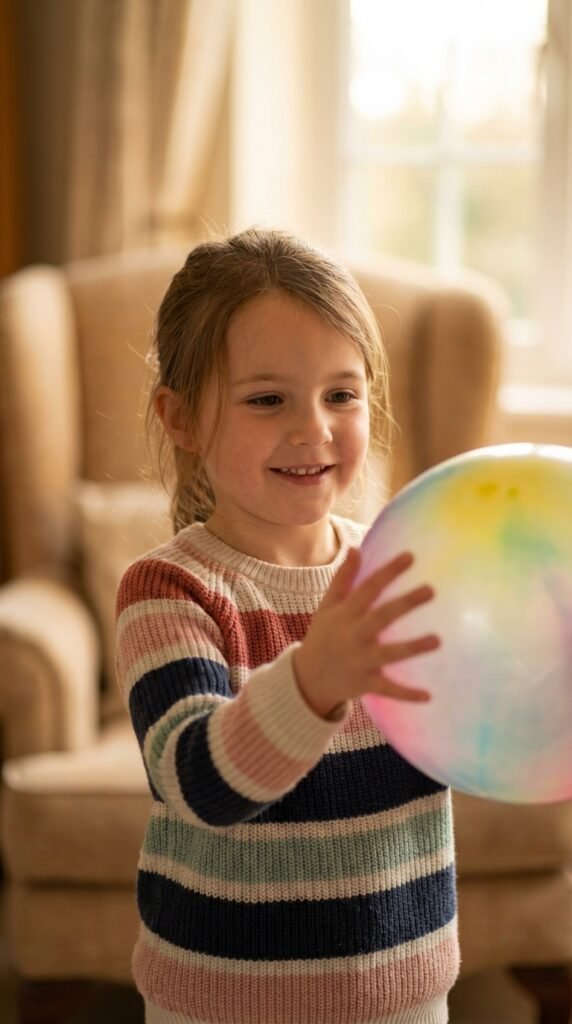
Blow up a balloon and transform your living room into a safe volleyball court. This gentle activity encourages motor skills and team spirit as you volley back and forth. Create makeshift nets using a string across two chairs, adding an element of aim and strategy to the game. Challenge your child by keeping the balloon aloft for as long as possible, setting small goals to boost their confidence.
- Item needed: Balloon
- Home-made net: String and Two Chairs
Balloon volleyball is perfect for days when the weather outdoors won’t cooperate, keeping moods buoyant and muscles active. Adapt the game by switching up rules such as using only one hand or hopping on one foot, which adds layers of fun and complexity to the activity.
5. Kitchen Band
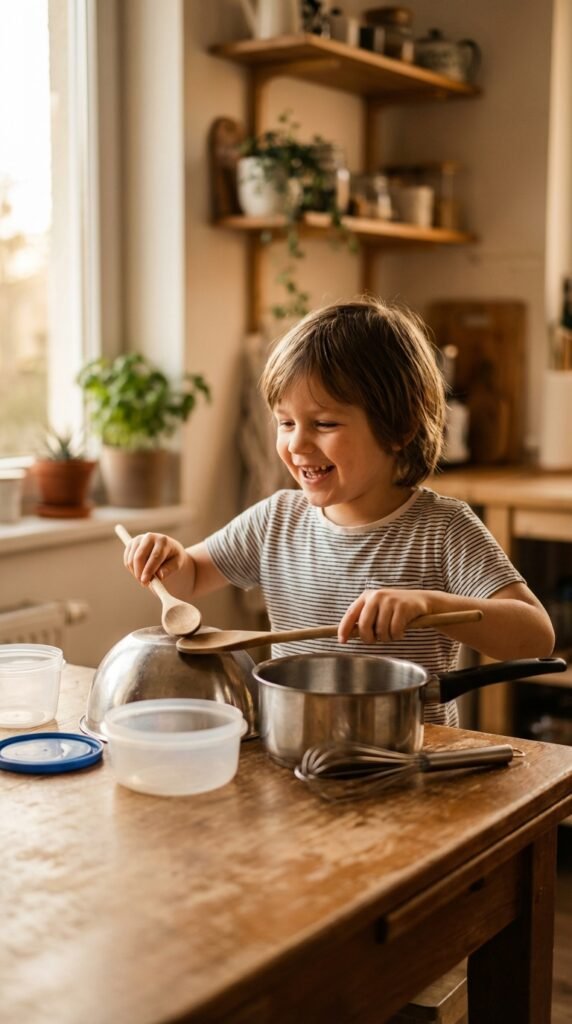
Turn everyday kitchen items like pots, pans, and wooden spoons into a full percussion set. Prompt your child to experience rhythm and sound. This enthusiastic exploration into the world of music not only introduces them to basic musical concepts but also enhances their sensory awareness. Suggest different tempos and dynamics, encouraging them to play softly and loudly, fast and slow. These contrasts teeter between chaos and coordination, potentially sparking a lifelong love for music.
- Materials: Pots, Pans, Wooden Spoon
- Optional: Metal lids for cymbal-like sounds
Remember ear protection if your child becomes an exuberant percussionist! Initiate simple rhythms for them to mimic, introducing basic music theory concepts, such as beats and rhythm patterns.
6. Sticker Art
Finding joy in simplicity can sometimes come from a humble sticker book. Provide a blank notebook and let your child unleash their creativity with endless combinations of sticky art. Not only is it an activity devoid of post-play mess, but it also refines fine motor skills as they peel and place each sticker with precision. Loving the silence, this activity encourages independent play, fostering concentration.
- Materials needed: Sticker book, blank notebook
- Theme possibilities: Farm animals, Space, Under the sea
Sharing stories or scenes about sticker creations can elevate the activity to a storytelling venture as well. Encourage them to create a sequential story where each page/new sticker follows the storyline, boosting narrative skills.
7. Dress-Up Parade
Dig through old clothes and let your child embark on a fashion adventure. Encouraging beyond surface-level appearances, it’s an opportunity to nurture imagination and self-expression. Whether they pretend as parents, superheroes, or wild animals, a dress-up parade offers a safe space to explore identities. Gathering everyone for a parade through the hallway transforms attire-mismatched chaos into triumphant, infectious laughter.
- Items: Old clothes, costume jewelry
- Encourage multiple outfit themes: Historical, Animal, Professional roles
Capture the moment with photographs, providing lasting memories of this fun-filled adventure. Invite them to narrate stories about their attire, blending creativity with fashion.
8. Indoor Obstacle Course
Rearrange furniture to create a challenging obstacle course that fuels agility and strategic thinking. From crawling under tables to jumping over cushions, this activity enhances motor control and spatial awareness. It’s a balance between freedom and rules, allowing them to invent additional obstacles or rules, like only hopping in certain sections. Documenting their victory over the course with ceremonious applause fosters a sense of achievement.
- Items: Furniture, Open Space
- Extra challenge: Timed obstacles for added excitement
Guide them to understand the flow from challenge to accomplishment, nurturing persistence and self-confidence. Adapt obstacles to suit different skills levels, providing a progressive difficulty curve that keeps the activity fresh and engaging.
9. Story Time Picnic
Transform the corner of a room into a relaxing oasis. Spread a blanket and gather a few favorite storybooks for an unforgettable storytime picnic. Enchanting narratives paired with thematic snacks, such as cookies for “If You Give a Mouse a Cookie,” allow immersion in imagination while sharing experiences and making stories meditative moments rather than mere reading.
- Materials: Blanket, Storybooks, Themed Snacks
- Invent characters or offer simple quizzes based on stories read
This ritual also creates a profound connection between parent and child through shared calmness and wonder. Alternate story choices to enrich vocabulary and thematic diversity.
10. Shadow Play
Dim the lights and wield a flashlight to create mesmerizing shadow animals. Transform bare walls into canvases of imagination, sparking laughter and dialogue. Encourage storytelling through shadows and challenge your child to innovate new shadow shapes. Shadow play introduces elements of physics and art without overt pedagogic intent – children learn by interacting with light and space.
- Materials: Flashlight, Darkened Room
- Easy starting shapes: Dog, Bird, Rabbit
The quiet nature of this activity is ideal for winding down an eventful day. Incorporate themes or stories to guide the activity, enhancing understanding of light, shadow, and size.
11. Shape Sorting Game
Engage in a DIY educational activity using cereal boxes. Cut different shapes into a large box while crafting matching shapes from spare cardboard. Task your child to fit them correctly, honing recognition skills and hand-eye coordination. It’s problem-solving tied neatly with a tactile format. Encourage customization with vibrant decorating, allowing them to paint or color the shapes.
- Materials: Cereal Boxes, Scissors, Cardboard
- Diversify shapes: Triangles, stars, circles defining written labels
Rotate the shapes for a new configuration, keeping the activity challenging and fresh. Introduce shapes gradually to build familiarity and confidence.
12. Watercolor Masterpieces
For a more calming creative expression, supply watercolors and paper, keeping artistic endeavors low-mess yet rewarding. Invite your child to explore the watery blend of hues, painting landscapes or abstract pieces. Discuss colors and combinations, building a rudimentary concept of color theory. It’s equally about reveling in process and creation, not necessarily the final product.
- Materials: Watercolors, Paper, Brushes
- Explore various painting styles: Pointillism, watercolor washes
Frame art that resonates most with them, exhibiting pride and permanence in their growth. Discuss color mixing and invite them to predict outcomes, subtly infusing scientific curiosity.
13. Cardboard Box Robots
With recycling and robotics wrapped into one delightful package, upcycle cardboard boxes into inventive robotic friends. Encourage combination of simple crafting supplies like markers and tape to personalize their creations. This activity fosters innovation and adventure, turning mundane materials into cherished inventions. Collaborate to build narratives around their robot’s purpose and skills.
- Materials: Cardboard, Markers, Tape
- Optional: Buttons and Plastic Caps for additional decoration
Display their creations prominently as testaments to creativity and problem solving. Involving discussions about robots they see in life introduces basic engineering concepts.
14. Dance Party
Ritualize movement by transforming any room into a vibrant dance party. Curate playlists that span different genres, exposing your child to diverse rhythms and tempos. Dance is a potent outlet for emotions and kinetic energy, integral for regulation and physical health. Bond through mimicking moves and freestyle expression, creating palpable joy through motion.
- Materials: Music player, Room Space
- Interactive additions: Limbo dance stick, “Freeze Dance” pauses
A themed party (popcorn party, pajama party) provides even more avenues for structured fun. Explore different historical dance styles to embolden cultural appreciation and storytelling via rhythm.
15. Matching Game
A deck of cards becomes a gateway to developing memory and pattern recognition. Traditional matching games can be augmented with expansions like animal cards or alphabet decks, ensuring variety and educational alignment. Match-making not only builds focus but also lengthens attention span and patience.
- Items: Deck of Cards, or Custom Themed Cards
- Include themes: Animals, Colors, Numbers
Creating personalized cards featuring family members or objects personalizes the experience further, allowing shared memories to become part of the game. Invent rules that include “memory pairs,” enhancing not only recall but also adaptive thinking skills.
16. Plastic Cap Stacking
Gathered bottle caps challenge balance and creativity by daring your child to construct towering sculptures. Informal competitions spark motivation and exploration. Understanding weight and equilibrium play a hands-on role in early scientific reasoning.
- Materials: Plastic Bottle Caps of various sizes/colors
- Introduce concepts: Force, Gravity, and Stability
Transform engineering failures into celebratory learning moments about trial and error. Use them as segues into environmental discussions surrounding recycling and the reusability of materials.
17. Indoor Hopscotch
Bring a childhood classic indoors with masking tape, laying down a makeshift hopscotch grid. This game doubles as an exercise in nostalgia and physical activity, promoting balance, coordination, and even basic arithmetic when numbers are involved. Besides fun, hopscotch also sharpens focus as children aim to keep their jumps within bounds.
- Items: Masking Tape, Large Room
- Variations: Number Patterns, Alphabetical Sequence
Have themes for designs, like rainbow or journey map, making setup just as engaging. Incorporate educational content, gradually transforming silliness into a sequential learning game.
Finding these activities can turn a challenging day into a joyful one within moments. These easy indoor activities for 3 year olds require no prep, so you can relax while nurturing your child’s imagination and energy. The key is to see these moments as opportunities to connect, enjoy, and learn together, fostering a home environment rich with creativity, patience, and discovery. Adapt the strategies to fit the multiple interests of your child, ensuring an enriching experience for everyone involved.