The Calming Sensory Play Ideas for Overstimulated Kids
1. Sensory Bin With Rice and Scoops
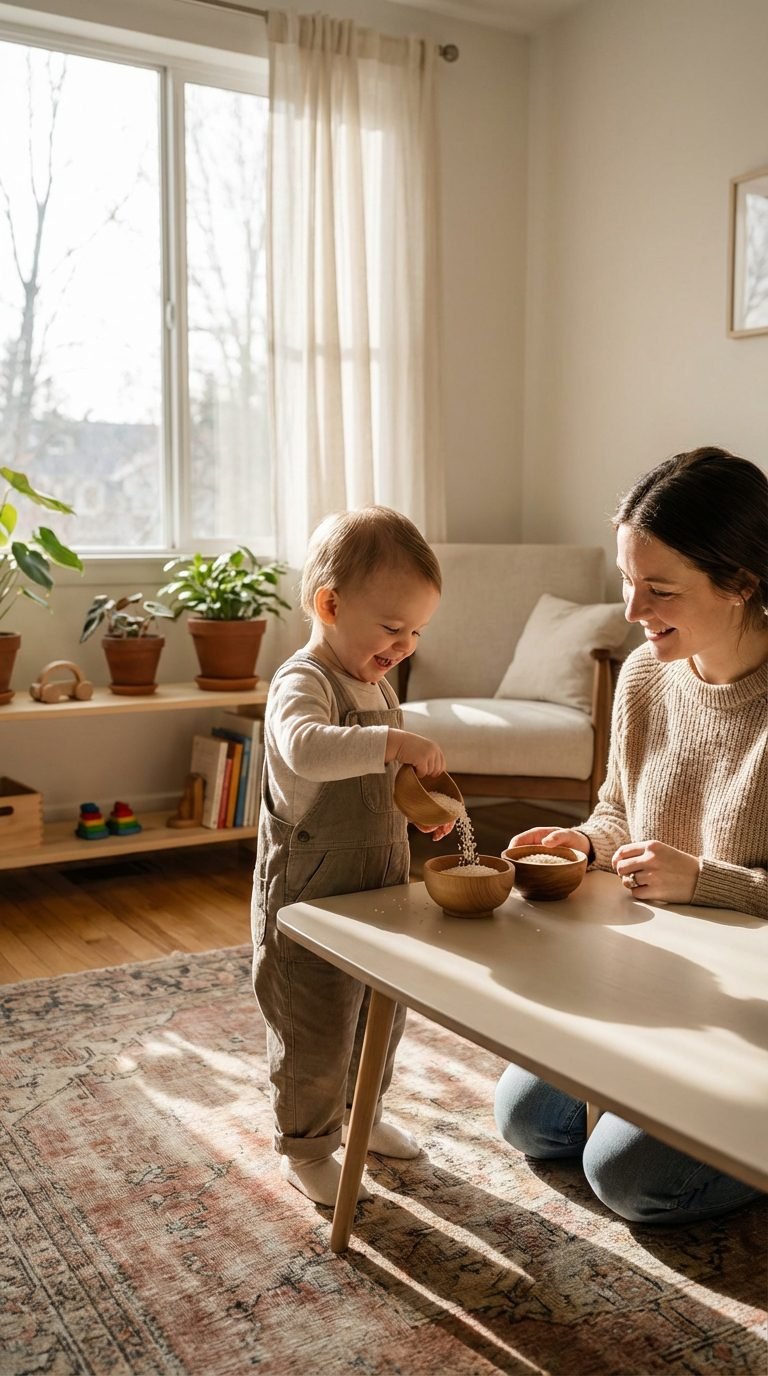
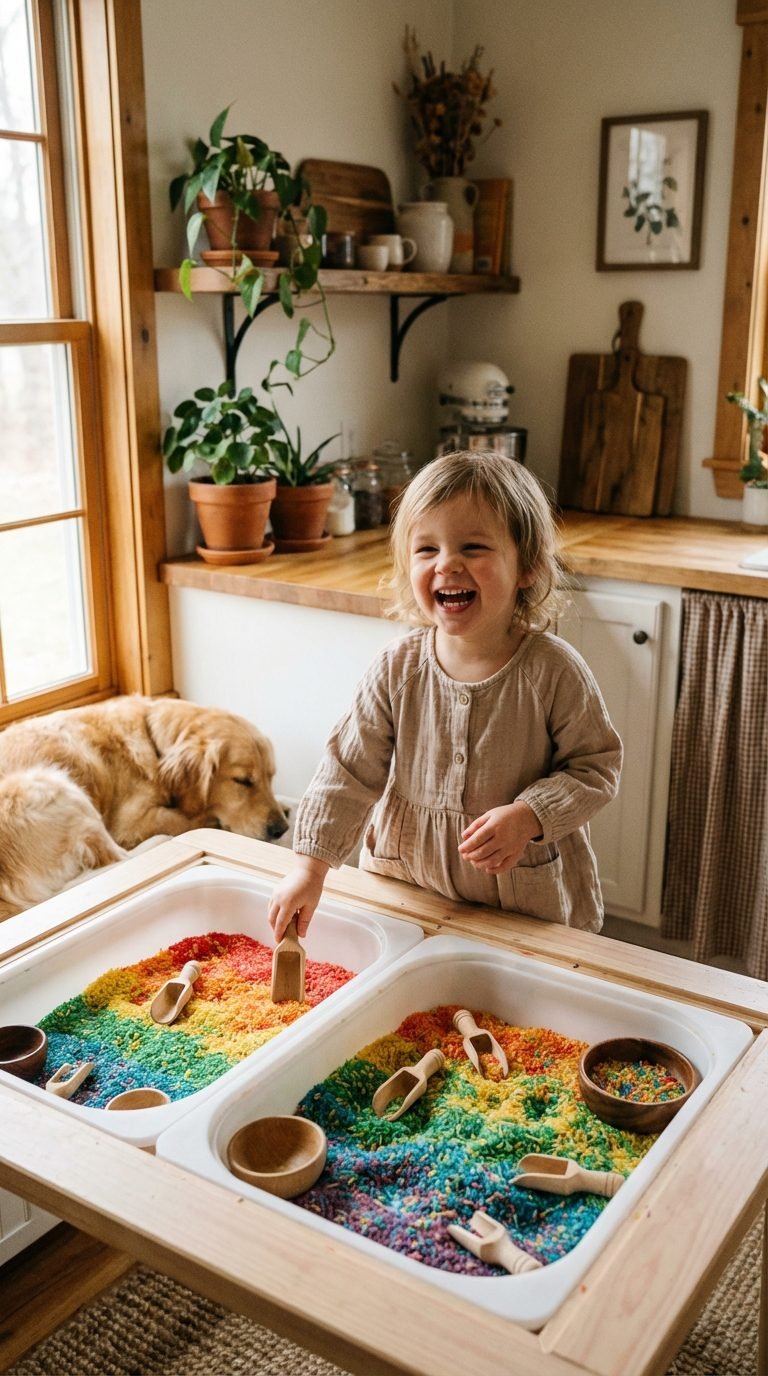
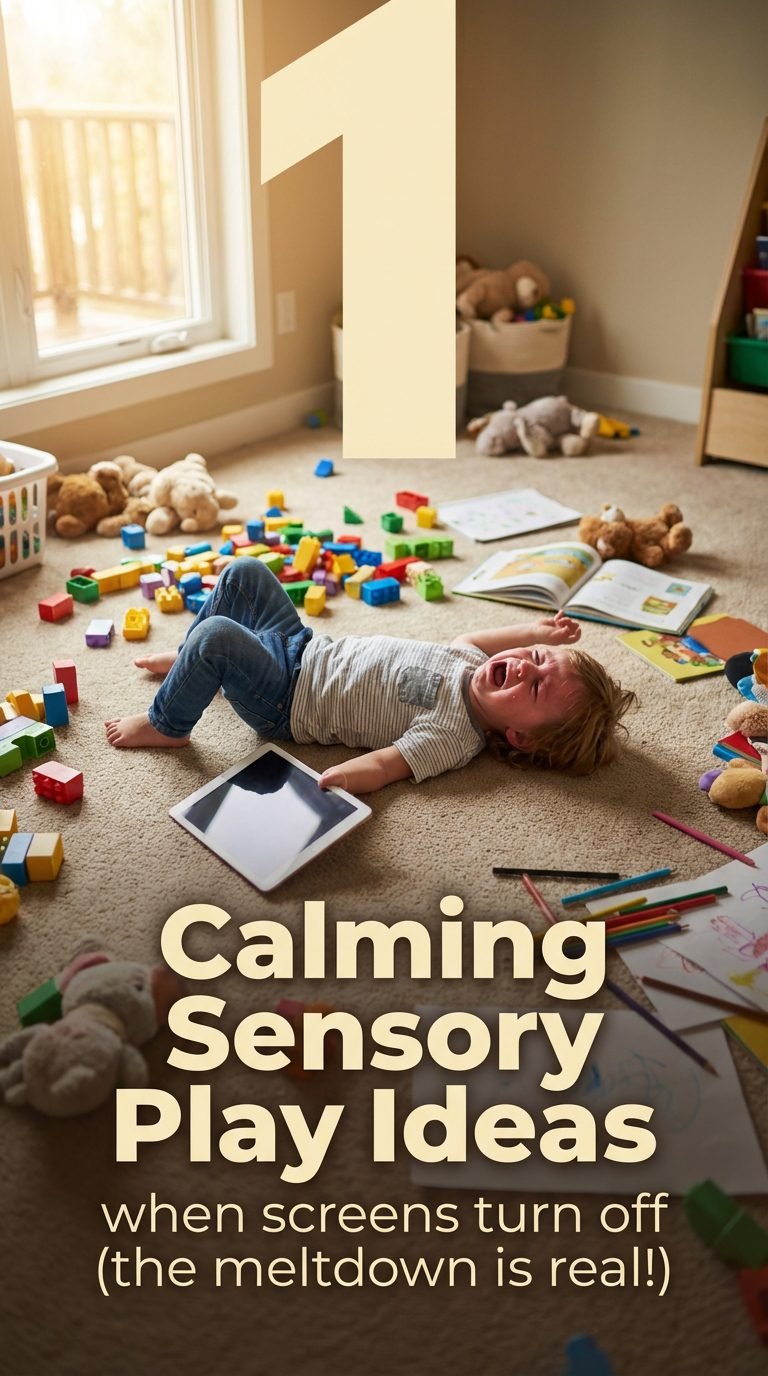
Calming sensory play ideas can make a real difference for parents looking for fresh ideas. This calming sensory play idea is a go-to for quiet afternoons. It buys you 30 to 45 minutes of focused, quiet play.
It works best when a toddler is bored but too wound up to sit with a book. The physical sensation of scooping and pouring is genuinely calming.
Fill a plastic bin with dry rice, a few cups, and a muffin tin. Show your child how to scoop rice into each cup. That’s it. Don’t over-explain — just hand it over and step back.
Most kids between 18 months and 4 years will dig into this immediately. Expect some rice on the floor. Worth it.
Pro tip: add a few small toy animals or figurines to hide inside — it adds 20 extra minutes of hunting.
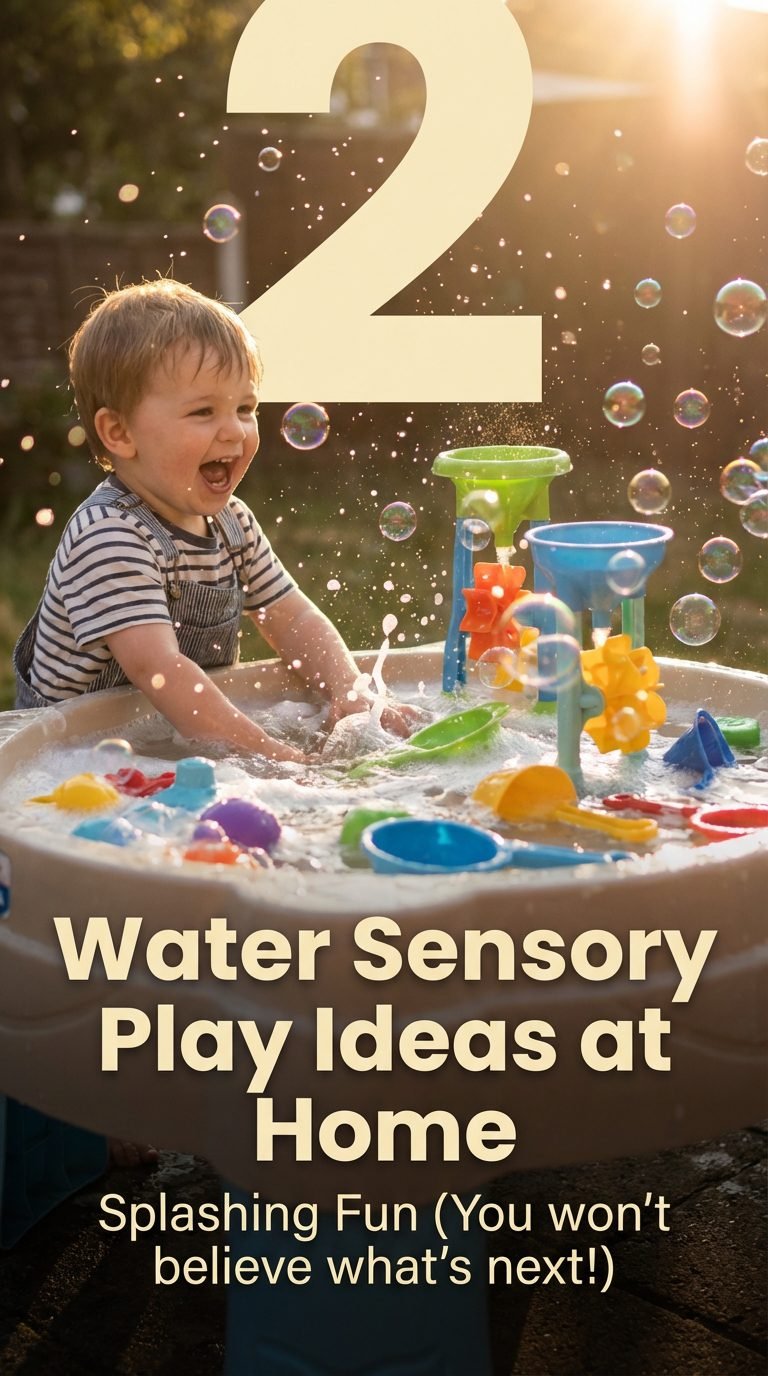
2. Water Sensory Play Ideas at Home
Water play is another fantastic calming sensory play idea that kids adore. It’s refreshing and engaging, especially on hot days.
This activity helps when your kids are restless and need to unwind. Water play can be as simple as filling a basin with water and adding cups or toys.
Fill a shallow basin with water, add some plastic cups, and let your child explore. You can even add food coloring for extra fun. Just remind them to be gentle!
Kids from 2 years and up love splashing and pouring. Just be ready for wet clothes and a little mess.
Pro tip: Set up the water play outside for easy cleanup. Use a towel to dry off afterward.
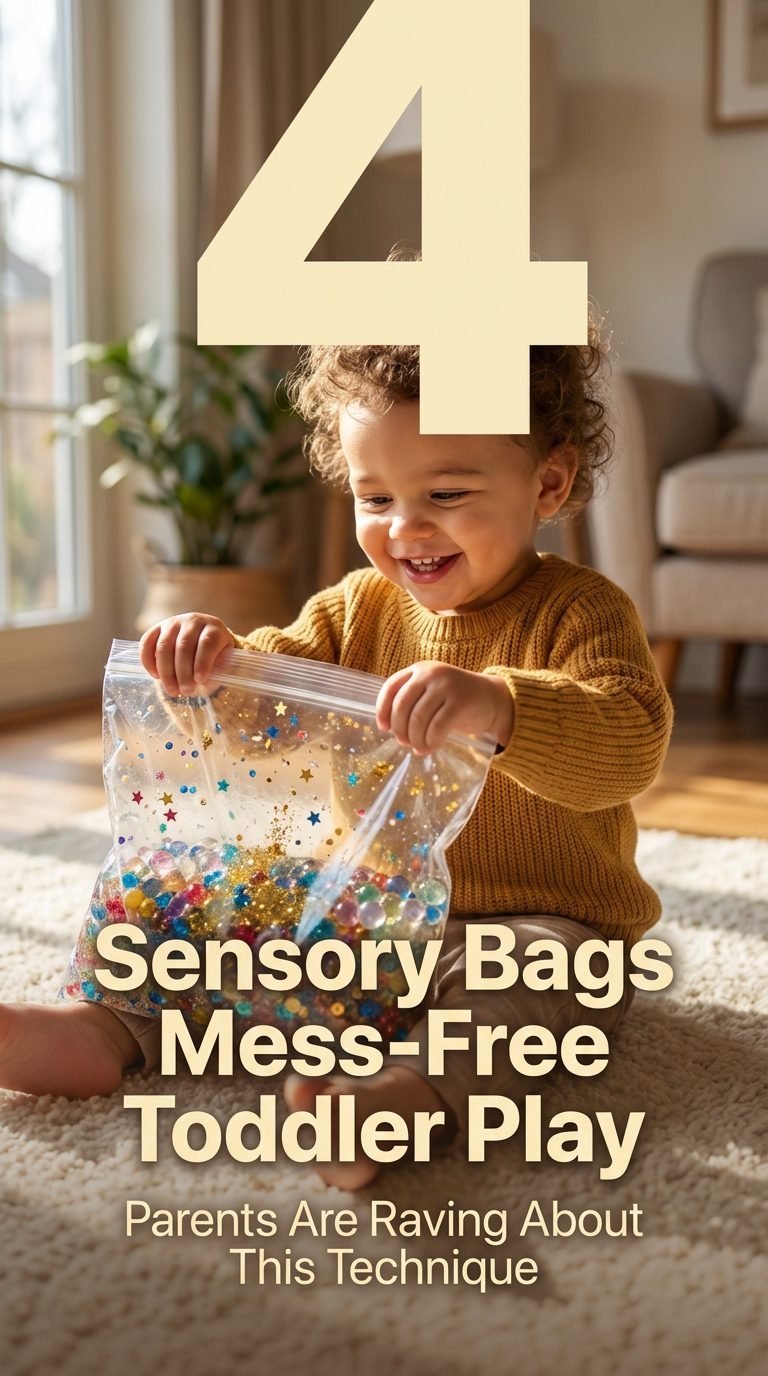
3. Sensory Bags for Mess-Free Toddler Play
These sensory bags are a game changer for calm play without the mess. They’re perfect for toddlers who love to explore with their hands.
When your child needs a quiet moment, sensory bags can help. They let kids squeeze, squish, and feel without any spills.
To make one, fill a ziplock bag with hair gel, glitter, and small items like beads. Seal it tightly and let your child explore the textures safely.
Kids as young as 18 months can enjoy this. It keeps them engaged and is super easy to clean up.
Pro tip: Tape the bag to a table to prevent it from moving around while they play.
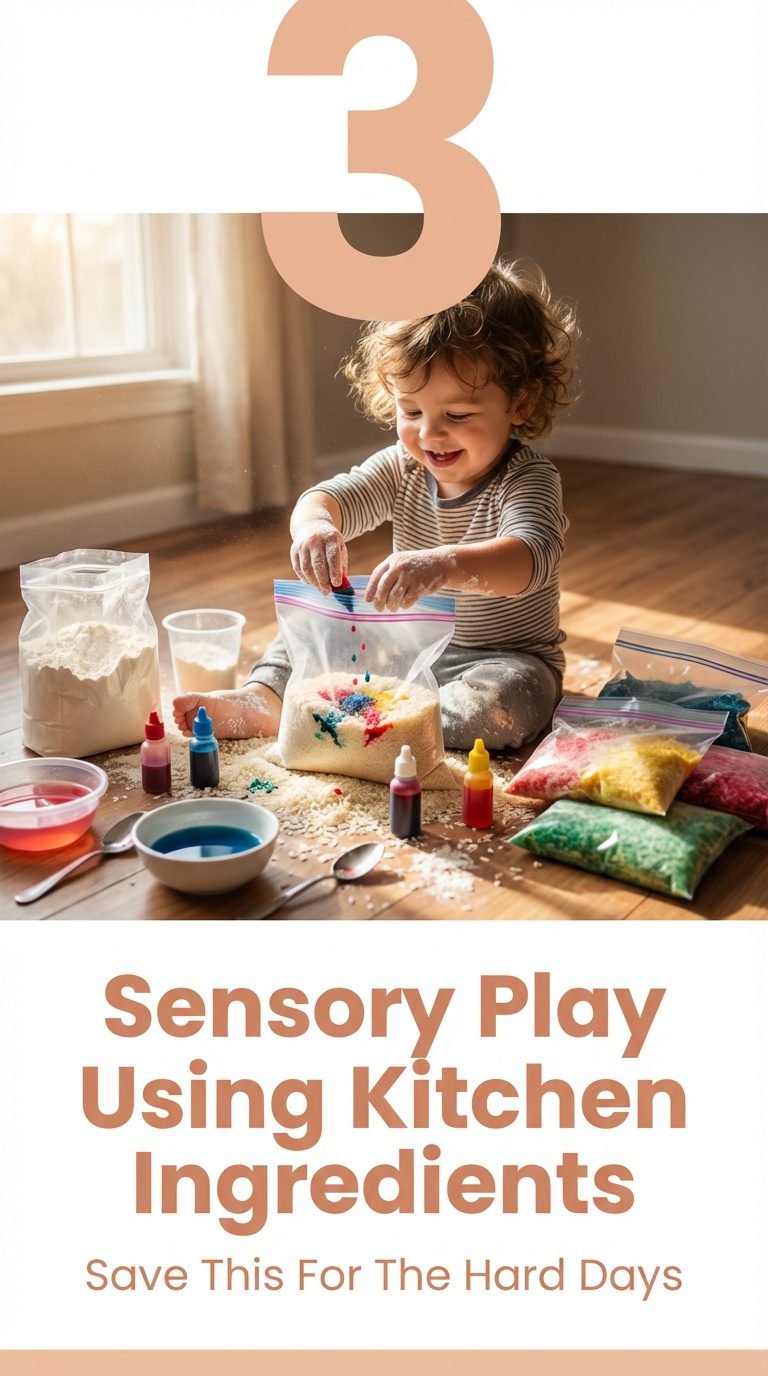
4. DIY Sensory Bins with Kitchen Ingredients
Using kitchen ingredients for sensory bins is not only calming but also creative. It’s a fun way to utilize what you already have at home.
This activity is great when you want to engage your child without making a trip to the store. Most household items can be transformed into sensory play materials.
Try using flour, sugar, or even pasta in a bin. Let your child scoop, pour, and explore. You can add measuring cups for even more fun.
Kids from 2 years and up will enjoy this. Just be prepared for a little mess, especially with flour.
Pro tip: Add some cookie cutters for extra shapes to play with!
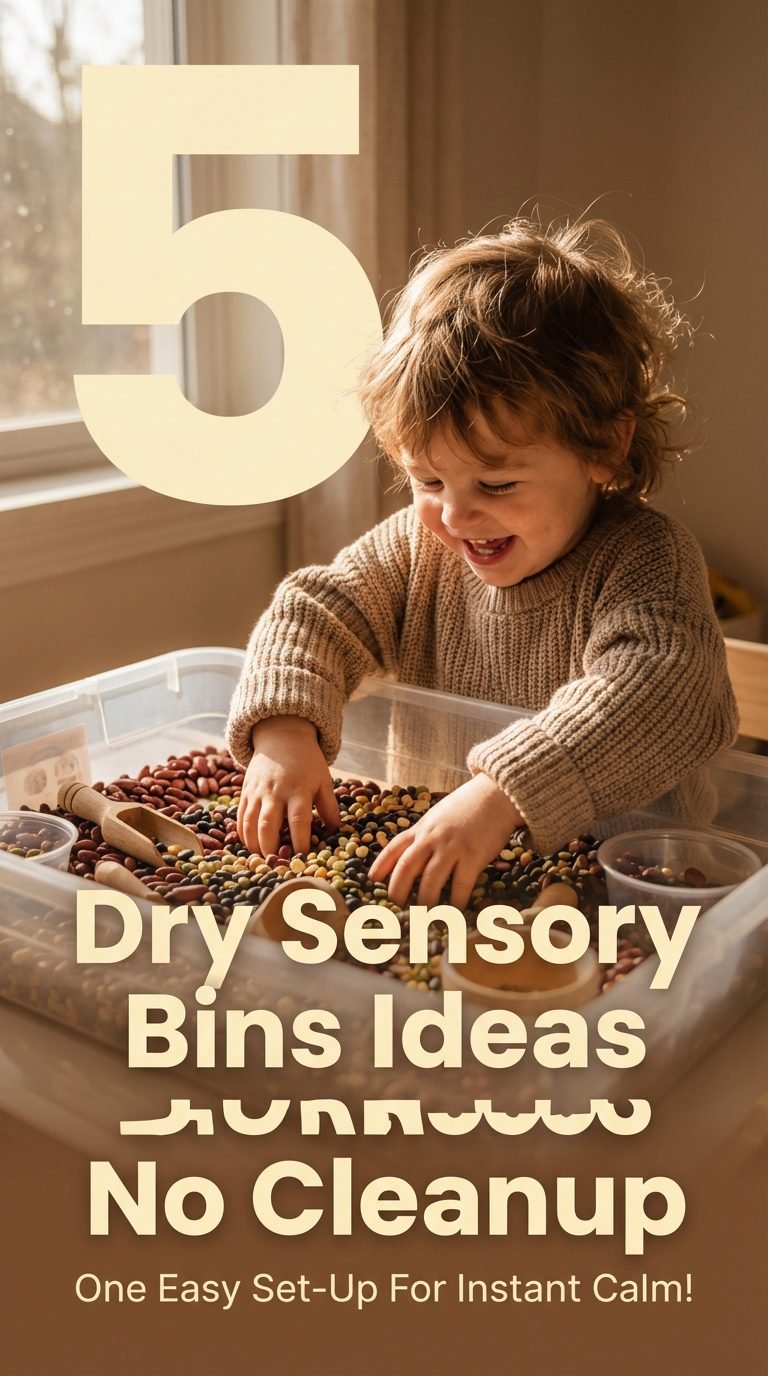
5. Dry Sensory Bins Ideas with No Cleanup
Dry sensory bins are a fantastic way to engage kids without the hassle of cleanup. They’re simple yet effective for calming overstimulated kids.
When your child is feeling overwhelmed, these bins can provide a much-needed distraction. The textures and materials can be very soothing.
Use materials like dry beans, cornmeal, or even shredded paper. Set up a few scoops and small containers for them to fill. For more sensory activities for kids, check out sensory activities for kids.
Kids aged 2 and up can spend time exploring. Just keep an eye on younger ones to avoid any accidental spills.
Pro tip: Use a large plastic tablecloth underneath to catch any stray materials.
Conclusion
Starting with the sensory bin filled with rice is a fantastic first step. It’s simple, engaging, and offers a great way to calm your child.
Remember, the mess is part of the fun. Embrace the chaos and enjoy these moments with your little ones. For more family activity ideas, check out more family activity ideas on Simple Family Everyday.
For more evidence-based parenting guidance, visit UNICEF Parenting.
Looking for a complete overview? Check out our Engaging Sensory Activities for Kids to Boost Development for everything you need to know. Learn more: family activit. For more ideas, check out parenting tips and expert advice. Learn more: family activit. Learn more: family activit. Learn more: family activit. Learn more: family activit.