Why Sensory Play Sounds Messy But Changes Everything — A Real Beginner’s Guide to Sensory Bins for 1-Year-Olds What to Use
Why Sensory Play Sounds Messy But Changes Everything
Sensory bins for 1-year-olds what to use can feel overwhelming at first. You might wonder if the mess is worth it. But sensory play is a game changer for your little one’s development. It opens up a world of exploration and discovery.
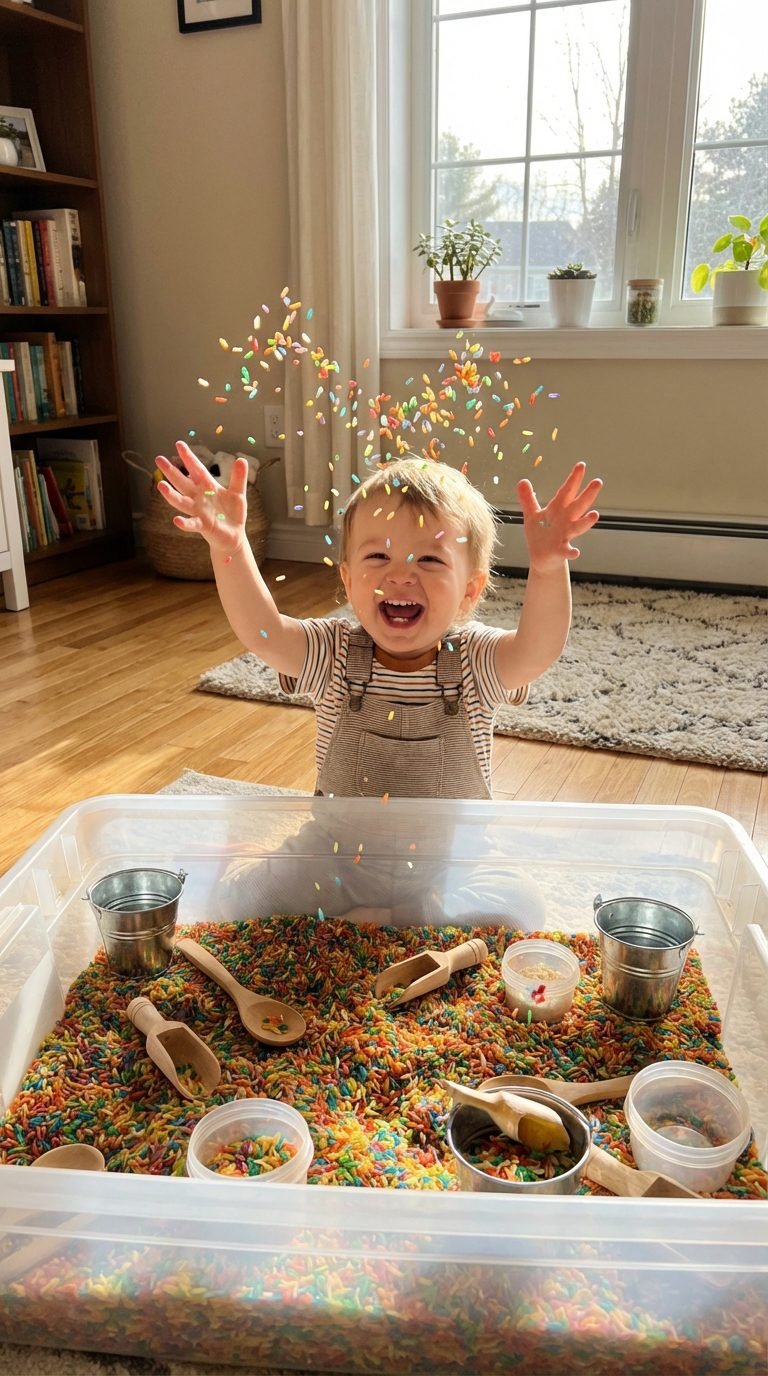
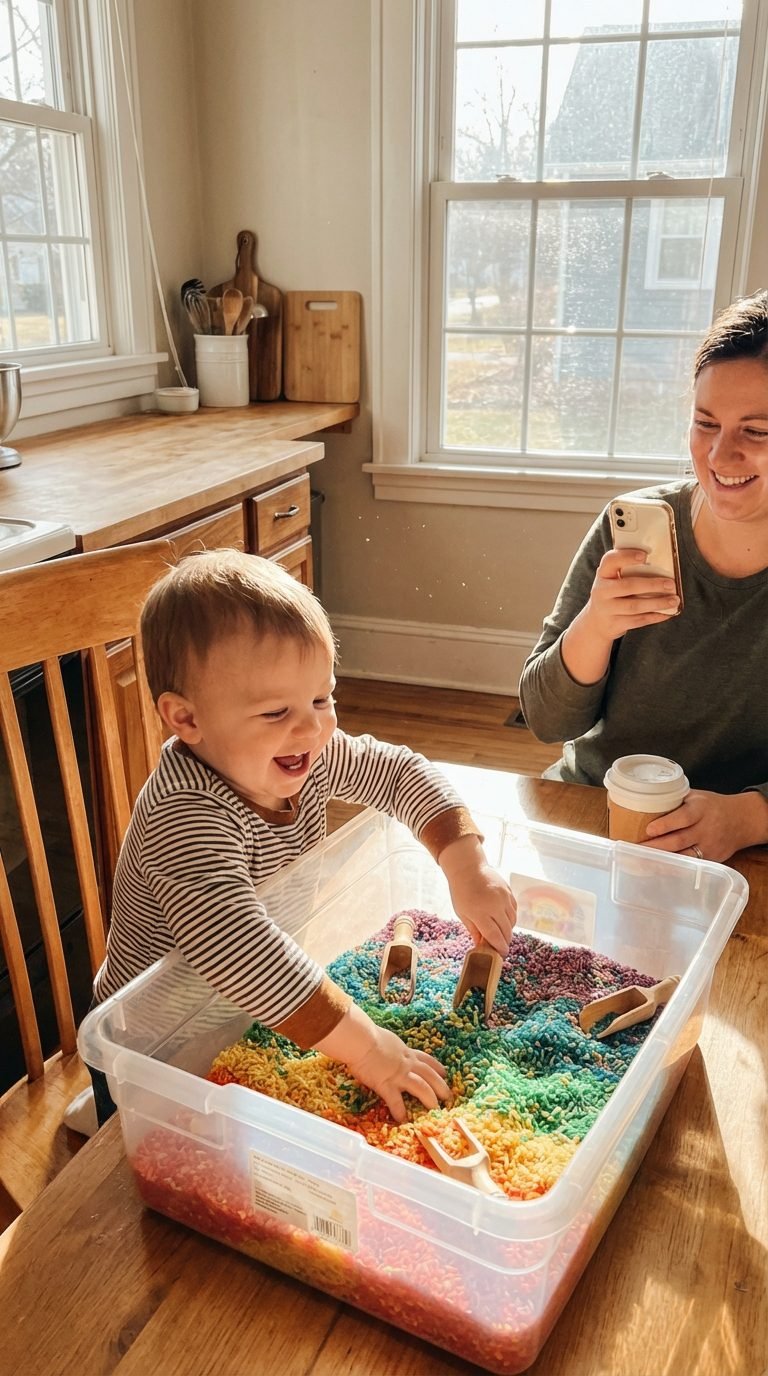
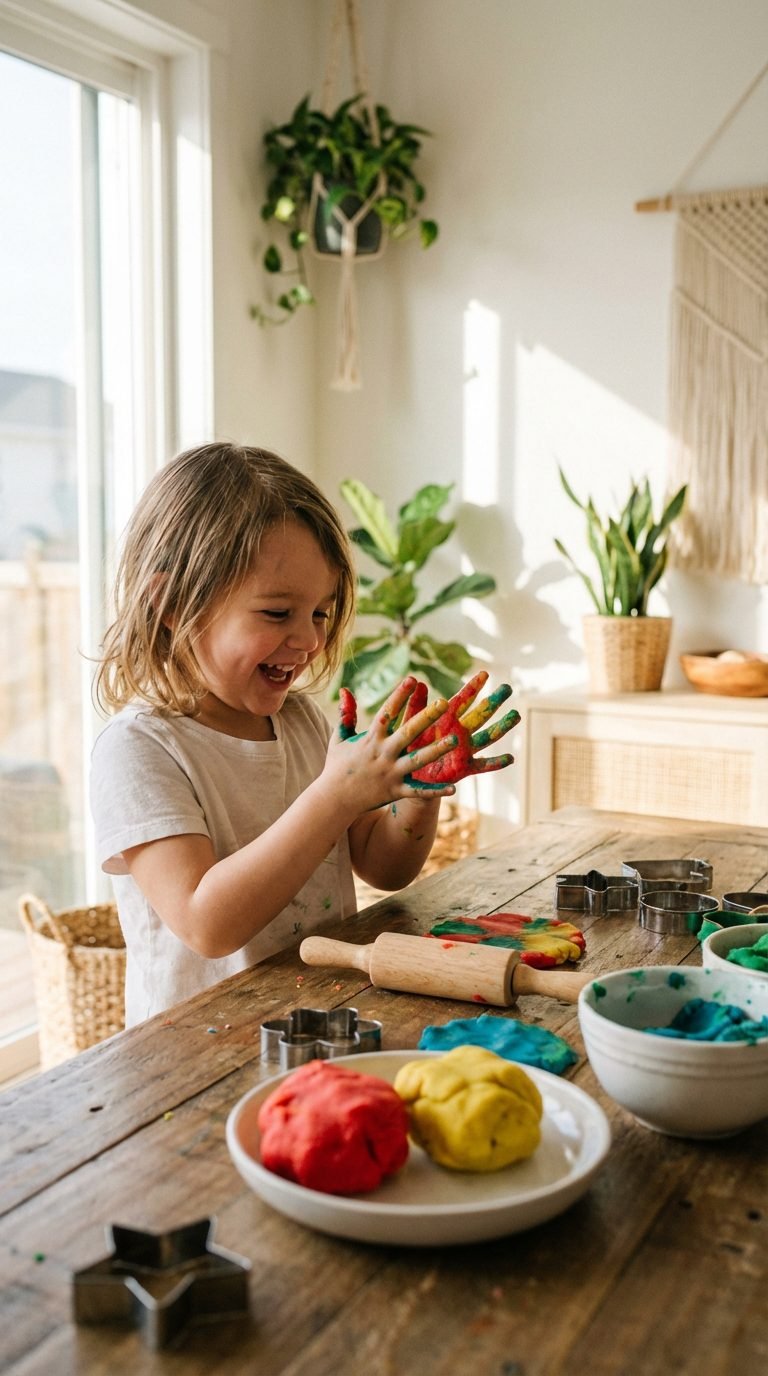
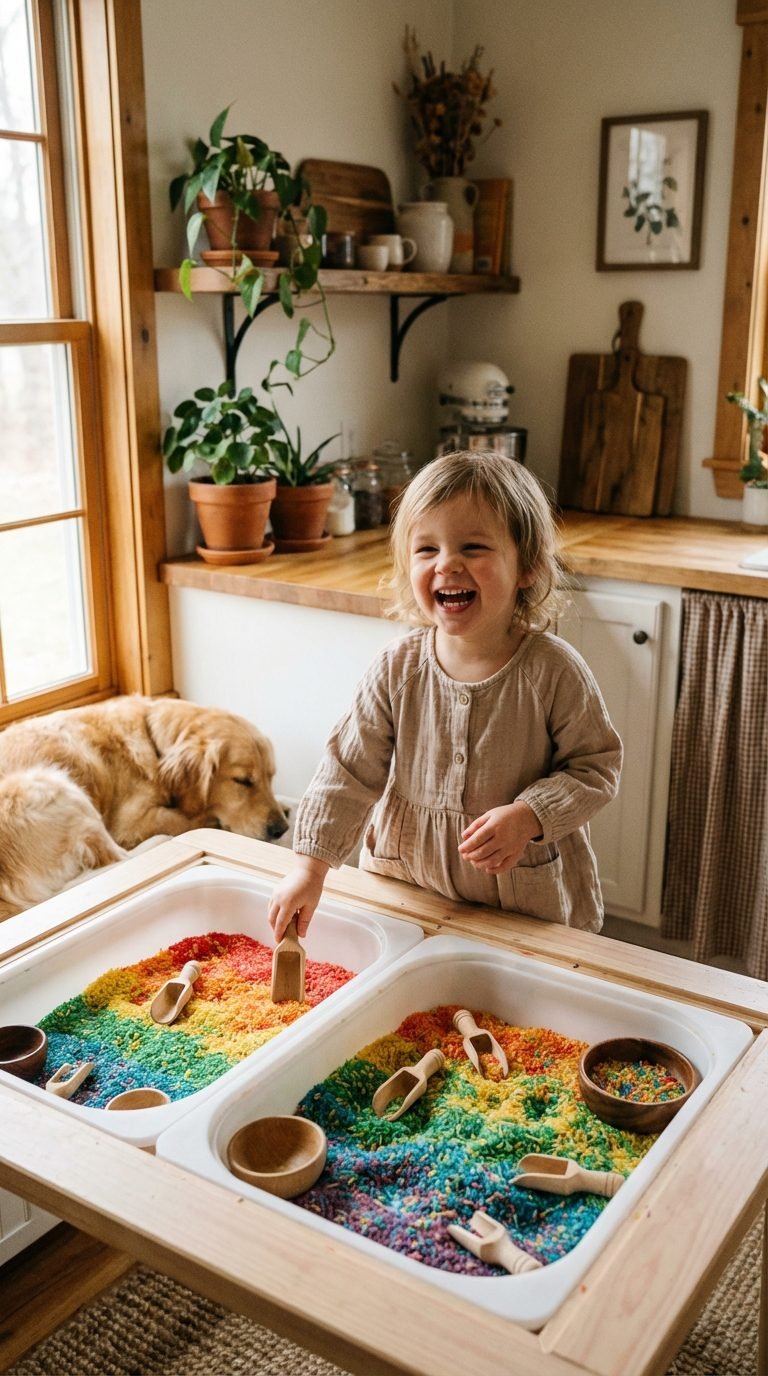
Imagine your toddler, engaged and happy, pouring rice from one container to another. Their giggles fill the room as they squish colorful play dough between their fingers. This is the magic of sensory play. It may look messy, but it’s a vital part of your child’s growth.
Why Is This So Hard for So Many Parents?
Many parents find sensory play daunting. The mess, the chaos, and the fear of spills can be intimidating. However, sensory bins can provide incredible benefits for your child’s development.
Understanding what to use in sensory bins for 1-year-olds can help ease your concerns. When you see the joy and learning happening, the mess becomes a small price to pay.
What Are Sensory Bins and Why Are They Important?
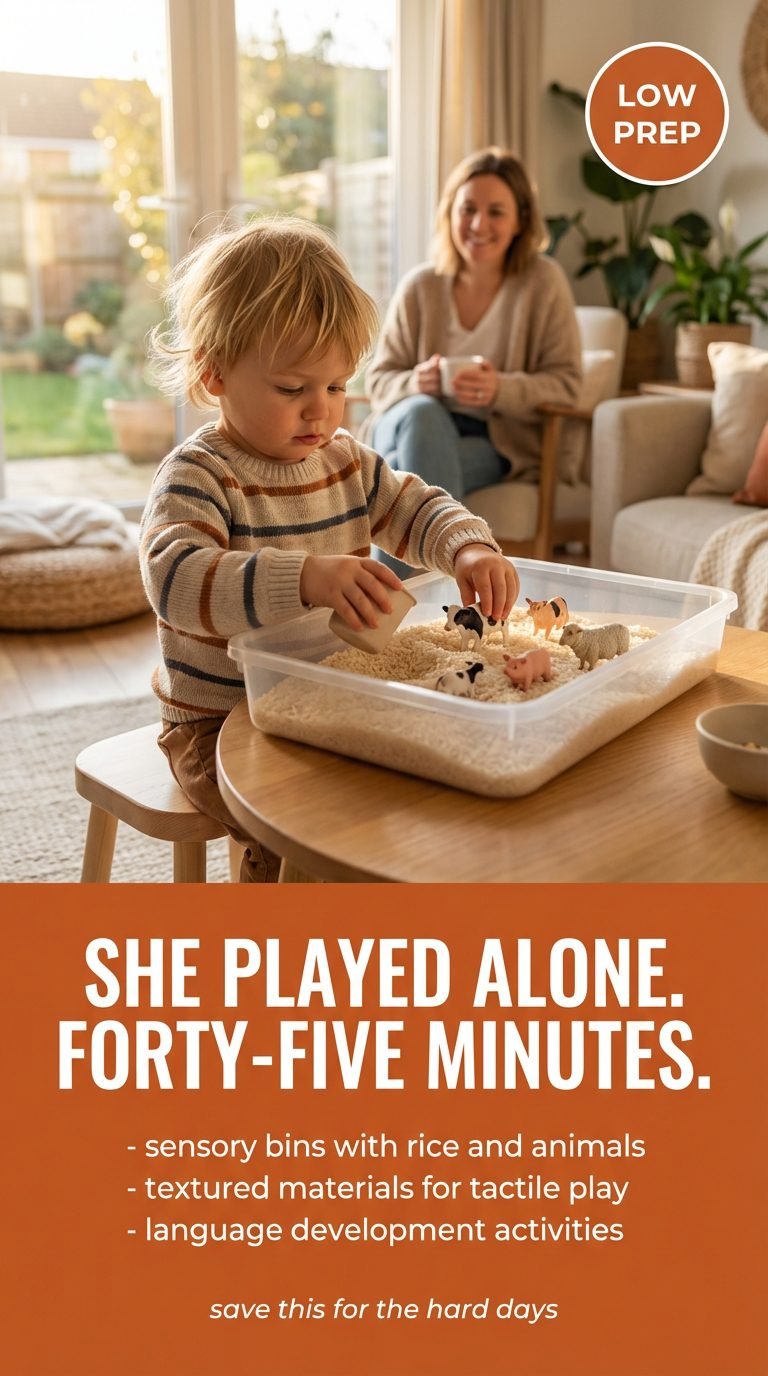
Sensory bins are containers filled with various materials that stimulate a child’s senses. They can include anything from rice and beans to water and sand. These bins allow children to explore textures, colors, and shapes.
Sensory bins for 1-year-olds what to use can include safe, edible items. This ensures that even if they taste something, it’s not harmful. For example, you can use cooked pasta or oatmeal. These materials are not only safe but also offer a delightful experience.
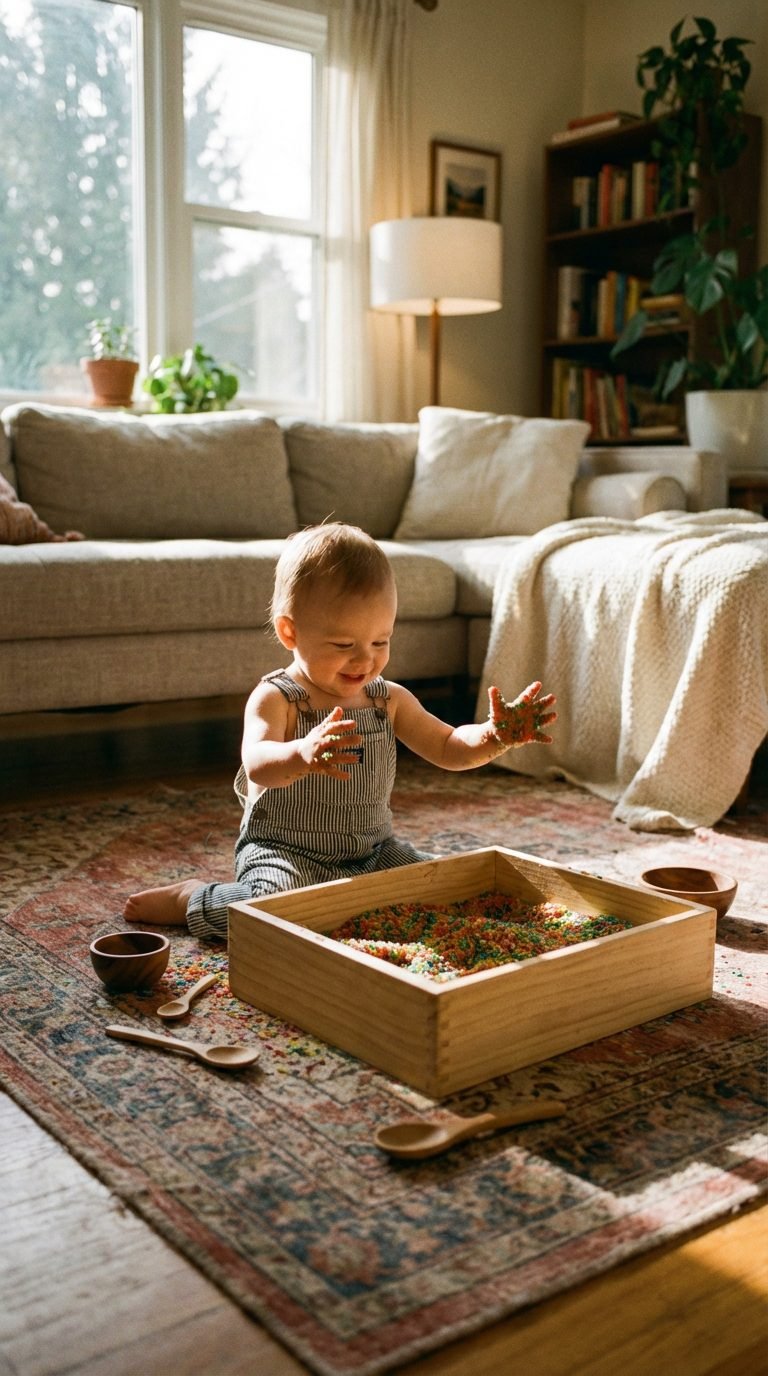
To create your sensory bin, start with a plastic container. Fill it with your chosen materials. Add scoops, cups, and small toys to encourage exploration. Remember, the goal is to let your child play freely and discover.
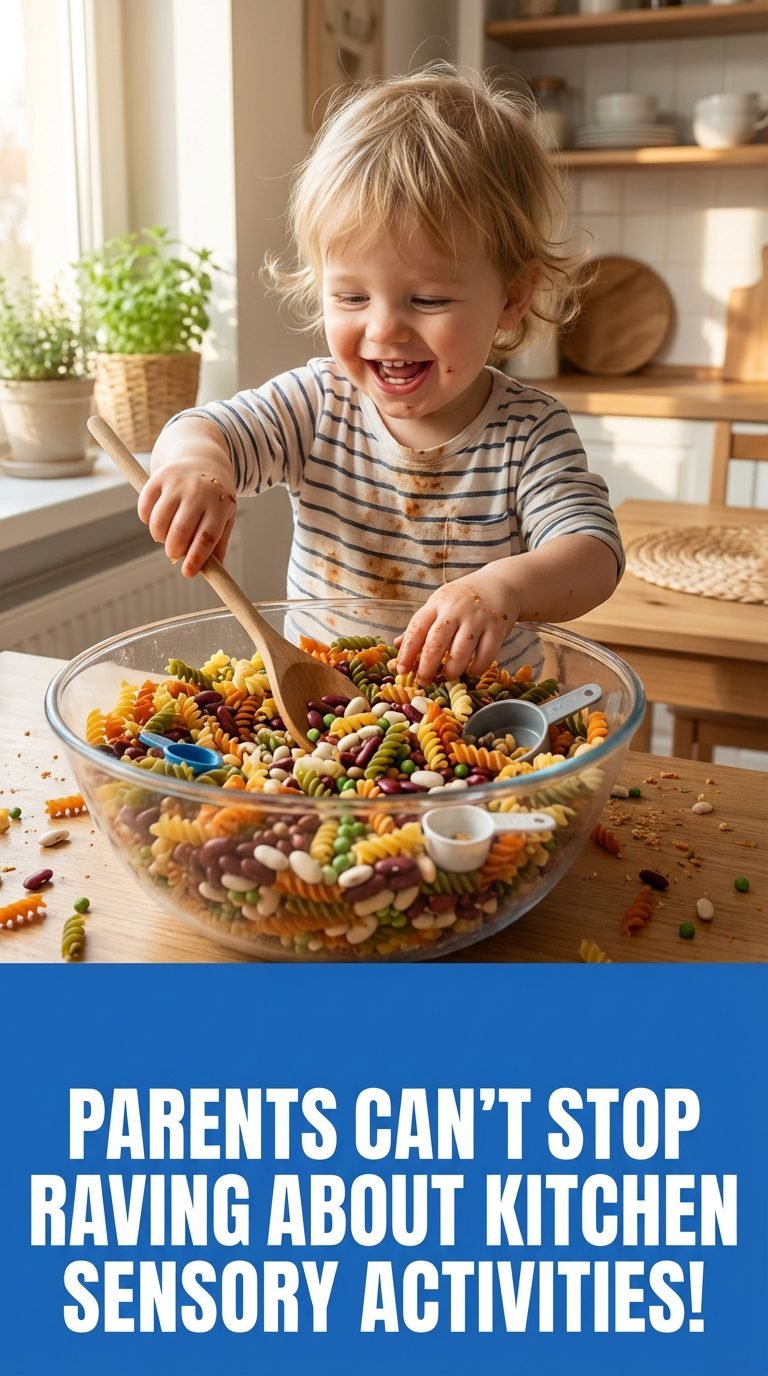
A common mistake is to overthink the materials. Instead, focus on what you have at home. Kitchen sensory activities toddlers using food are great options. For instance, old pasta, rice, or even dried beans can be perfect.
How to Choose Materials for Sensory Bins
When selecting materials, consider safety and sensory engagement. Materials should be non-toxic and easy to clean up. Common choices are grains, beans, and water.
Additionally, think about the textures and colors. Bright colors can attract your child’s attention. Different textures, like smooth beads or rough sand, provide varied experiences.
For a quick sensory bin, fill a container with uncooked rice and small toys. Let your child dig through to find hidden treasures. This can keep them entertained for hours!
However, avoid small items that can be choking hazards. Always supervise your child during playtime. Safety should always come first.
Incorporating Water Play Activities
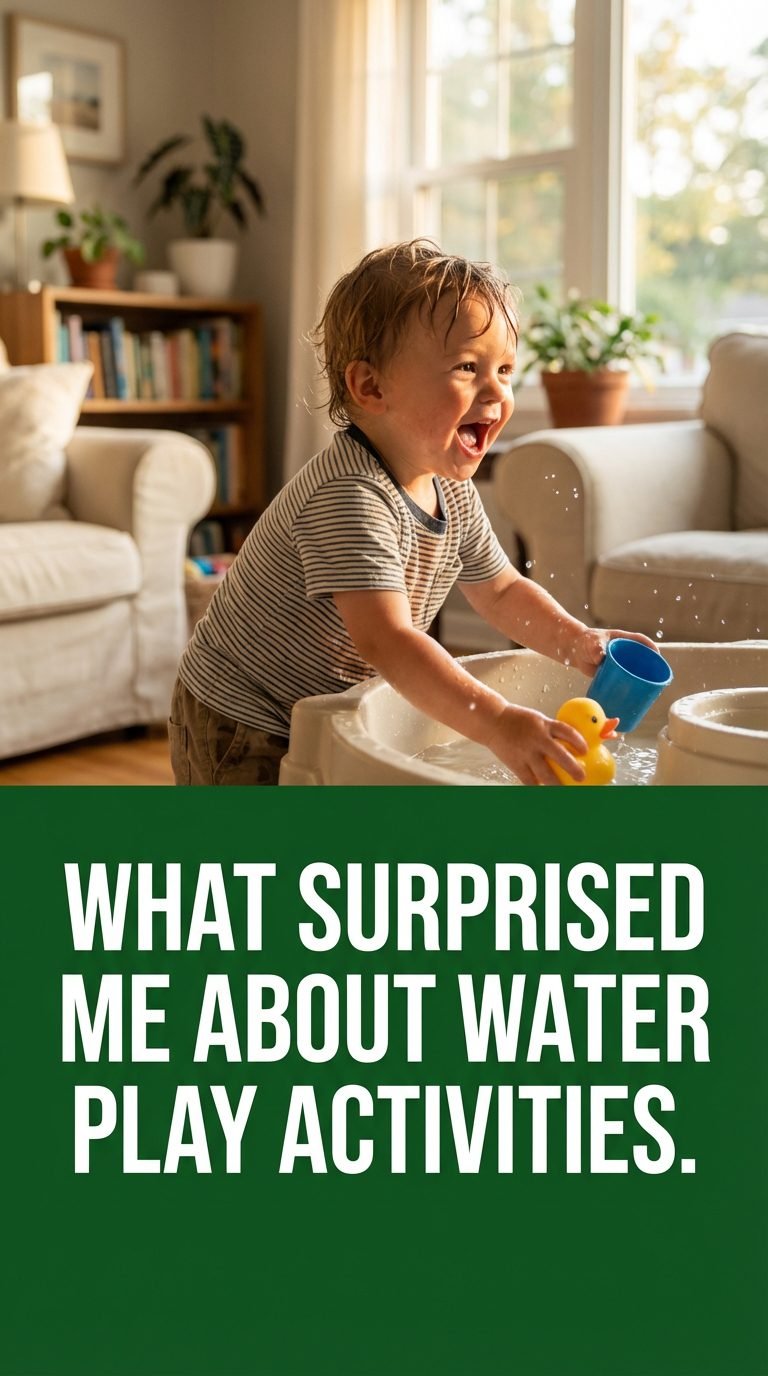
Water play activities toddlers at home can be an exciting addition to sensory bins. Water is inherently engaging and can be calming for many children. You can create a water sensory bin using a shallow container filled with water.
Consider adding cups, small boats, or even rubber ducks. This not only makes it fun but also teaches concepts like floating and sinking. Water activities promote fine motor skill development as children pour and scoop.
To set this up, take a large plastic tub and fill it with water. Add items like sponges or measuring cups for extra fun. Always supervise closely to ensure safety during water play.
Additionally, be prepared for splashes! Lay down towels or a waterproof mat to catch any spills. This can help you manage the mess effectively.
Exploring Kitchen Sensory Activities
Kitchen sensory activities toddlers using food can be a great way to engage your child. You can use everyday items to create memorable experiences. Think about using flour, sugar, or even spices.
For instance, create a bin with uncooked rice and add a few scoops of cinnamon. The smell will entice your child, while the rice provides a tactile experience. This combination can stimulate both their sense of smell and touch.
To create a sensory bin, gather items from your pantry. Place them in a large container and let your child explore. Encourage them to feel the different textures and smell the scents.
However, be mindful of any allergies. Always ensure that the materials you use are safe for your child. This way, you can enjoy the play without worry.
Building a Sensory Corner at Home
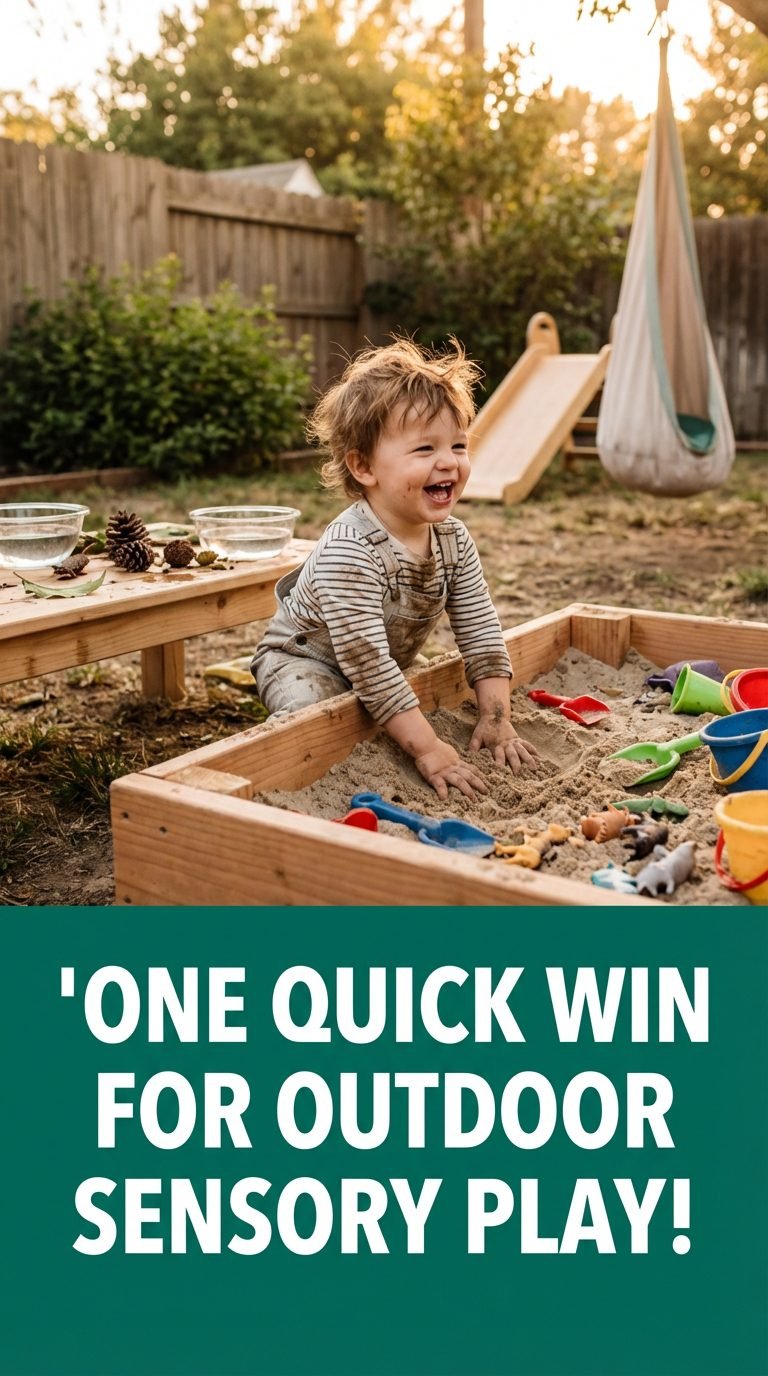
Creating a sensory corner setup small home can provide a dedicated space for play. This area can be filled with different sensory bins and materials. It allows your child to explore whenever they want.
Consider dedicating a small table or corner of a room. Stock it with various sensory bins, toys, and materials. This encourages independent play and exploration.
To make it inviting, use colorful bins and labels. This can help your child learn to recognize and choose their own activities. Encourage them to play freely and explore different textures.
However, keep the area organized. Rotating materials regularly can keep the play fresh and exciting. This can also reduce clutter and ensure everything has a place.
Encouraging Language Development Through Sensory Play
How sensory play helps toddler language is often underestimated. When children engage in sensory activities, they learn new words. They describe what they feel, see, and smell.
For example, as your child plays with a sensory bin, ask questions. “What does the rice feel like?” or “Can you find something round?” This encourages them to express their thoughts and feelings.
To promote language skills, narrate their actions. Describe what they are doing and encourage them to repeat after you. This not only builds vocabulary but also strengthens communication skills.
Nevertheless, remember to be patient. Each child develops at their own pace. Celebrate small milestones and keep the conversation flowing.
Conclusion
Incorporating sensory bins for 1-year-olds what to use can transform your playtime. The mess may seem daunting, but the benefits are immense. Sensory play fosters creativity, motor skills, and language development.
As a parent, it’s essential to embrace the mess and enjoy the process. Remember, small progress is enough. For more family tips on Simple Family Everyday, visit here.
Frequently Asked Questions
What materials can I use for sensory bins?
You can use rice, beans, pasta, or even water. Just ensure they are safe.
How does sensory play help language development?
As children play, they learn to describe their experiences, building vocabulary.
Are sensory bins messy?
Yes, they can be messy, but the benefits outweigh the cleanup effort.
What are some safe water play activities?
Use shallow containers with cups and toys. Always supervise closely.
How can I set up a sensory corner at home?
Designate a space with various sensory materials. Rotate items to keep it fresh.
For more evidence-based parenting guidance, visit UNICEF Parenting. Learn more: child develop. For more ideas, check out parenting tips and expert advice. Learn more: parenting tips. Learn more: parenting tips. Learn more: child develop.